
OE Logo

We expect the significant increases in fund maturities, spurred by capital raised over the past decade, to exert upward pressure on the rate of asset disposals as the funds approach the end of their lifecycles.

Global trade can amplify economic development and poverty alleviation. Capable leaders are required to put in place enabling conditions for trade, but currently these skills are underprovided in developing countries. For philanthropists, investing in trade leadership talent through graduate-level scholarships is an opportunity to make meaningful contributions that can multiply and sustain global economic development.

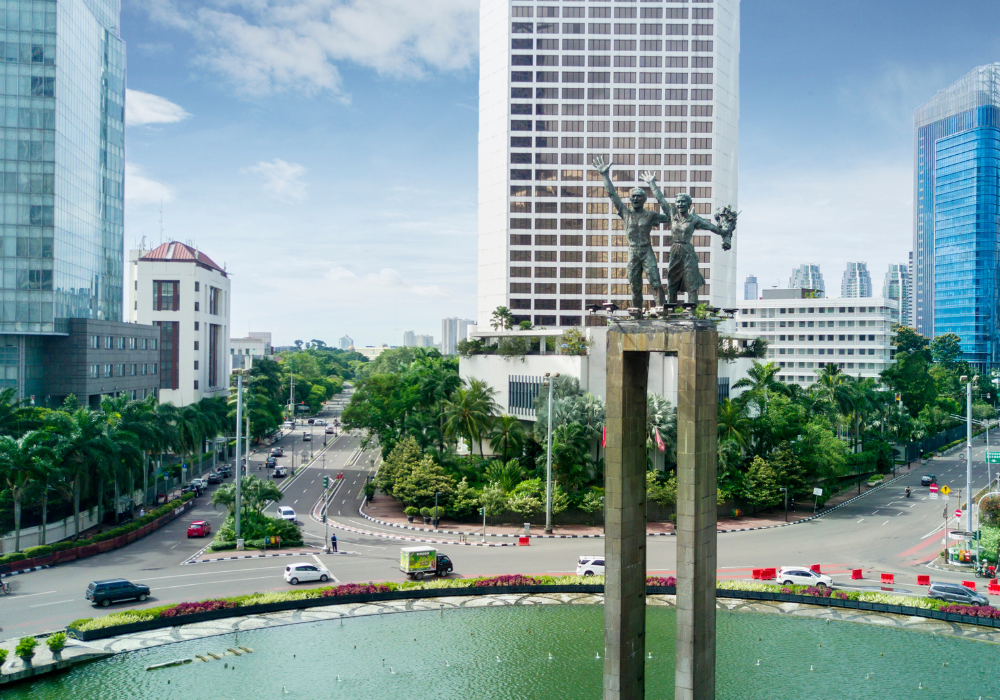
We forecast Bank Indonesia will start cutting its policy rate in Q2, which will provide a cyclical tailwind for credit growth and consequently domestic demand, as lower real lending rates will help boost loan demand.

We now project that the Bank of Japan will start to raise its policy rate next spring assuming another robust wage settlement at the Spring Negotiation. If inflation remains on a path towards 2%, the BoJ will likely raise rates cautiously to a terminal rate of around 1% in 2028.

Reflecting a surprisingly strong Spring Negotiation result and weaker yen assumption, we have upgraded our baseline wage and inflation forecasts. We now project higher wage settlements will push inflation towards 1.8% by 2027. Uncertainty is high, however.

This year is set to be a turning point for commercial property markets in the US. A gradual easing of inflationary pressures alongside a steady, if unspectacular, year for GDP and employment growth should help to ease the market through the final leg of the post-Covid adjustment. But there are four important themes market participants will need to understand to navigate the short and medium term successfully.

The focus on green office buildings and sustainability is being driven by both government targets to achieve net zero and increasing corporate and investor focus on environmental, social, and corporate governance (ESG) considerations and compliance.

Taiwan was hit by the 7.2 magnitude earthquake on 3 April, the strongest in 25 years. However, the economic impact seems to be manageable so far, thanks to sparse population close to the epicentre, improving building codes and stronger disaster management and awareness in the past two decades.

Continued economic growth will help stabilise commercial real estate yields and values before pricing slowly begins to recover next year. We expect global all-property total returns to average 5.3% per year over 2024-2025 in our baseline scenario. However, there are still upside and downside risks that real estate professionals should watch out for. In this infographic, we outline these risks and their impacts on property value.

We forecast Indian cities to outpace the rest of APAC in terms of GDP growth over the medium term (2024-28). Southeast Asian cities such as Ho Chi Minh City and Jakarta will come close to matching Indian cities and will outperform Chinese ones. Among advanced APAC cities, we expect that Australian ones will fill the top two positions in terms of medium-run GDP growth.

World goods trade declined in 2023, reversing the trend of 2022. This development points to the resumption of the decade-long pattern of slow global trade growth relative to GDP. Recent trade trends imply downside growth risks for 2024 and the longer-term outlook still looks to be one characterised by ‘slowbalisation’, especially with protectionism a rising issue.

Over the next five years China and its major cities face the prospect of a significant downshift in economic growth. We forecast GDP to grow on average by 4.1% per year across 15 major cities in the years to 2028, down from 7.3% between 2015-2019.

We expect that offices will be the most exposed US property sector to the impact of generative AI by 2032, followed by life sciences and manufacturing. In contrast, the hospitality and industrial sectors look set to be the least exposed.

The launch of ChatGPT in November 2022 made 2023 a leap forward for artificial intelligence (AI). The big battle for the future AI winners heated up and many tech companies revealed their future investment plans during the latest earnings season. A global race to build the most powerful AI chips has begun, which will potentially revolutionise the global tech sector.

japan

The Bank of Japan (BoJ) decided to end its negative interest rates policy and set the target band for the overnight market rate at 0%-0.1% at Tuesday’s meeting, earlier than our call for April.

We believe aged care is emerging as a prominent sector in Asia with a robust growth outlook.

As 2024 progresses global industrial activity should pick up and begin to rebuild some momentum. In annual terms, we expect growth of 2.7% in industry this year.

In collaboration with Uber, our latest report: “Ride-Hailing: A Platform for Women’s Economic Opportunity in Bangladesh” explores the transport challenges limiting women’s economic participation in Dhaka and the role that ride-hailing can play in overcoming them.

Related Posts Takaichi’s big win doesn’t affect the fiscal outlook for Japan The ruling Liberal Democratic Party’s (LDP) landslide election victory on Sunday doesn’t change our expectation of a primary fiscal deficit of 2%-3% of GDP in FY2026-FY2028 – we still see the deficit only starting to decline from FY2029. We also keep our view … Read more

Among major European cities, we think London offers the best outlook for residential real estate based on demographic trends and supply constraints.