


The population of the world’s 1,000 largest and most important global cities is forecast to increase by more than half a billion by 2050. However, this urban demographic growth is not equally distributed across the world’s cities.
 Saarah Ghazi
The population of the world’s 1,000 largest and most important global cities is forecast to increase by more than half a billion by 2050. However, this urban demographic growth is not equally distributed across the world’s cities.

Inflation is poised to weigh on the psychology of the swing voter, who will be pivotal in determining the outcome of the 2024 presidential election in a handful of battleground states. How these swing voters perceive inflation, among other economic developments, will likely determine the election.

Our long-term income and consumer spending forecasts reveal the high-potential urban consumer markets of the future. We identify four key trends underpinning shifts across global urban consumer markets over the coming decades.

Cities dominate the global economy. Today, 19 cities have achieved urban economic powerhouse status, with annual GDP greater than $500 billion. These are predominantly in the US, but over the coming decades, the urban landscape will shift as large and fast-growing cities across Asia emerge to challenge the current hierarchy.

Outside the financial sector, people might be forgiven for dismissing the Sustainable Finance Disclosure Regulation’s (SFDR) latest public consultation as one more addition to the European Commission’s myriad of regulatory measures and reforms.

Tourism Economics’ latest Travel Industry Monitor (TIM), a quarterly survey among tourism professionals conducted in Q4 2023, identified strong expectations of growth in 2024 and beyond.

We believe the Canadian economy has slipped into a moderate recession that will create slack, ease price pressures and help bring headline CPI inflation back to the 2% target by late 2024. Moreover, weaker global oil and food prices will facilitate the slowing of inflation this year.

Surprisingly, the rate hiking cycle in the US has not been accompanied by a spike in financial distress. This week on Beyond the Headlines join Adam Slater, Lead Economist, in looking at the corporate defaults cycle in the United States and where default rates might go from here.

The odds of a recession have declined over the past several months because of a strong labor market, a deceleration in inflation, and looser financial conditions on the back of the impending Fed pivot to rate cuts.
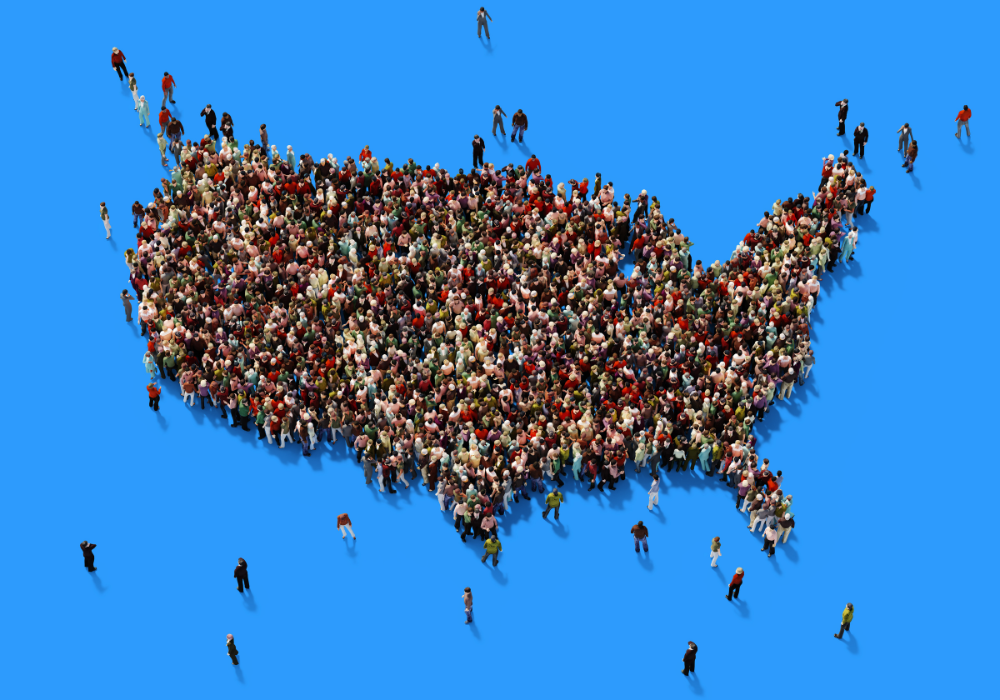
The Census Bureau released its long-term population projections in November. They paint a more pessimistic outlook for the US than its last set released in 2017.

The Canadian economy will begin 2024 still mired in recession as the lagged impact of higher interest rates continues to filter through. In our first Canada Up Close video, Tony Stillo, Director of Canada Economics, examines four key themes that will shape the economy’s performance in 2024.

Surprisingly, the rate hiking cycle in the US has not been accompanied by a spike in financial distress. This partly reflects the delayed impact of monetary tightening, leading some commentators to argue stress indicators such as corporate default rates will surge this year.

Our risk sentiment indicator is flashing red once again following the sharp end-of-year equity rally. In this week’s Beyond the Headlines, Javier Corominas, Director of Global Strategy, suggests there’s scope for disappointment as rate cut expectations are pushed back and the earnings recovery stalls.

We think US high-yield spreads will trade at or below 400 bps throughout this year. Upward revisions to our US 2024 US GDP growth forecast and improving corporate fundamentals mean that a sub-2% default rate for US HY credit by 2024 year end can be achieved.

The upcoming elections will affect the US economy beyond 2024 and are a major source of near-term uncertainty. Although we cannot know the precise policy mix of either party, which prevents detailed modelling at this stage, we have a view on potential post-election scenarios and their broad economic implications.

The Canadian economy will begin 2024 still mired in recession as the lagged impact of higher interest rates continues to filter through. However, we expect a modest recovery in the latter half of 2024 as the Bank of Canada begins to cut interest rates, disinflation continues, and global growth improves.

Global travel recovery will continue in 2024 despite a slower economic backdrop. Many countries that were previously expected to endure recession are now likely to avoid this although economic growth will certainly slow.

We expect another year of industrial metal price weakness in 2024 and are generally below consensus. Metal demand will remain weak in H1 while supply continues to increase. However, metal prices will gradually increase later in the year and beyond as demand recovers.

The economy is weakening, but the incoming data are consistent with a slowdown rather than a technical recession.

Unsurprisingly, the COP28 international climate conference did not end with a dramatic shift in the world’s response to climate change. However, it did mark the beginning of the end for fossil fuels as the main energy source in the global economy.
