
Economic Impact and GDP numbers of Drilling in Australia
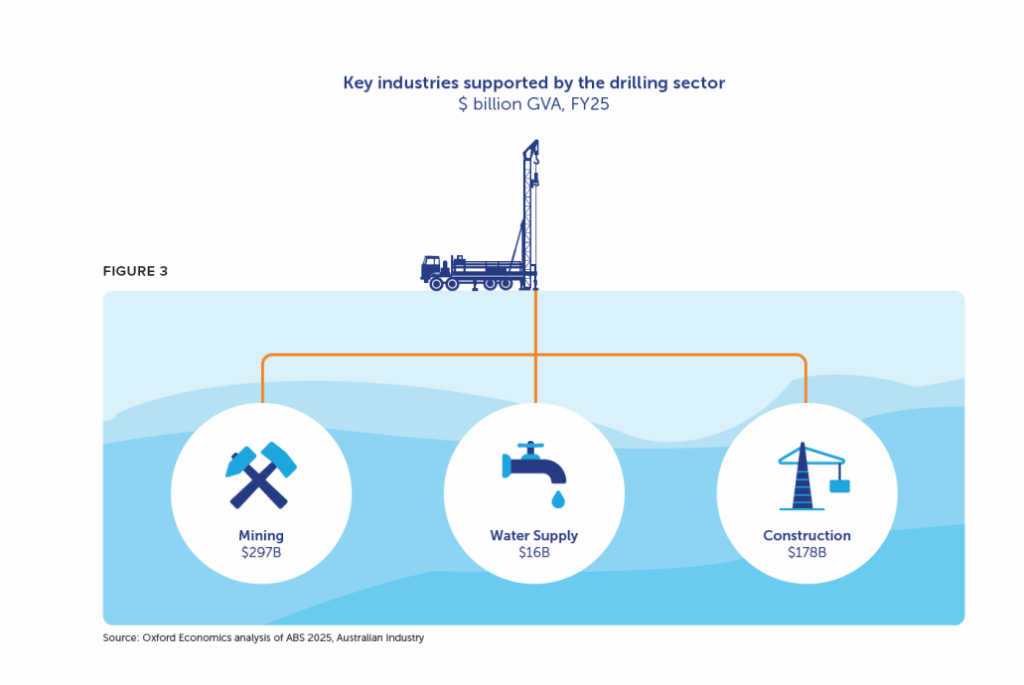
The report reveals drilling enables downstream sectors that are worth $500 billion in GDP, supports 12,000 jobs, and serves as the essential gateway for mining, water, and infrastructure development.
A comprehensive industry-wide assessment was developed to map the sector’s structure, workforce, supply-chain ecosystem and future demand outlook providing a robust evidence base for planning, communication, and industry representation.



Details
Find out how we can help you
Connect with us todayBackground: An Essential Industry That Lacked Visibility
Drilling unlocks underground water, supports mineral discovery, enables infrastructure development and drives early investigative work. Yet much of this activity happens out of public view, leaving the sector undervalued and often misunderstood.
The client needed a credible, independently developed assessment that could define the industry’s workforce, national footprint, operating structure and enabling role strengthening its advocacy and strategic positioning
The Challenge: Capturing a Diverse, Regionally Distributed Sector
The drilling industry spans:
- Hundreds of contractors from single-rig operators to large multi-rig companies
- Multiple drilling types (water well, geotechnical, mineral exploration, RC, underground, etc.)
- Activity occurring across metropolitan, regional and remote Australia
Producing a unified national view required consolidating fragmented datasets, clearly defining what activity fell within scope, and developing consistent modelling for employment, rig utilisation, revenue structures and future demand drivers
The Solution: Combining rigorous modelling with inclusive engagement
The project team delivered a robust, evidence-based analysis that enabled the client to clearly
communicate the industry’s national significance. Key components included
- National Industry Mapping: Contractor data and rig inventories were analysed to build a detailed view of industry composition, scale, rig types and regional distribution.
- Workforce & Employment Modelling: Rig-type datasets, utilisation rates and labour statistics were used to model employment across drilling and support roles, reflecting the true operational workforce.
- Revenue & Economic Contribution Framework: A transparent economic modelling approach was applied to estimate the sector’s direct contribution, providing a defensible baseline for engagement and communication.
- Supply Chain & Enabling Industries Assessment: The study identified the upstream suppliers and support services reliant on drilling such as equipment manufacturing, consumables, transport, and technical services illustrating drilling’s role as the first step in resource and infrastructure development.
- Future Demand & Sector Outlook: A forward-looking analysis across mining, water security, construction, energy and infrastructure highlighted the external drivers shaping demand for drilling activities.
Impact: Turning modelling into actionable insight
The final deliverables provided the industry body with:
- A long-term analytical foundation for future reporting and strategic planning
- A credible evidence base for government and stakeholder engagement
- A unified national narrative to strengthen advocacy efforts
- Enhanced visibility for a sector that typically operates out of sight
- Increased confidence in communicating with policymakers and partners
Contact us to explore how we can help you
Related resources

Bespoke Forecasting and Scenarios

Global Economic Model

Global Industry Model