
Research Briefing
30 Sep 2025
Bifurcated – State of US consumer depends on whom you ask
Diverging fortunes across age and income groups reveal both resilience and fragility in the US consumer outlook.
We’re optimistic about the US consumer outlook for next year, but prospects by age and income differ. Younger, less affluent households face ongoing challenges, while older, wealthier consumers will drive overall spending growth. That makes the economy more vulnerable to equity and house price shocks.
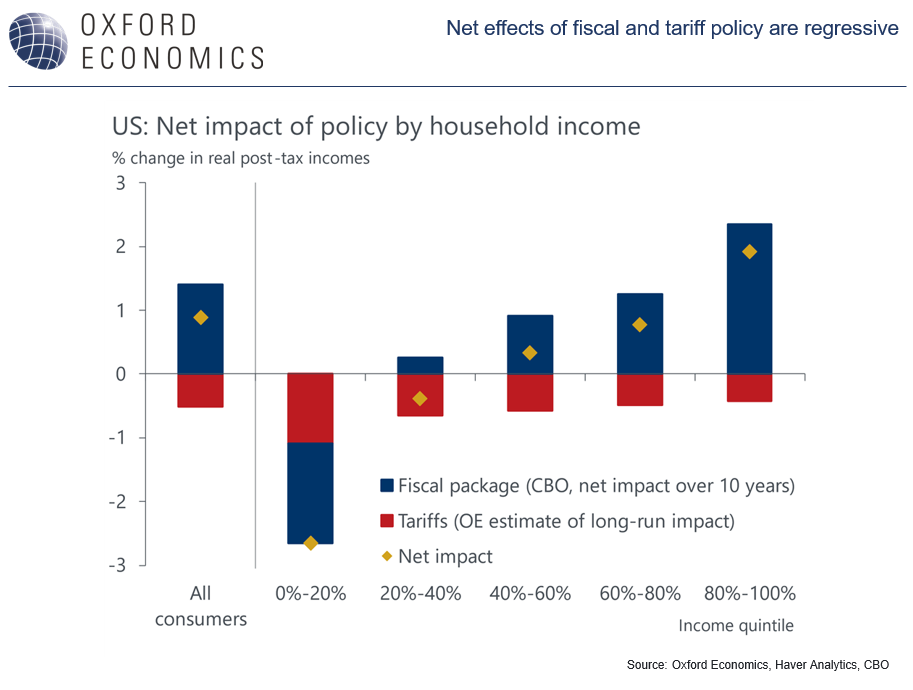
- Consumer bifurcation took hold with the post-pandemic inflation surge, disproportionately impacting discretionary spending for low-income and younger households. Tariffs present a smaller shock, but the impacts are largest for low-income households.
- Fiscal policy changes will widen the spending gap over the coming years. High earners will experience the most significant increase in household incomes, while reductions in welfare spending will lower real disposable incomes for the lower half of the income distribution. Other chasms deepen the divide. Pay and job growth have slowed significantly at small firms and lower-paying roles. Hiring and firing have been stagnant, with younger cohorts and those less attached to the labor market struggling to find work, increasing long-term unemployment.
- A bifurcating consumer means that many of the apparent contradictions evident in the economy in recent years may continue. Sentiment could remain weak and delinquencies could rise even as aggregate spending grows at a solid pace.
You might also be interested in
Tags:
Download Report Now
[autopilot_shortcode]