
Economist’s Notebook: China’s Economy in Transition – On-the-Ground Observations

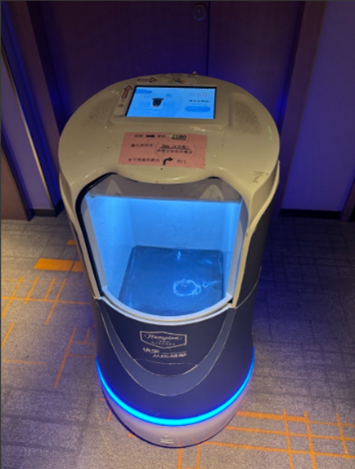
The sleek service robot glides to a halt outside my hotel room in Tianjin, having navigated elevators and corridors with surprising dexterity. It delivers my bottled water before departing with a “thank you” note. This juxtaposition—cutting-edge automation in a city where young graduates are increasingly anxious about their employment prospects—encapsulates the contradictions in China’s economy today.
I recently travelled to Tianjin, a tier-2 city in northern China about 30 minutes by train from Beijing. This visit offered a valuable opportunity to take the pulse of the Chinese economy firsthand.
A tale of two economies: blind boxes and robots
During the trip, I had the opportunity to speak with some local university students who expressed concerns about their employment prospects. With the job-hunting season approaching, some of them are planning to pursue master’s degrees or study abroad—rather than brave what they perceive as a challenging employment market. Despite the official unemployment rate for 16-24 year-olds dropping to 15.8% in April, there’s a risk that it could rise again in the following months.
This economic uncertainty is also reshaping consumption patterns in visible ways. Budget retailers are flourishing, with affordable coffee and juice chains like Mixue (which listed earlier this year) drawing more foot traffic than premium brands like Starbucks. Perhaps most telling is the remarkable popularity of “blind boxes”—collectible toys typically priced around USD10. Locals describe these as an “affordable source of happiness”—a phrase that speaks volumes about consumer psychology in today’s Chinese economy. (Although, Labubu did recently take the headline for selling for more than $150,000 at China Auction, which is probably another topic for another day).
My visit coincided with the Dragon Boat Festival, bringing noticeably busy streets and hotels. Indeed, broader data points to a shift in Chinese household preferences away from goods and towards services such as tourism, as outlined in my recent Research Briefing. However, there might be another side to this, according to my local friends in Tianjin. Their take is that this represents a form of “consumption downgrade,” with people increasingly opting for domestic travel to tier-2 cities rather than more expensive destinations.
The inflation picture remains complex. While locals express concern about housing and education costs, there are clear price reductions in categories like electric vehicles. The proliferation of discount retailers is exerting downward pressure on everyday necessities. These trends are reflected in sluggish inflation data as we have highlighted for a while. Indeed, China posted another negative CPI inflation on June 9, marking the fourth consecutive month of y/y decline.
During my visit, I was impressed by young people’s strong interest in topics such as Japanization, investment in gold, financial market development in the US , revealing a sophisticated awareness of global economic concerns. As a self-sufficiency mindset develops amid rising geopolitical tensions, I was happily surprised by this question and humbly shared my belief around the importance of openness in today’s interconnected economy.
Unlock exclusive economic and business insights—sign up for our newsletter today
SubscribeBack at my hotel room, I called for room service and was surprised when my delivery arrived promptly—not by a person, but by a robot. The sleek mechanical attendant glided to a halt outside my door, having navigated elevators and corridors with remarkable precision. After delivering my bottled water, it departed with a digitally programmed conversation ended with a “thank you” note. This integration of robotics into everyday service reflects China’s broader push to promote high-tech adoption and innovation, following notable breakthroughs made by firms like DeepSeek and Unitree Robotics.
Universities and local governments are now beginning to make proposals for their 15th FYP (2026-2030), as part of the broader national 15th FYP which is likely to be unveiled early next year. From my limited sample size during the trip, there’s a clear emphasis on digital-related areas, reflecting national priorities around innovation, talent development and high-tech (and AI) deployment.
As I departed Tianjin, watching another service robot efficiently navigate the hotel lobby, I reflected on these contradictions. China’s economy continues to modernise at remarkable speed, yet it faces significant structural challenges. The robots may be delivering water today, but whether they can deliver sustainable, balanced growth remains the more pressing question.
Subscribe to our newsletters
Tags:
Related Reports
A reality check on the status of RMB internationalisation
The recent geopolitical shocks and abrupt US policy shifts have heightened concerns about the stability of the dollar-centric global financial system and strengthened the perceived need for diversification.
Find Out More
China and AI underpin stronger global trade outlook
Global trade is set for a stronger-than-expected rebound, supported by lower US tariffs, continued AI-driven investment, and China’s renewed export push. Our latest forecasts show upgrades to both nominal and volume trade growth in 2025–26, even as legal uncertainty surrounding US tariff mechanisms and evolving geopolitical dynamics pose risks to the outlook.
Find Out More
China’s Outbound Recovery: Slowing but Still Rising
Research Briefing Economist’s Notebook: China’s Economy in Transition – On-the-Ground Observations The rebound continues, but slowing demand, economic headwinds, and shifting traveler preferences are reshaping the outlook.
Find Out More
Navigating fundamental drags and policy drives for China’s manufacturing investment in 2026
Chinese manufacturing fixed investment shrank by 6.7% year-on-year in October, deepening the slump that began in July. We expect this decline to continue for most of H1 2026. The pace of recovery will depend on the policy support in the Fifteenth Five-Year Plan.
Find Out More