














OE Logo
Hong Kong housing

We expect Hong Kong’s housing prices to stabilise in 2023, following a 15% peak-to-trough decline.

China people

China is confronting the impact of a profound demographic shift on labour force growth and the economy, after official data showed its population declined in 2022 for the first time in 60 years.

tokyo

The Bank of Japan maintained its monetary policy settings at today’s (18th Jan) meeting. At the same time, the BoJ decided to enhance the funds-supplying operations to put downward pressure in the belly zone of JGB yield. Meanwhile, revisions in inflation outlook were smaller than we had expected. We think that the BoJ will continue to stick to its current Yield Curve Control policy ahead.

Asia

Inflation in Asia over the past year has by and large been a story of external supply shocks, rather than excess demand. And with those external forces now easing, so too are we seeing inflationary pressures start to recede. We think inflation will drop much further over the first half of this year, giving policymakers the space to stop raising rates.

Tokyo office buildings

In December, the Bank of Japan surprised markets by widening the allowance corridor for the 10-year JGB yield target, aiming to fortify its Yield Curve Control policy. The shift effectively results in a tightening of monetary policy, although we think the impact on growth will be limited.

India

Bengaluru’s and Hyderabad’s economies will most likely continue to outperform their Asia Pacific
and Indian peers in terms of growth in 2023.

Shanghai

We expect GDP growth across many of China’s major cities to improve in 2023 following the largely weak performances in 2022. But the near-term outlook remains tentative.

United States flags

The US economy will need a lot of luck to avoid a recession next year because the headwinds are about to intensify. We have identified several key themes that will shape the economy in 2023.

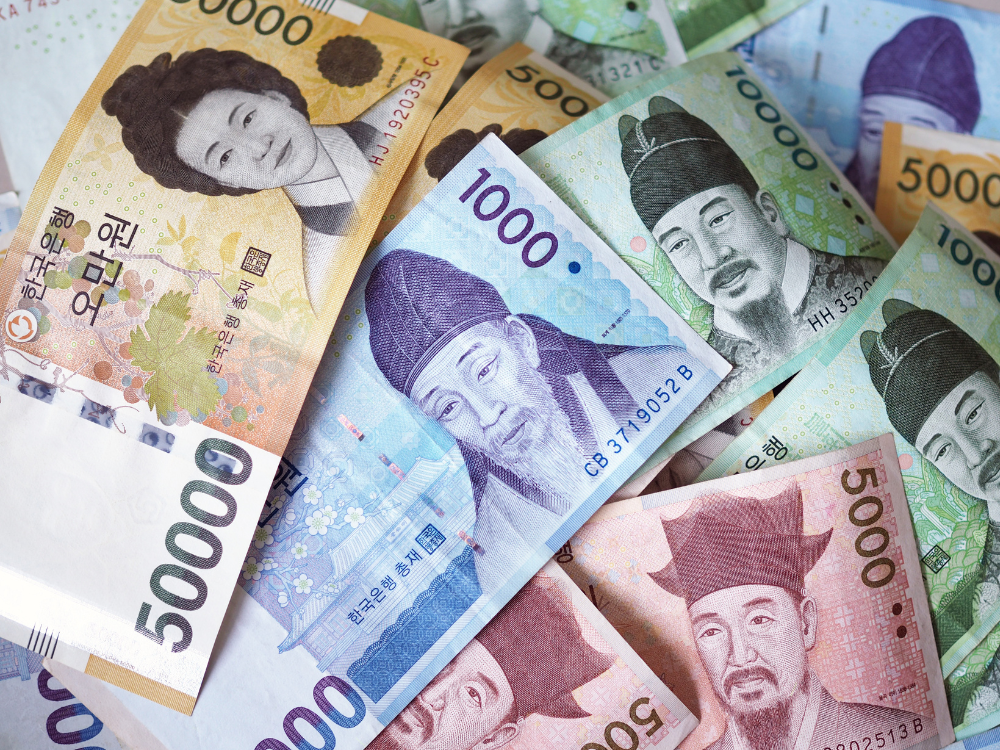
Korean Won

We think the Bank of Korea (BoK) will continue to focus on inflation and the Korean won (KRW) even as headwinds to growth and financial stability rise. In our view, an extended pause at 3.5% is likely after one more 25bps rate hike in early 2023.

Asia map

Economists Arup Raha and Theng Theng Tan identify 5 themes that are likely to be important for Asia in 2023.

manufacturing

We earlier argued that Asia’s manufacturing activity has been impacted more by demand than by supply-side pressures, due to strict Covid-related policies. Supply constraints in Asia have been less acute than in the US and Europe, and we had forecast resilient industrial growth in 2022 and 2023 as regional demand recovers. But the global growth outlook has deteriorated since then. Following our recent downgrade to 2023 GDP growth forecasts for most Asian economies, we now expect weaker industrial growth in Asia. That said, there will be divergences across the region.

Japan

We expect the Japanese economy to grow at 0.9% y/y in 2023, after 1.6% growth in 2022. Four reasons why we project the relatively resilient growth compared to other advanced economies: pent-up demand, the key auto industry recovery, supportive policy, and a strong base effect.

Japan: Where next for yield curve control?

We think there is a slim chance that the Bank of Japan will adjust its Yield Curve Control policy when the upward pressures on JGB yields and the terms of trade shock recede in the coming years.

Tokyo, Japan

Another wave of yen weakening has not deterred the Bank of Japan (BoJ) from leaving monetary policy unchanged at today’s (28th Oct) meeting by maintaining current short- and long-term interest rates.

agri-food-sector-in-southeast-asia

A comprehensive analysis of the economic contribution the agri-food sector makes to Southeast Asia, through five key markets: Indonesia, Malaysia, the Philippines, Thailand and Vietnam. We explore the demand outlook for the sector and the challenges it faces in the current global economic context, and the longer term.

Tokyo, Japan
Research Briefing | Sep 26, 2022

BoJ to look through a temporary decline in monetary base
BoJ to look through a temporary decline in monetary baseThe Bank of Japan (BoJ) left monetary policy unchanged at today’s (22nd Sep) meeting, maintaining current short- and long-term interest rates, despite another wave of yen weakening and upward pressures on JGB yields. The strategy of offering daily, unlimited fixed-rate JGB purchases has been defending the +/-0.25% range for 10yr JGBs, with a limited amount of purchases.

Read more

Research Briefing | Sep 26, 2022

BoJ to look through a temporary decline in monetary base

BoJ to look through a temporary decline in monetary baseThe Bank of Japan (BoJ) left monetary policy unchanged at today’s (22nd Sep) meeting, maintaining current short- and long-term interest rates, despite another wave of yen weakening and upward pressures on JGB yields. The strategy of offering daily, unlimited fixed-rate JGB purchases has been defending the +/-0.25% range for 10yr JGBs, with a limited amount of purchases.
Read more

Real estate
Research Briefing | Sep 20, 2022

Embedded inflation could significantly erode property values

Embedded inflation could significantly erode property valuesDownside risks to our near-term outlook for global real estate are mounting, as the global economic outlook has continued to deteriorate over the past three months. Under our baseline scenario, global all-property total returns are expected to average 5.2% pa over 2022-2024, 2.2ppts below our June forecast. However, if inflation were to become embedded, as is the case in our high inflation regime scenario, this would knock returns to 2.1% pa. 

Read more

Research Briefing | Sep 20, 2022

Embedded inflation could significantly erode property values

Embedded inflation could significantly erode property valuesDownside risks to our near-term outlook for global real estate are mounting, as the global economic outlook has continued to deteriorate over the past three months. Under our baseline scenario, global all-property total returns are expected to average 5.2% pa over 2022-2024, 2.2ppts below our June forecast. However, if inflation were to become embedded, as is the case in our high inflation regime scenario, this would knock returns to 2.1% pa. 
Read more

Tokyo, Japan
Research Briefing | Sep 15, 2022

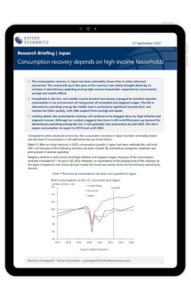
Japan’s consumption recovery depends on high-income households

Japan: Consumption recovery depends on high-income households
The consumption recovery in Japan has been noticeably slower than in other advanced economies. The recent pick up in the pace of the recovery was mainly brought about by an increase in discretionary spending among high-income households, supported by accumulated savings and wealth effects.

Read more

Research Briefing | Sep 15, 2022

Japan’s consumption recovery depends on high-income households

Japan: Consumption recovery depends on high-income households
The consumption recovery in Japan has been noticeably slower than in other advanced economies. The recent pick up in the pace of the recovery was mainly brought about by an increase in discretionary spending among high-income households, supported by accumulated savings and wealth effects.

Read more

Japan labour market
Research Briefing | Sep 5, 2022

Working hours decline despite rising labour participation in Japan

Japan Working hours decline despite rising labour participationJapan’s labour force has increased due to rising labour participation by females and seniors, despite a decline in the working-age population. However, hours worked per capita have been on a downward trend, increasingly weighing on GDP and household incomes.
Read more

Research Briefing | Sep 5, 2022

Working hours decline despite rising labour participation in Japan

Japan Working hours decline despite rising labour participationJapan’s labour force has increased due to rising labour participation by females and seniors, despite a decline in the working-age population. However, hours worked per capita have been on a downward trend, increasingly weighing on GDP and household incomes.

Read more

Global Risk Servey - recession risk
Research Briefing | Aug 12, 2022

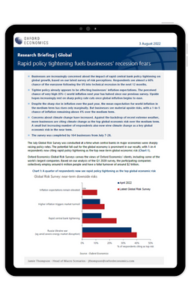
Rapid policy tightening fuels businesses’ recession fears

Rapid policy tightening fuels businesses' recession fears

The July Global Risk Survey was conducted at a time when central banks in major economies were sharply raising policy rates. The potential fall-out for the global economy is prominent in our results, with 1-in-4 respondents now citing rapid policy tightening as the top near-term global economic risk.

Read more

Research Briefing | Aug 12, 2022

Rapid policy tightening fuels businesses’ recession fears

Rapid policy tightening fuels businesses' recession fears

The July Global Risk Survey was conducted at a time when central banks in major economies were sharply raising policy rates. The potential fall-out for the global economy is prominent in our results, with 1-in-4 respondents now citing rapid policy tightening as the top near-term global economic risk.

Read more