


The Bank of Japan kept its policy rate at 0.5% at its July meeting. We continue to think the BoJ will exercise caution on rate hikes despite still-high inflation and a recent trade deal with the US.
 Yasuko Koido
The Bank of Japan kept its policy rate at 0.5% at its July meeting. We continue to think the BoJ will exercise caution on rate hikes despite still-high inflation and a recent trade deal with the US.
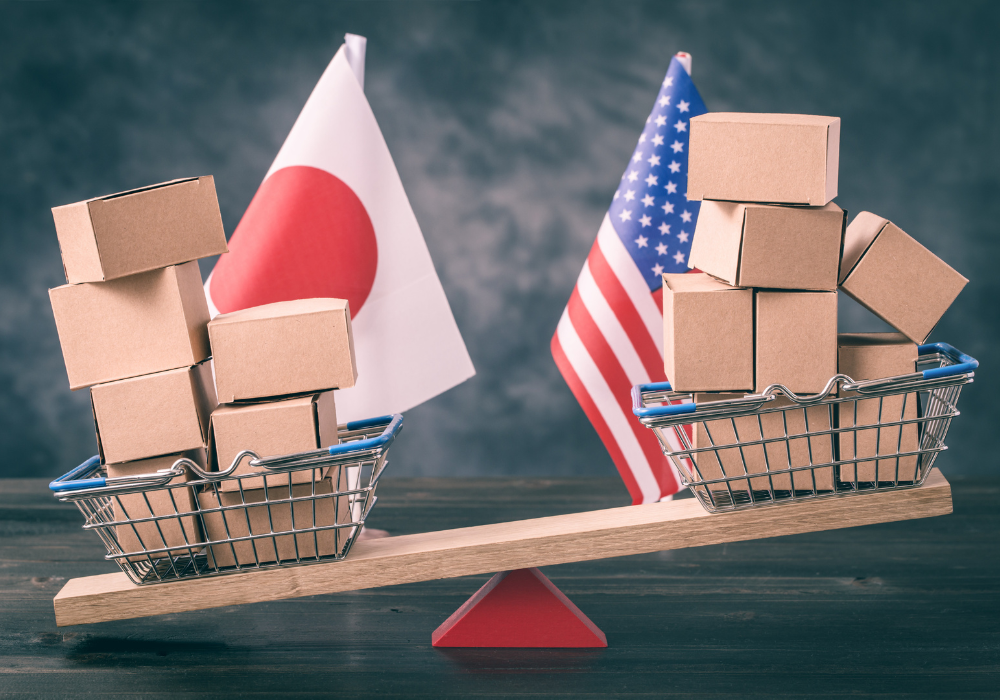
We estimate that the US’s effective tariff rate on Japanese products is around 17%, in line with our baseline assumption. Lower tariffs on autos are a positive, given the sector’s significant contribution to the economy and its broad domestic supporting base
The ruling Liberal Democratic party (LDP) and its partner Komeito lost their majority in Japan’s upper house elections on July 20. Although Prime Minister Shigeru Ishiba will likely stay to avoid political gridlock, especially to complete tariff negotiations with the US, the political situation has become fluid and could lead to a leadership change or the reshuffling of the coalition.

Amid the continued decline in working-age population, we expect Japan’s knowledge-intensive manufacturing sectors will likely outperform other sectors. Machinery, automotive, and chemicals all require specialised know-how that are not easily replicable, and these sectors are striving to boost labour productivity through various forms of investment. The machinery sector will perform particularly well, with its share of manufacturing rising more than 1 ppt by 2035.

Our scenario analysis reveals a partial shutdown of the Strait of Hormuz by Iran would push the Japanese economy into a near-stagflation situation in H2 2025, given Japan’s structural vulnerability to terms of trade shocks.

The Bank of Japan kept its policy rate at 0.5% and announced its exit plan from quantitative easing at Tuesday’s meeting. Following a recent spike in ultra-long JGB yields, the BoJ decided to ease off the pace of reducing JGB purchases in FY2026.

We expect Japan’s fiscal outlook to deteriorate due to weak economic growth and pressure on the government to implement fiscal stimulus. We don’t think deficit concerns drove the recent spike in ultra-long Japanese government bond (JGB) yields, but as domestic purchasers reduce their JGB holdings, long-term yields could become more sensitive to fiscal developments in the coming quarters, raising the risk of a higher term premium.
During the recently concluded three-day Dragon Boat Festival in China, domestic tourism spending reached CNY42.7bn ($5.9bn), with a total of 119mn domestic trips made, rising nearly 6% year-on-year. While per-trip spending dipped, we caution against overinterpreting this single holiday, as travel has become more routine. Broader data points to a shift in Chinese household preferences away from goods and towards services such as tourism.

Japan’s industries, which are exposed more to international demand than to tepid domestic demand, are often concentrated in certain cities. This makes these cities more dynamic than others, a feature masked when only looking at national data. Understanding the industrial landscape helps identify growth opportunities across various sectors, as job creation and incomes drive spending.

The Bank of Japan kept its policy rate at 0.5% at Thursday’s meeting. Considering the significant downgrading of growth and inflation forecasts in its Quarterly Outlook Report, the central bank will likely take a long pause to assess the impact of high global trade policy uncertainty on growth and inflation.

We’ve cut our GDP growth forecasts for Japan by 0.2ppts to 0.8% in 2025 and by 0.4ppts to 0.2% in 2026, reflecting higher US tariffs and heightened global trade policy uncertainty. We now forecast that Japan’s economy will barely grow over 2025-2026 on a sequential basis.

US tariffs of 25% on all automobile and auto parts will weigh heavily on the Japanese and South Korean automotive sectors. A GTAP analysis suggests Japanese and South Korean automotive production will each shrink by approximately 7%. The impact is larger than suggested by bilateral trade data, because vehicles assembled in other countries before being shipped to the US will also be affected, dampening domestic auto parts production.
The ‘Liberation Day’ tariffs, together with separately announced higher tariffs on auto imports to the US, will lead us to cut our growth forecast for Japan. The direct impact of the tariffs will end the modest growth we projected in March, and we now think the economy will barely grow in 2025-2026. This initial estimate does not consider the indirect impact from high trade policy uncertainty and retaliation from other economies.

Oxford Economics, the world’s leading independent economic advisory firm, is excited to announce the launch of its new Japanese website. This important milestone reflects our ongoing commitment to broadening our presence in key regional markets and strengthening our ability to provide localised, high-quality economic insights to businesses and decision-makers in Japan.
The Bank of Japan (BoJ) kept its policy rate at 0.50% at Wednesday’s meeting, as expected. Despite a marginally higher increase in pay than last year at the first round of the spring wage negotiations, our baseline view is for the BoJ to hike its policy rate only gradually due to concerns about the capacity of small firms to raise wages and the lacklustre rate of consumption.

We have revised our CPI forecast upwards for this year and next, due to more persistent supply side-driven food inflation, led by soaring prices of rice. Despite the significant revision to the short-term inflation path, we don’t expect the Bank of Japan (BoJ) to react with a rate hike.

The slew of tariff proposals coming out of the US has added much uncertainty to the highly export-reliant Singapore economy. Given its status as a major shipping hub, potential gains from trade rerouting will probably offset some of the negative impacts of increased tariffs. The upshot is that although Singapore’s prospects are dimmed, they remain relatively promising.
The resilience of consumption is essential to support sustained wage-driven inflation and the Bank of Japan’s rate hikes. We see little risk of spending faltering due to the projected gradual rate hikes to 1% because the ageing of society has made households’ balance sheets less vulnerable to rate increases.

Rising wage costs have been increasingly squeezing the already low profitability of small firms in Japan, thereby raising concerns about the sustainability of the wage-driven inflation dynamics. The evolution of these dynamics will be key in determining how far the Bank of Japan can raise its policy rate in the coming years

Our analysis of industry and trade structure between the US and Japan reveals the auto and non-electrical machinery sectors are most vulnerable to tariffs by the US. For both sectors, the US accounts for a sizeable share of total exports as well as gross output, and particularly so for auto.
