


South Africa’s local government elections (LGE2026) on November 4 come amid a shifting political landscape.
South Africa’s local government elections (LGE2026) on November 4 come amid a shifting political landscape.

AI has changed how Oxford Economics delivers its research, and the pace of change has been rapid. In twelve months, our research, data and models have moved from reports you read to tools you can question directly.

Heatwaves, economic pressures, and geopolitical uncertainty all featured in this summer’s travel season. Tourism Economics will open with the latest data on Europe’s summer performance at regional and destination level and close with an outlook for the winter season.

AI has changed how Oxford Economics delivers its research, and the pace of change has been rapid. In twelve months, our research, data and models have moved from reports you read to tools you can question directly.
In this webinar, we will discuss the latest developments in geopolitics and financial markets, and what they mean for our outlook for Eurozone growth, inflation, interest rates and public finances. We will also assess the main risks to our forecast.

The closure of the Strait of Hormuz has underscored a long-standing paradox: Africa produces oil, yet many of its economies depend heavily on imported fuel.

As the 2027 planning season moves into full swing, regional and global teams are facing an unusually difficult challenge: setting credible targets, defending resource needs, and making investment decisions against a backdrop of persistent volatility. Geopolitical shocks, pressure on customers, intensifying competition, and uneven growth will continue to shape the operating environment in 2027.

We enhance our Climate Catastrophe scenario by incorporating climate-induced migration, providing a more comprehensive picture of how climate change could reshape populations and economies. Our panel of experts explore how climate change could alter migration patterns under worsening climate conditions.

Webinar 生成AIとマクロ経済-経済モデルで探る影響とシナリオ分析

Join us to explore our new Scenario Assistant tool for the Global Economic Model, taking natural language scenario ideas into expertly-crafted model inputs to create and discuss scenarios within the Global Economic Model.

Analizamos las perspectivas económicas para Europa y España en un contexto marcado por riesgos geopolíticos y cambios de ciclo. Descubra si España puede mantener su liderazgo en crecimiento e inversión de cara a 2027.

Beyond the US, we ask whether it is time to rotate out of expensive Japanese equities into Europe, where earnings momentum is improving. And, are US 10y yields at 5% durable? In a world of positive stock-bond correlations and waning structural demand, are EM local bonds the better portfolio ballast?

Join our economists for a look at what’s driving Germany’s cyclical recovery, consumer demand, and what the path ahead means for industry and investment.
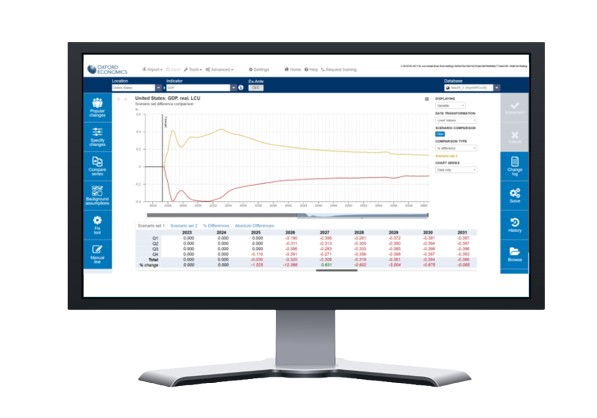
Join us to explore our new Scenario Assistant tool for the Global Economic Model, taking natural language scenario ideas into expertly-crafted model inputs to create and discuss scenarios within the Global Economic Model.

Understand how secular forces interact and which markets are best placed with our 2026 Megatrend Resilience Index. Our index ranks 91 major global real estate cities in 33 countries across four megatrends: demographics, technology, geopolitics, and climate. Each megatrend is driven by six to 10 indicators, which aim to encapsulate the relative resilience of each city across five core property sectors.
L’énergie flambe à nouveau, les taux d’intérêt grimpent et les marges de manœuvre budgétaires se réduisent, alors que les échéances politiques prochaines ajoutent à l’incertitude.
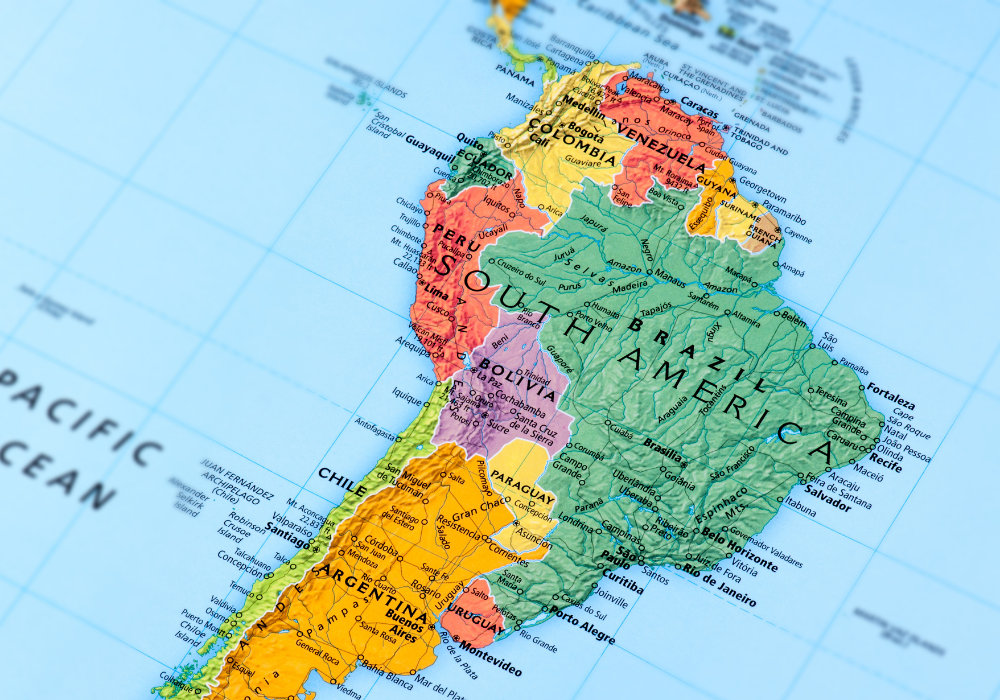
Growth dynamics in 2027 will be mixed for the Latin America’s largest economies but all countries will face downside risks. Volatile geopolitics, commodity prices, and uncertainty around ongoing political transitions have resulted in wide forecast ranges in 2027. From this perspective, what can we expect for 2027 in terms of growth, inflation, monetary policy and exchange rates?

Inflazione in risalita, tassi in bilico e tensioni geopolitiche irrisolte: le sfide dell’autunno per l’economia globale nel webinar Oxford Economics del 6 ottobre.

We will explore the impact of AI on the real estate markets in the major APAC market. What the impact is on the different sectors: office demand, translation into industrial and logistics absorption, data centre-adjacent investment and on the different countries. We also cover what megatrends are in play for APAC real estate market future performance.

The global economy has again proven remarkably resilient to a swathe of geopolitical shocks in 2026, and we can expect that to continue into 2027. But it’s too soon to conclude that there’s a significant risk that the world economy is on the edge of tipping into a recession. We will explore some of these key growth drivers and risks surrounding the outlook.