
Recent Release | 25 Jul 2022
Industry Outlook 2030+ | The Semiconductor Industry

Johanna Neuhoff
Director of Economic Consulting, Continental Europe
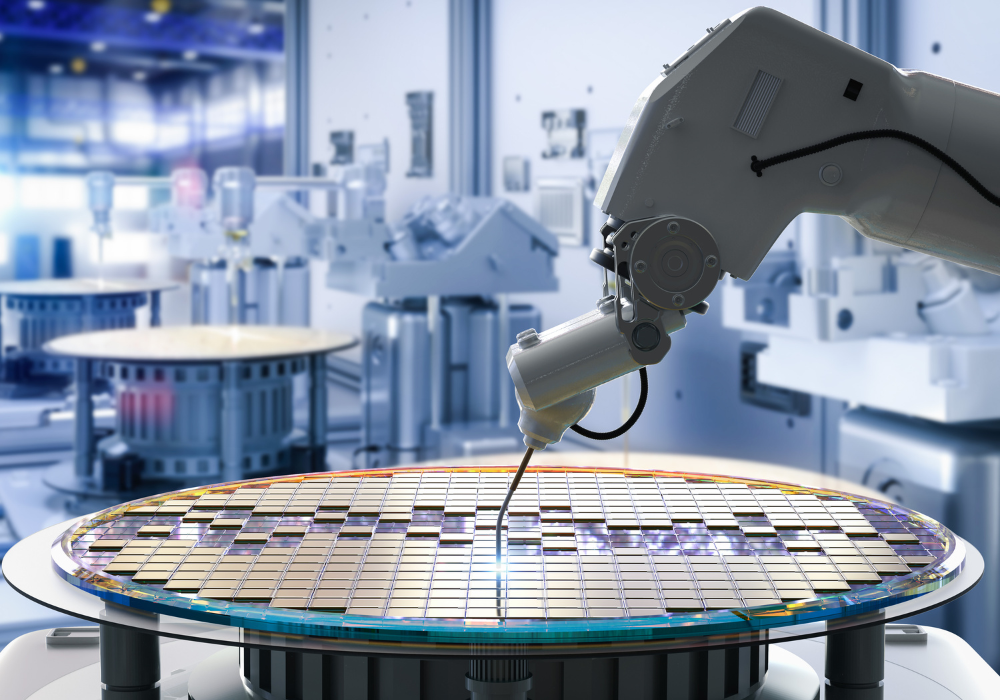
As a high-tech industry, the European semiconductor industry is indispensable for the digital and ecological transformation of the economy. It supplies other industries with important microelectronics for the smart control of electric cars and household appliances, for example, and also contributes to increased efficiency and sustainability in industrial production.
The European Union has acknowledge the semiconductor industry’s high strategic relevance and has defined an ambitious target for the next 10 years in its Digital Compass 2030 policy: Europe’s share of the world semiconductor market is to increase to 20 per cent by 2030 and the establishment of new, technologically leading chip factories is to be driven forward.
Our study analyses the strengths and weaknesses, opportunities, and threats for the European and German semiconductor industry in light of future transformation trends.
The Sector Outlook 2030+ Semiconductor Industry report is based on an analysis of the latest industry research and data. We find that:
- European semiconductor manufacturers design and produce highly innovative products and are intensively integrated into highly specialised global value chains.
- Driven by the trends of digitalisation and sustainability, the demand for semiconductor solutions will increase significantly in the future. The demand for automotive semiconductors, in which European manufacturers are world leaders, will grow the strongest of all semiconductor submarkets—driven by electromobility and automated driving.
- The efforts of the European Commission and the member states to invest massively in the expansion of the European semiconductor industry are meeting a growing future demand for semiconductors.
As a major location for the European semiconductor industry, Germany plays a vital role in meeting the European Union’s ambitious goals. Given the limited public budget available, resources should be spent to build on existing strengths. Therefore, we recommend seven measures German policymakers should consider to expand Germany’s position as one of the most important European industry players.
Read the full report in German
Read the English executive summary
Our economic consulting team are world leaders in quantitative economic analysis, working with clients around the globe and across sectors to build models, forecast markets and evaluate interventions using state-of-the art techniques.
About the team
Our Economic Consulting team are world leaders in quantitative economic analysis, working with clients around the globe and across sectors to build models, forecast markets and evaluate interventions using state-of-the art techniques. Lead consultants on this project included:

Johanna Neuhoff
Associate Director of Economic Consulting, Continental Europe
Related Posts

KPMG M&A Outlook 2026: Between Uncertainty, Resilience, and Seizing Opportunities
Discover how Germany’s M&A landscape is evolving – with a focus on growth, AI and post-merger value creation.
Find Out More
Silver, the next generation metal
This report highlights the critical role silver plays in data centres and artificial intelligence (AI), automotive and electric vehicles (EVs), and solar energy photovoltaics (PVs). With these sectors expected to expand significantly over the coming years, we expect future silver demand to be strong.
Find Out More
Powering the UK Data Boom: The Nuclear Solution to the UK’s Data Centre Energy Crunch
The UK’s data centre sector is expanding rapidly as digitalisation, cloud computing, and artificial intelligence (AI) drive surging demand for high-performance computing infrastructure.
Find Out More
Measuring the Value of Design in Singapore
This study explores how design delivers value to Singapore-based organisations, enhancing profitability, strengthening strategic performance, and supporting broad environmental and social benefits. It introduces a Theory of Change framework to help organisations more effectively communicate and measure the value of their design activities.
Find Out More