
Recent Release | 18 May 2023
Hackney’s Green Economy: An asset to be nurtured

Cities Consulting Team
Oxford Economics
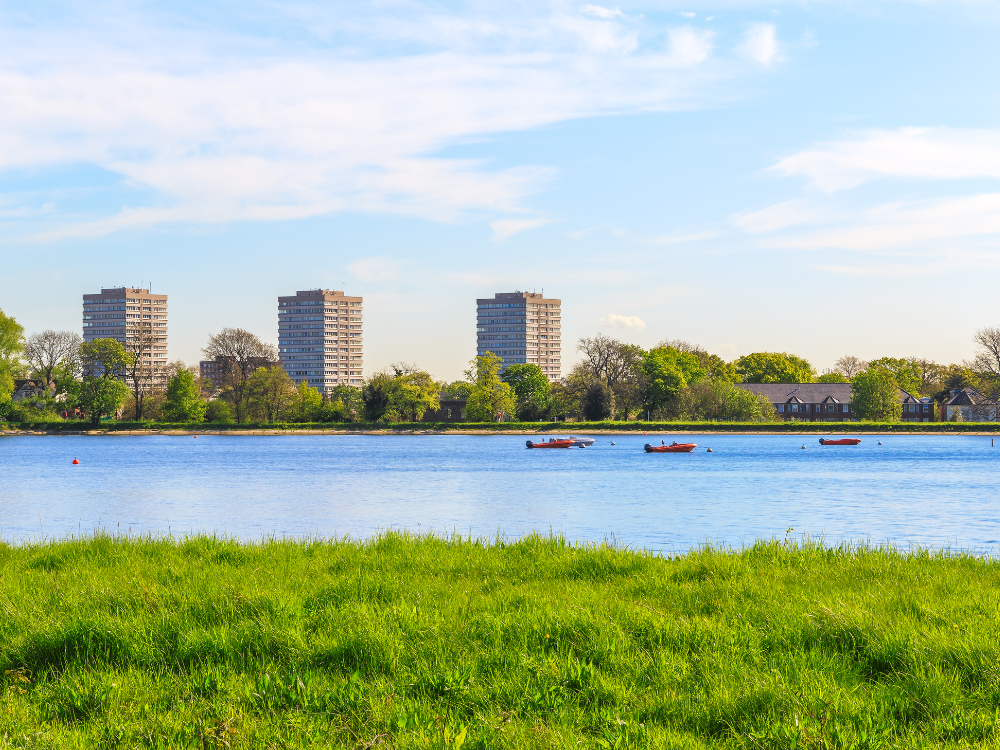
In early 2023 the Hackney Council commissioned Oxford Economics, in partnership with Ramidus, to research the current scale and specialisms of Hackney’s green economy and identify future opportunities and potential barriers to growth.
The study assesses the current scale and specialisms of Hackney’s green economy and identifies future opportunities and potential barriers to its growth. It also investigates the presence and degree of green business networks within the borough and hence gains an understanding of clustering activity. The approach builds on existing data and supplements it with new survey data and other analyses using:
- Chain referral methods or ‘snowballing’ for expanding the survey sample.
- Data validation and GIS mapping.
- An advanced desk-based research method called network analysis.
- On-the-ground meetings and workshops with local businesses.
The research was conducted across two stages. Stage 1 was focused on measuring the number of Hackney businesses operating in the green economy. Stage 2 developed the understanding of Hackney’s green economy and its characteristics. The final report brings together both stages of this research and concludes with our recommendations to build a stronger green economy in Hackney.
The experts behind the research
Our cities consulting team specialise in analysing and forecasting cities and regions around the world. Drawing on our detailed forecast data and a range of modelling tools, we work with clients globally across sectors to produce studies tailored to their needs and to help them make informed decisions.

Tim Lyne
Associate Director, Cities & Regions

Meera Sadier
Senior Economist, Cities & Regions
Tags:
You might also be interested in

Silver, the next generation metal
This report highlights the critical role silver plays in data centres and artificial intelligence (AI), automotive and electric vehicles (EVs), and solar energy photovoltaics (PVs). With these sectors expected to expand significantly over the coming years, we expect future silver demand to be strong.
Find Out More
Key take-aways from COP30
COP 30’s agenda had placed a strong emphasis on countries’ implementation of their emissions reduction target and, for the first time, several workstreams included discussions on unilateral trade policies.
Find Out More
Flooding risks diverge across UK cities, sectors and economies
Climate-linked flooding is becoming more severe, reshaping risks for UK cities, real estate, and local economies. Which areas face the greatest impact—and why?
Find Out More
COP 30 in focus: How to stay the course on the path to Net Zero
EMDEs are projected to account for 70% of global CO₂ emissions by 2050, making accelerated emissions reductions in these economies essential. Yet gaps in AE leadership—such as US policy rollbacks and insufficient climate finance—risk slowing the global transition.
Find Out More