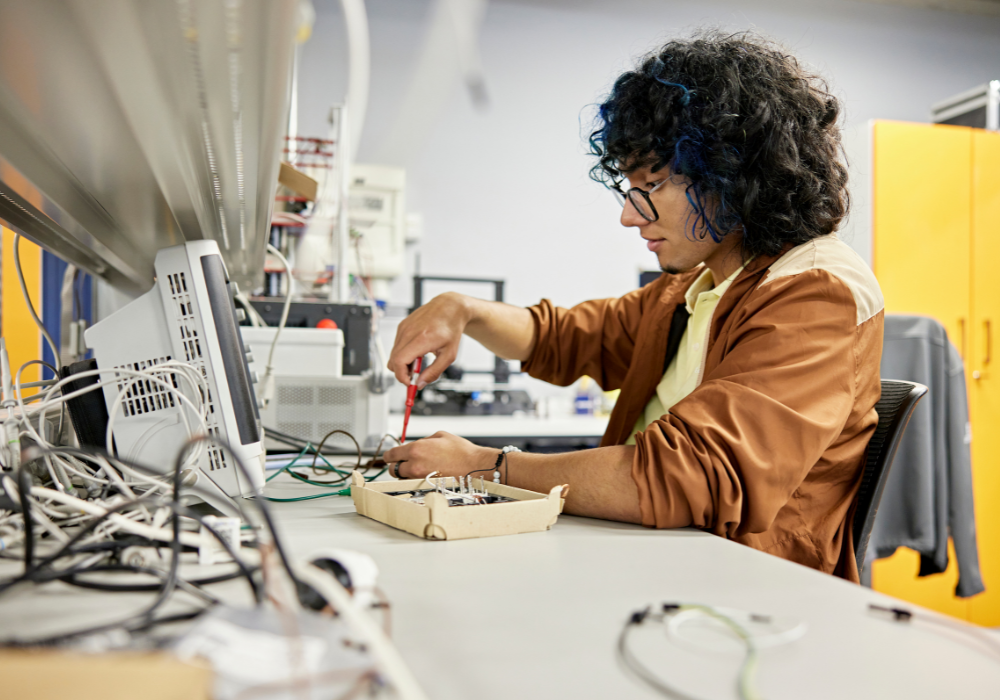
In the context of an accelerated expansion of the tech industry, and the implementation of policies like the CHIPS and Science Act, US firms are expected to demand more STEM (science, technology, engineering and mathematics) trained professionals, at a pace that the American higher educational system will have trouble matching.

Saarah Ghazi
Some observers are predicting a very big uplift to global productivity and economic growth from developments in artificial intelligence. But our historical analysis of productivity growth and technological change suggests that while AI could be transformative for some sectors, it’s unlikely to shift world growth on to a markedly higher path.
A peak in policy rates is often a positive catalyst for equities, but there are three key reasons why we don’t think it will be in this cycle. In this week’s Beyond the Headlines, join Daniel Grosvenor, Director of Equity Strategy, as he discusses the implications of an end to the Fed’s hiking cycle.
Fiscal rules should aim to ensure fiscal sustainability and inter-generational fairness while helping to promote longer term societal goals such as higher potential growth and the transition to net zero. In this week’s Beyond the Headlines, join Michael Saunders, Senior Economic Advisor, as he examines the UK’s three fiscal rules.
The world economy performed better in the final months of 2022 and early 2023 than might have been expected, given the scale of the inflation and interest rate shocks it suffered. In this week’s Beyond the Headlines, join Adam Slater, Lead Economist, as he discusses global economic resilience and whether it will last.
We expect Latin America’s six largest countries’ combined GDP to expand 0.8% next year, down from our 1.8% forecast for 2023 and the consensus’ 1.4%. The dissipation of idiosyncratic shocks and less restrictive domestic policies should support a broad regional recovery in 2024 from the recessions LatAm’s major economies are in or about to enter.