
Urenco’s socioeconomic impact on the UK economy
Commissioned by Urenco
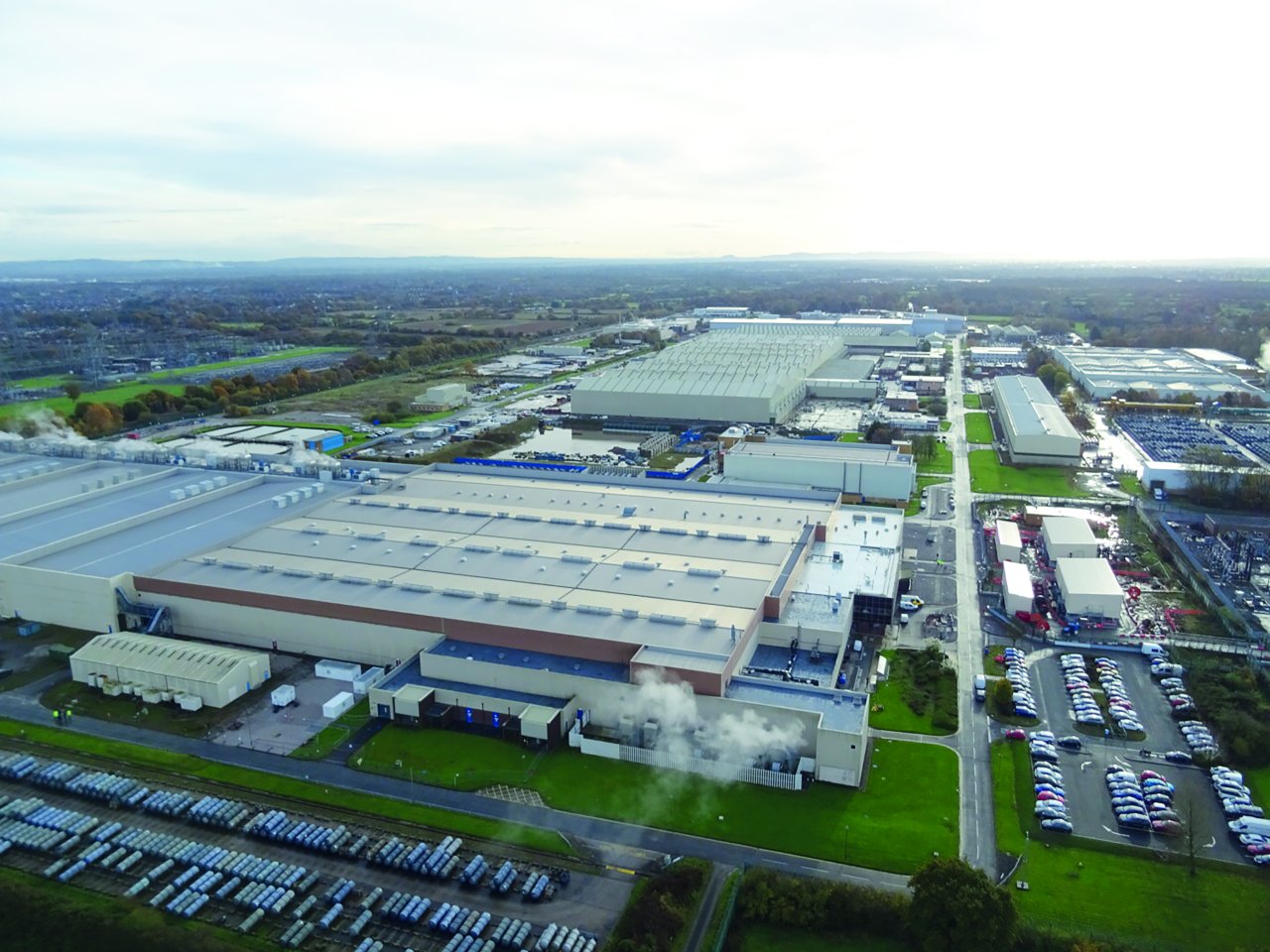
Urenco provides uranium enrichment services and fuel cycle products for nuclear power generation. Operating in a pivotal area of the nuclear fuel supply chain for over 50 years Urenco serves more than 50 customers in 19 countries, facilitating zero carbon electricity generation for consumers around the world. This report investigates the contribution that Urenco’s UK enrichment facility at Capenhurst made to the economy in 2023.
Urenco is a trusted, long-term international supplier of enrichment services and fuel cycle products for the civil nuclear industry. Founded in 1970 by the governments of Germany, the Netherlands, and the United Kingdom, it has uranium enrichment facilities in each of those three countries and the United States.
We estimate that in 2023, Urenco’s operations at its Capenhurst site near Chester, UK, supported a £547 million contribution to gross domestic product and supported 4,575 UK jobs. Over the course of 2023 we estimate that its activities supported £130 million in tax revenues. This is enough to pay the equivalent annual wages of around 4,000 UK nurses.
Urenco Capenhurst also made wider contributions to the UK economy. Firstly, its considerable export presence (71% of Urenco Capenhurst’s turnover in 2023 was generated by exports) helps to support UK jobs, with these sales likely to boost the UK’s ability to exercise soft power. It also helps to boost the productive potential of the UK economy by enhancing the skills of its workforce through training, and running the Richie programme to foster science, engineering, technology, and maths (STEM) careers among young people.
The experts behind the research
Our Industry Consulting team are among the world’s leading analysts of a variety of industrial sectors. They combine their expert insight with our state-of-the-art economic models and tools to answer the crucial questions facing our clients.

Andy Logan
Director of Industry Consulting, Economic Impact

Emily Gladstone
Senior Economist, Industry
Tags:
You might be interested in

Australia’s Infrastructure Outlook: Big Shifts, Bigger Challenges
Australia’s infrastructure landscape is shifting fast, driven by new investment trends, emerging asset classes and growing capacity constraints. This outlook explores the major changes ahead and what industry and government must do to navigate the decade effectively.
Find Out More
Peak tariff impact on industry still to come
In 2026, we anticipate global industrial value-added output to grow just 1.9%, the slowest pace of growth since the global financial crisis.
Find Out More
Roadblocks to China’s chip self-sufficiency dream
China is unlikely to achieve full chip self-sufficiency any time soon because of high technological hurdles in producing advanced manufacturing equipment and materials. The self-sufficiency target now stretches well beyond actual fabrication to include the entire chip supply chain as China struggles to acquire necessary input and machinery into the production process.
Find Out More
European defence spending surge: which sectors will benefit?
Our modelling suggests the main beneficiaries of the spending will be a highly concentrated subset of capital-intensive subsectors, mainly in transport and electronics.
Find Out More