
The socioeconomic impact of second-hand clothes in Africa and the EU27+
Commissioned by Humana People to People and Sympany+
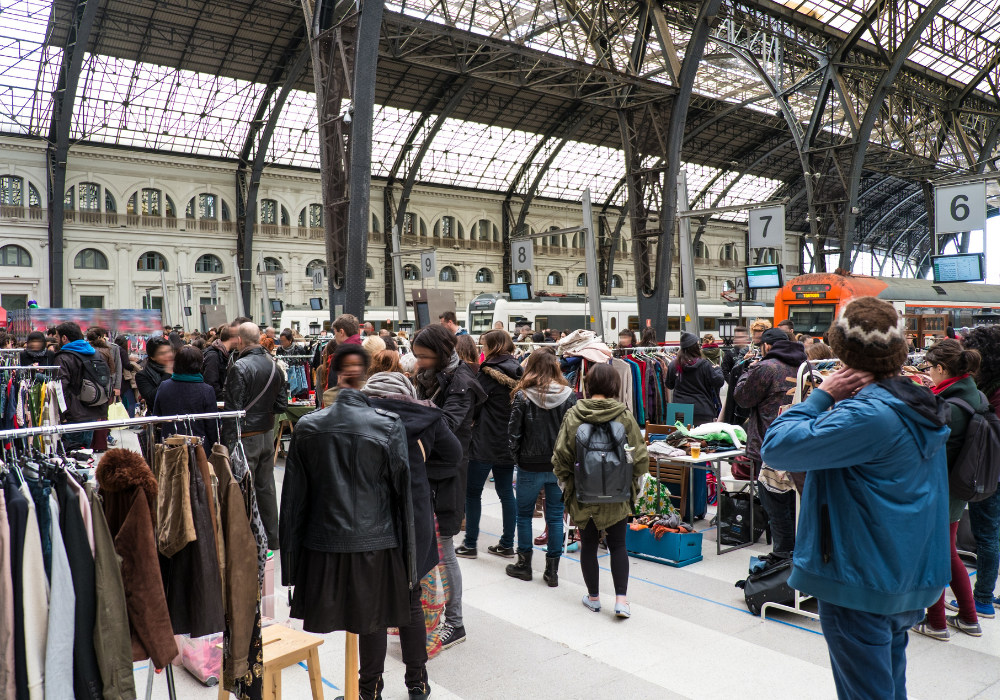
This report, commissioned by Humana People to People and Sympany+, evaluates and quantifies the socioeconomic impact of the second-hand clothing industry in EU27+ countries (the Global North) and three selected African countries: Ghana, Kenya, and Mozambique (Global South).
The link between the second-hand clothing industry and sustainability has been well established. Compared with the production of new clothes, reused clothing has a significantly lower environmental impact in terms of both water consumption and CO2 emissions per item of clothing. Less established, however, is the socioeconomic impact. But in terms of economic value and employment, the industry generates substantial economic activity along its value chain. Although there has already been some research done to evaluate this, our report is unique in scope and is the largest study (to date) to assess the economic impact of the industry across two continents.
For this undertaking, we utilised a tailored and comprehensive multi-method approach, including a literature review, expert interviews, quantitative surveys, trade data analysis, and qualitative fieldwork. Through this, we were able to conduct an in-depth assessment of the entire value chain, from the Global North to the Global South. Following this, we employed our bespoke economic impact model to quantify the three economic impact channels—namely the direct, indirect (supply chain), and induced (wage-financed consumption expenditure) channels—and then evaluated these across both continents.
Ultimately, our research illuminated how the second-hand clothing industry generates significant economic value through green jobs in both continents, supporting economic activity in line with environmental policies.
Moreover, the industry contributes to the UN’s Sustainable Development Goals, for example by supporting the livelihoods of thousands of second-hand clothing traders and by providing affordable clothing options to people around the world.
The experts behind the research
Our Macro Consulting team are world leaders in quantitative economic analysis, working with clients around the globe and across sectors to build models, forecast markets and evaluate interventions using state-of-the art techniques. Lead consultants on this project were:

Johanna Neuhoff
Director of Economic Consulting, Economic Footprint & Sustainability

Sven von Wangenheim
Economist, Economic Footprint & Sustainability

Cobus de Hart
Head: Africa Consulting, Oxford Economics Africa

Marietha Jacobs
Senior Econometrician, Oxford Economics Africa
Tags:
Related reports

US Bifurcated ꟷ Economic backdrop deepens racial disparities
Black and Hispanic households have experienced more inflation than other groups since the reopening of the economy from the pandemic lockdowns. Although there've been many phases of high inflation, some have disproportionately hurt these minority groups, such as the jump in energy prices following Russia's invasion of Ukraine, with the ensuing surge in rental inflation further setting them back.
Find Out More
Commodity Key Themes 2026: Softer oil prices and firmer metals
In this report, we outline five key themes that will shape the global commodity landscape in 2026.
Find Out More
US Tariff Monitor – Going bananas over food prices
The US macroeconomic implications are minor, and the resulting reduction in inflation next year is no more than just a handful of basis points.
Find Out More
The kids aren’t alright – Economic health of Gen Z
Unemployment is rising and wage growth is declining for young adults, which could have a long-term scarring impact. Weak labor market prospects and rising housing costs are causing more young adults to live with their parents.
Find Out More