
Blog | 20 May 2024
To bee or not to bee—a small insect’s place in the world economy

Emilia Rosén
Editorial Assistant
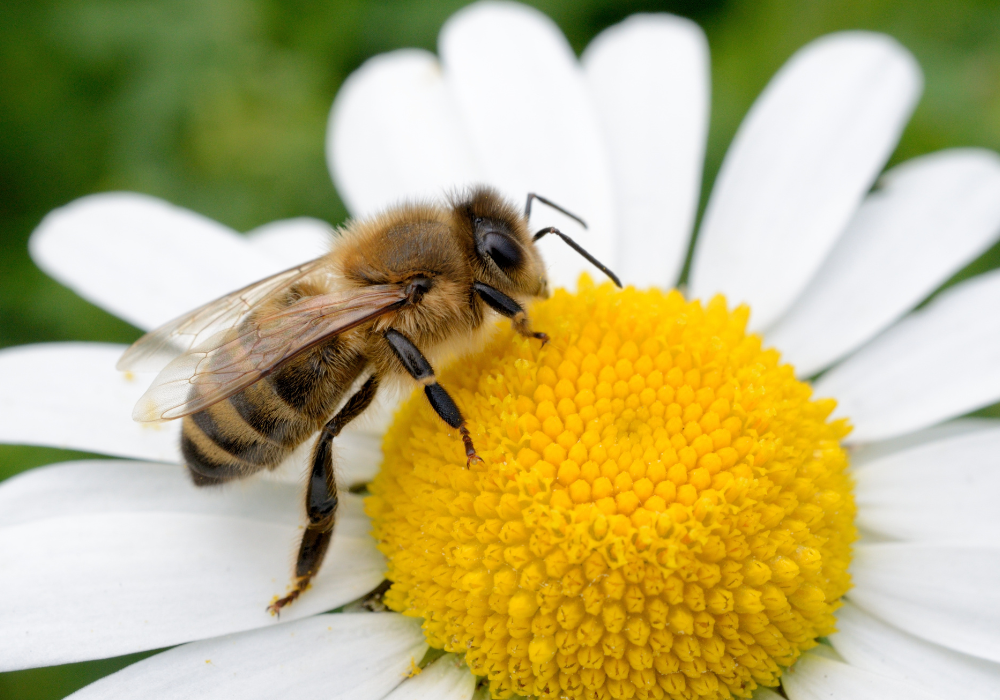
With the flowers blooming after a dreary winter, the spring season is often accompanied by one distinguished guest—bees. Anyone who has previously been stung might be less than thrilled to hear them buzzing around, but with all the flowering plants around it is inevitable that you’ll stumble across one of them… or is it?
In recent years, UK government figures have pointed towards a long-term decline in bee populations, and perhaps more worryingly, a study in the US found a decline in the honey yield per colony due to environmental degradation. Given this concerning evidence, World Bee Day was established by the UN General Assembly in 2017 to highlight the important role bees and other pollinators play in global food production, and how vital it is that we support them.
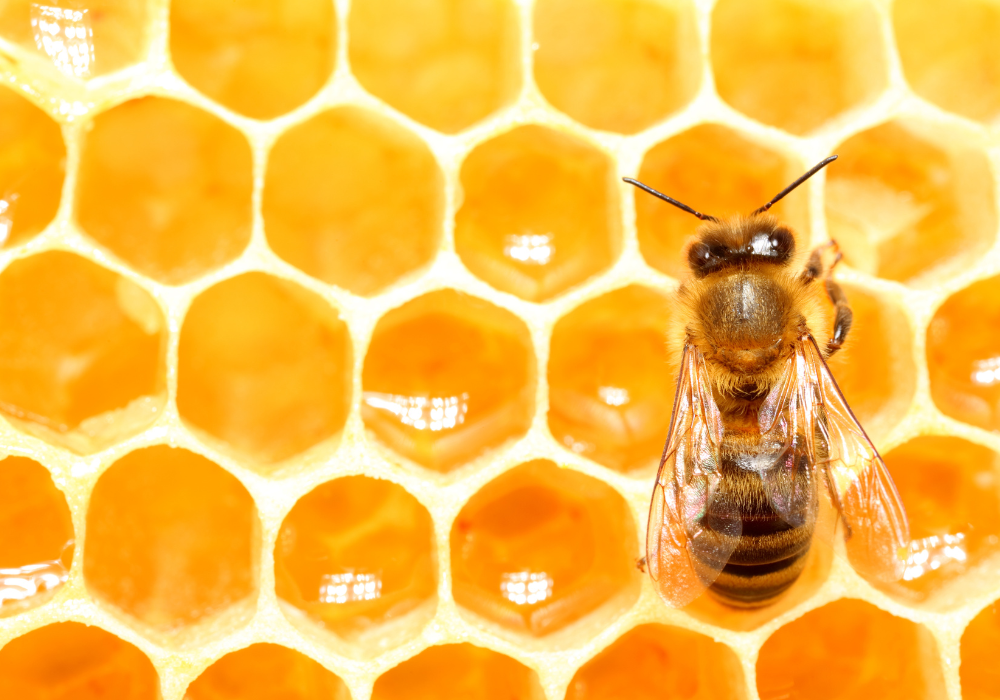
Bees have a fundamental place in our ecosystems and are key to preserving biodiversity. As the WWF estimates, almost 90% of wild flowering plants rely on pollinators for reproduction, whilst another report shows that $235 billion to $577 billion of annual global food production depends on their contribution. Bees impact on the world in significant ways, and often in places one might not expect.
Take beer, for example. Beer is generally made up of four main ingredients—malt, yeast, water, and hops. Although most of these components are self-pollinating or do not require pollination, hops are not; and without bees to fertilise them, we would be forced to drink bland beer (an unimaginable tragedy). As shown in our previous assessment of the beer industry, the beer sector provides substantial indirect economic stimulation, i.e., the economic activity that the sector supports along its supply chain in a myriad of different industries. And without the support of bees, this chink in the chain can have severe knock-on effects.
In the context of beer, a loss of biodiversity from a decline in pollinator populations can impact a whole host of activities. This can range from the outdoor garden where you might sit and enjoy your drink, to the cider your friend is drinking, to the grains in the burger bun you might have for lunch. So, even if the hop plant initially appears to be the only ingredient of beer production directly affected, inevitably, they all feel the sting in one way or another.
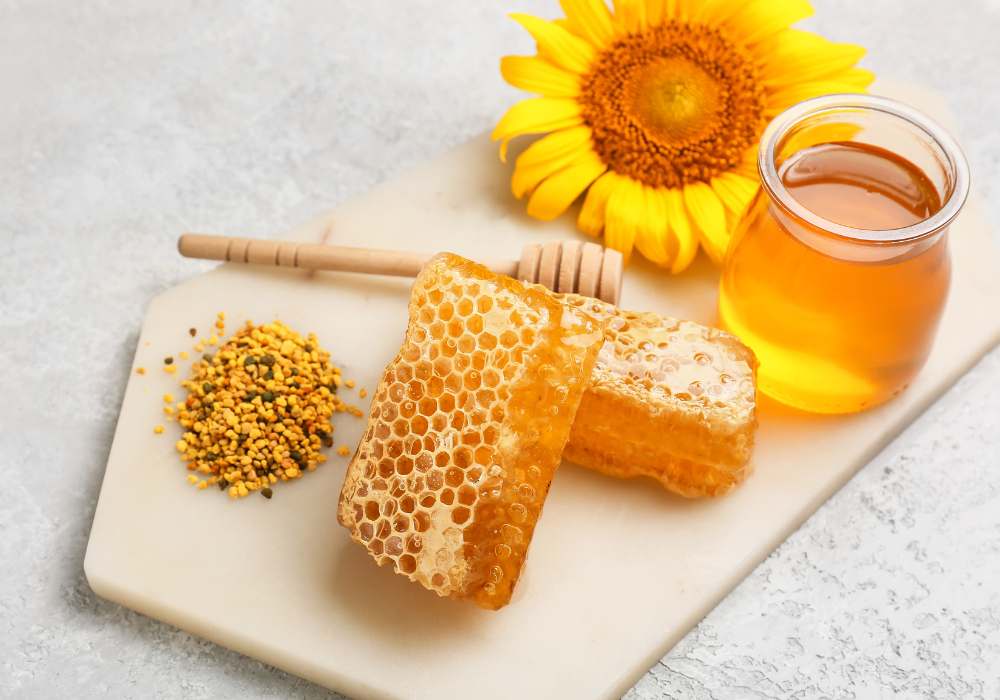
Bees also produce a range of byproducts—such as honey, beeswax, bee pollen, royal jelly, propolis, etc.—that filter out into the economy, with complex value chains of their own. Connecting honey and beer through the creation of honey beer forges yet another link in the chain. And one of the many things that became apparent during the Covid-19 outbreak is that supply chains can be very vulnerable to external influences, including those caused by climate change, flooding, overextraction, deforestation, and a loss of biodiversity; you can also add a substantial decline in pollinators to the list of potential supply chain disruptors. And it’s not just food products, bees also pollinate agricultural commodities that become fuels, fibres, and lubricants for manufacturing.
Preserving biodiversity for the sake of the environment is a noble cause in itself, but the interconnectedness of value chains with nature and the associated risks of disruption demonstrate how it should be a key economic concern. World Bee Day may have been created to find solutions to protect bees, preserve biodiversity, and provide food security, but it can also serve as a day to remind companies to consider how environmental degradation can impact their organisation, such as their dependence on pollinators in their value chains. As un-bee-lievable as it may seem, these little insects can have as big of a role to play in the global economy as they do in the global environment.
Tags:
You may be interested in

Post
Silver, the next generation metal
This report highlights the critical role silver plays in data centres and artificial intelligence (AI), automotive and electric vehicles (EVs), and solar energy photovoltaics (PVs). With these sectors expected to expand significantly over the coming years, we expect future silver demand to be strong.
Find Out More
Post
Key take-aways from COP30
COP 30’s agenda had placed a strong emphasis on countries’ implementation of their emissions reduction target and, for the first time, several workstreams included discussions on unilateral trade policies.
Find Out More
Post
Flooding risks diverge across UK cities, sectors and economies
Climate-linked flooding is becoming more severe, reshaping risks for UK cities, real estate, and local economies. Which areas face the greatest impact—and why?
Find Out MoreTalk to us
S-MAP is a platform that harnesses the power of Oxford Economics’ macroeconomic models, tools and forward-looking analysis, our deep sustainability knowledge and our consulting and advisory capabilities. We help you fulfil your impact reporting and financial disclosure requirements, manage and mitigate risks and identify opportunities, and achieve your sustainability aspirations,
For a demo and to discuss how S-MAP can help you, complete the form.