
Global city travel: 2019 to 2025
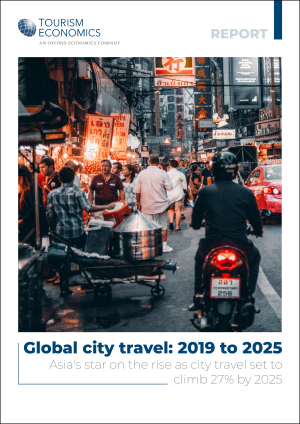
Cities are a dynamic driver of global travel, both as destinations and as origin markets since cities house a greater concentration of people with high enough income to enjoy international travel.
630 million international visitors are expected in 2019 in the top 300 cities worldwide; an additional 28 million compared to 2018. These cities will account for almost 50% of global international visitor arrivals in 2019, while being home to just under 20% of the global population.
Large Asian cities are among the most visited, as the region houses seven out of the top ten city destinations. Bangkok, Hong Kong, and Macau are the three largest global destinations.
The top 25 destinations for international visitor arrivals in 2019 account for 19% of global visitor arrivals. These top cities contain a mix of established destinations as well as fast-growing destinations.
By 2025 an additional 173 million international travelers are expected to visit the top 300 cities around the world – an increase of 27% over 2019 volumes.
More than 300 leading companies, associations, and destinations work with Tourism Economics every year as a research partner. We bring decades of experience to every engagement to help our clients make better marketing, investment, and policy decisions.
To find out more about our capabilities, contact:
EMEA
Eva Satkute
+44 (0)203 910 8000
Email