
Blog | 31 Mar 2023
Africa risks squandering its critical mineral opportunity

Gerrit van Rooyen
Economist & Editor
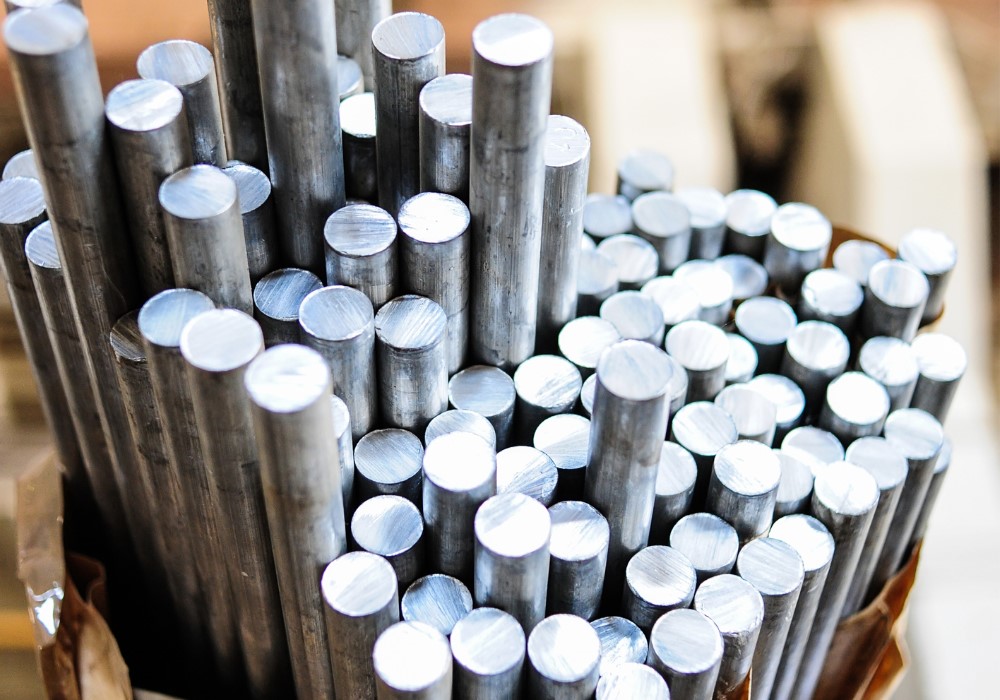
There is a scramble for African critical minerals amid the “New Cold War” brewing between the US and China. This presents several African countries with the opportunity to become major players in the global critical mineral value chain as Western powers try to break China’s monopoly in the mining and processing of these minerals.
Critical minerals those deemed essential to a country’s economic development or national security, have no viable substitutes, and are vulnerable to supply chain disruption. Countries have different definitions for critical minerals, depending on their needs. The US currently considers these 50 minerals critical.
The World Bank estimates that the production of certain critical minerals—such as graphite, lithium, and cobalt—could increase six-fold by 2050 to meet the growing demand for clean energy technologies. However, this massive opportunity for Africa could be hampered due to the continent’s leaders holding grudges against former colonial nations, and not recognising that swift reforms are needed to counter competitors.
Africa is no stranger to foreign powers competing to exploit the continent’s minerals for strategic purposes. This time around, however, Africa wants a bigger share of the spoils by taking part in the beneficiation process, not simply being a cheap producer of raw materials.
Western countries are more than receptive to this desire as this would help to diversify global supply chains. However, many African countries remain sympathetic to Russia and China, or are looking to pit the Western and Eastern powers against each other to score the most lucrative deals. This is exemplified by the large number of African countries that abstained from voting for the UN resolution to end the Russian war in Ukraine.
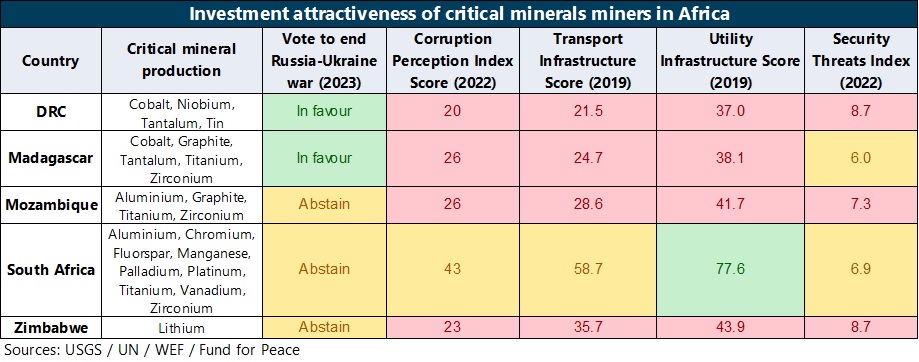
Other hurdles facing Western countries trying to expand their critical minerals portfolio into Africa include myriad well-known development issues: widespread corruption, infrastructural deficiencies, security risks, and a shortage of high-skilled labour.
Speakers at this year’s Investing in African Mining Indaba highlighted that persistently high levels of corruption and cronyism are the biggest obstacles to mining investment in Africa. The challenge to establish critical mineral processing and manufacturing capacity will be formidable given the necessary skills and infrastructure. Building batteries, for instance, is far from easy—it requires cheap and reliable electricity as well as experienced engineers and rigorous quality controls.
Tanzania’s first president, Julius Nyerere, famously said, “Africa must run while others walk” in reference to the pace of development Africa needs to compete with more advanced economies. Indeed, Africa will face stiff competition from the likes of Australia, Canada, Indonesia, Chile, Argentina, and Brazil, which all have significant critical mineral reserves and plan to boost their refinery and battery-building capacities. The South American nations recently announced plans to coordinate actions to enable the local beneficiation of its regional lithium resources.
Similarly, African countries should collaborate to create regional critical mineral processing and manufacturing hubs, which would help nations to pool financial resources, share data and skills, and spread risks. Encouragingly, Zambia and the Democratic Republic of Congo (DRC) took the first step in this direction in April 2022 by signing a cooperation agreement to facilitate the development of a battery value chain. The implementation of the Africa Continental Free Trade Agreement should also help to break trade barriers and could serve as a platform for leaders to engage in discussions to build critical mineral processing hubs.
Author
Gerrit van Rooyen
Economist & Editor
Gerrit van Rooyen
Economist & Editor
Paarl, South Africa
Gerrit van Rooyen has led the analysis of country risks and macroeconomic forecasts for several sub-Saharan African countries at Oxford Economics Africa for more than eight years. The countries he has covered includes South Africa, Namibia, Botswana, Mauritius, Mozambique, Angola, Sao Tome and Principe, and Cape Verde. Gerrit has postgraduate degrees in Financial Economics and Journalism from the University of Stellenbosch and worked as a financial journalist at Media24 for nearly three years before joining Oxford Economics Africa. He was named Business Journalist of the Year at the 2015 Media24 Legends Awards and was also the overall winner of the 2022 Focus Economics Analyst Award for Angola, beating other top macroeconomic forecasters, such as Fitch Solutions, EIU, and JP Morgan.
Tags:
You may be interested in

Post
The Green Leap: More promises but little innovation at COP30
The COP30 in November made some ambitious commitments to scaling up climate finance. Until those materialise, initiatives to leverage natural endowments for financing may be more attractive to African countries, especially those with high forest cover.
Find Out More
Post
The Green Leap: Unlocking climate financing at COP30 for Africa
The scaling of climate finance for developing countries will take centre stage at the 30th Conference of the Parties (COP30) of the UN Framework Convention on Climate Change (UNFCCC) starting today, in Brazil. Leaders will grapple with how to plug the gaping shortfall in funds needed to help developing economies curb emissions and adapt to climate shocks. Reforming the global financial architecture will be a key discussion.
Find Out More
Post
Continental oil kings missing out on evolving oil dynamics
Uncertainty around global growth has widened the range of possible outcomes for oil consumption. While demand growth currently lags behind supply, stronger-than-expected trade or industrial activity could lift demand above projections. This brief explores whether Nigeria and Algeria are positioned to take advantage of such an upside.
Find Out More