






Businesses see tighter policy as the greatest economic risk
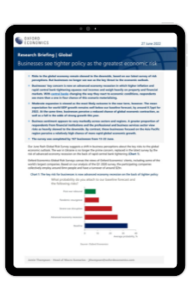
Risks to the global economy remain skewed to the downside, based on our latest survey of risk perceptions. But businesses no longer see war as the key threat to the economic outlook.
Businesses’ key concern is now an advanced economy recession in which higher inflation and rapid central bank tightening squeeze real incomes and weigh heavily on property and financial markets. With central banks changing the way they react to economic conditions, respondents see more than a one in four chance of this scenario materialising.
Moderate expansion is viewed as the most likely outcome in the near term, however. The mean expectation for world GDP growth remains well below our baseline forecast, by around 0.7ppt for 2022. At the same time, businesses perceive a reduced chance of global economic contraction, as well as a fall in the odds of strong growth this year.
Business sentiment appears to vary markedly across sectors and regions. A greater proportion of respondents from financial institutions and the professional and business services sector view risks as heavily skewed to the downside. By contrast, those businesses focused on the Asia Pacific region perceive a relatively high chance of more rapid global economic growth.
The survey was completed by 167 businesses from 13-22 June
Businesses see tighter policy as the greatest economic risk
Risks to the global economy remain skewed to the downside, based on our latest survey of risk perceptions. But businesses no longer see war as the key threat to the economic outlook.
Businesses’ key concern is now an advanced economy recession in which higher inflation and rapid central bank tightening squeeze real incomes and weigh heavily on property and financial markets. With central banks changing the way they react to economic conditions, respondents see more than a one in four chance of this scenario materialising.
Moderate expansion is viewed as the most likely outcome in the near term, however. The mean expectation for world GDP growth remains well below our baseline forecast, by around 0.7ppt for 2022. At the same time, businesses perceive a reduced chance of global economic contraction, as well as a fall in the odds of strong growth this year.
Business sentiment appears to vary markedly across sectors and regions. A greater proportion of respondents from financial institutions and the professional and business services sector view risks as heavily skewed to the downside. By contrast, those businesses focused on the Asia Pacific region perceive a relatively high chance of more rapid global economic growth.
The survey was completed by 167 businesses from 13-22 June





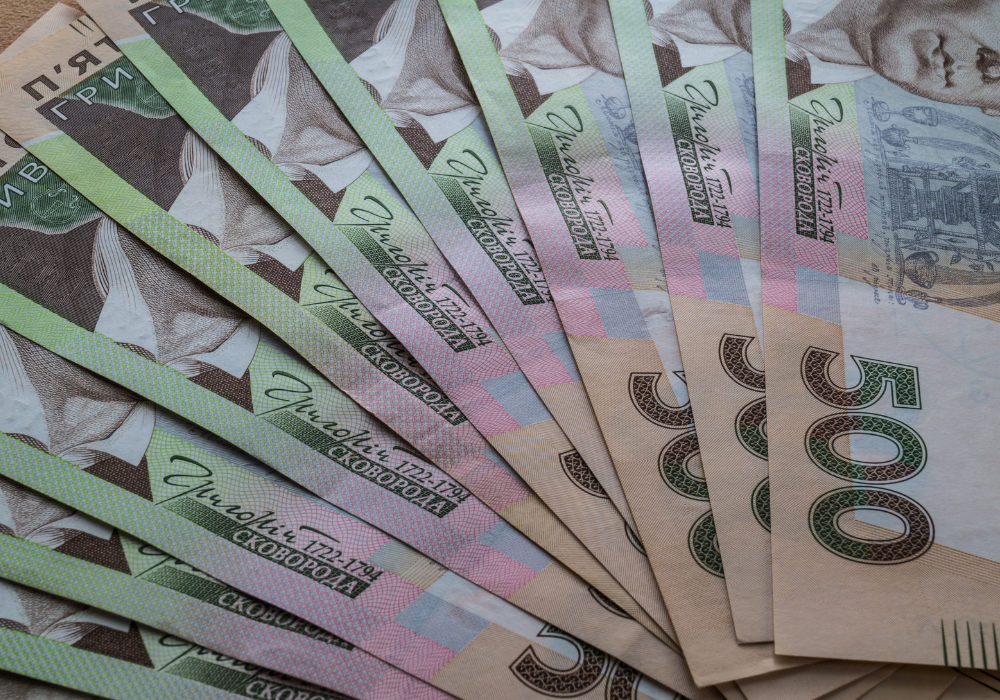
 According to early estimates, Ukraine’s GDP experienced a 40%-45% contraction in March in the wake of Russia’s invasion. In our view, the prompt response from Ukraine’s monetary and fiscal authorities, along with stronger fundamentals compared to the 2014-2015 crisis, helped cushion the blow from Russia’s invasion and likely prevented an even deeper economic drop.

 The implementation of Marine Le Pen’s main economic proposals would drag on France’s medium-term growth prospects, according to our analysis. We estimate Le Pen’s measures would drag potential GDP 3% lower than our baseline by 2027, and public debt would soar to 120% of GDP. The labour market would also suffer, with the unemployment rate rising above 9%.

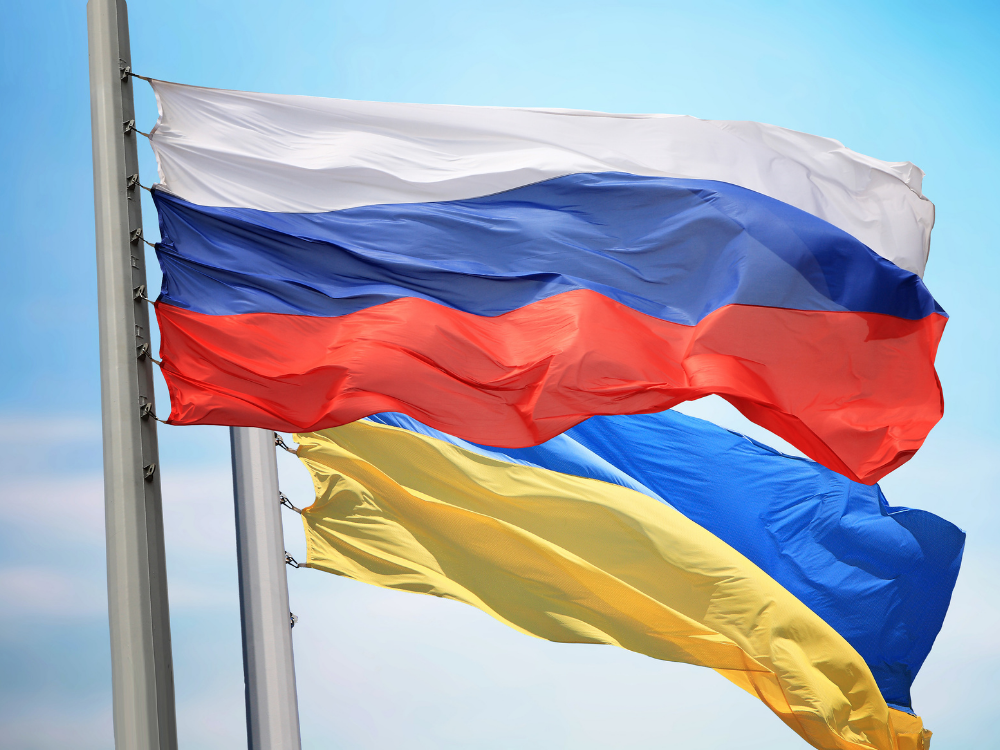
 President Putin’s threat to halt gas supplies from “unfriendly” states if they don’t switch to roubles is not as important as it seems. Russia has backed down on some of its demands following a backlash from the EU countries.

