
Cashing in on Africa’s critical copper
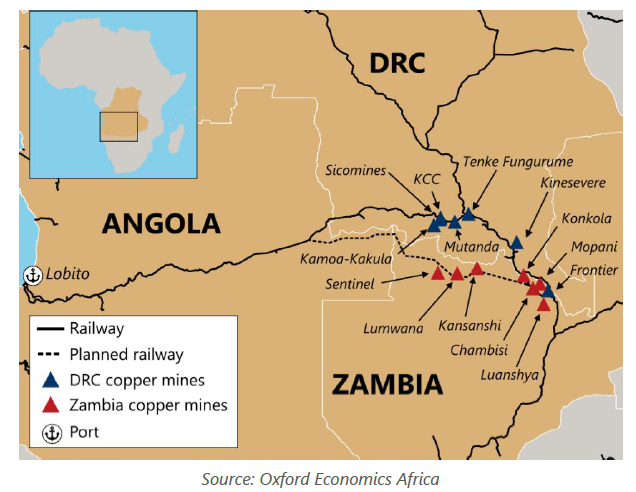
Africa’s copper production is concentrated in the Central African Copperbelt, shared between the DRC and Zambia, and is the world’s second-most-productive copper region. After a decadeslong production slump, the DRC has become the second-largest copper producer globally, supported by Chinese investment. Although copper production in Zambia has recovered more modestly, it remains below its past peaks. Copper prices have recently soared to all-time highs, with Zambia and the DRC reaping the greatest benefit.
Our outlook for copper prices remains broadly positive due to rising demand and limited supply.
While speculative flows and a weaker dollar have partly driven the recent price surge, the longterm
demand prospects remain robust. Structural shifts in the global economy, such as booming
AI investments and the renewable energy transition, are bolstering copper’s importance.
Zambia and the DRC are already gaining from higher copper prices: elevated prices have
strengthened their currencies, lowered inflation, increased reserves, and prompted policy rate
cuts. Moreover, rising copper prices should support private mining investment in both countries,
thereby improving the outlook for copper production.
The benefits of higher copper prices extend beyond Central Africa: by making copper production
more viable, development in the Kalahari Copper Belt should accelerate, helping to offset the
impact of the diamond industry downturn on Namibia and Botswana.
Intensifying competition among global powers for access to critical minerals and AI supply
chains should boost copper production in Africa. Greater US engagement, such as Glencore’s
stake sale, security deals, expanded geological data and exploration efforts, and funding for the
Lobito Corridor, highlights the region’s strategic importance to the global economy.
Africa’s copper production is dominated by the Central African Copperbelt