


A protracted yet shallow recession in Finland lies ahead
 We expect a shallow but protracted recession in Finland from Q3 this year to Q1 2023, with a contraction of just over 1% from peak to trough. While Q2 growth proved resilient, pushing up our forecast for 2022 to 2.2%, the near-term outlook is bleak. High inflation is seeping into core prices, squeezing real incomes and denting confidence, while the ECB hikes rates. We see growth of 2.3% in 2022 and 0% in 2023, although there’s great uncertainty around the outlook.
A protracted yet shallow recession in Finland lies ahead
We expect a shallow but protracted recession in Finland from Q3 this year to Q1 2023, with a contraction of just over 1% from peak to trough. While Q2 growth proved resilient, pushing up our forecast for 2022 to 2.2%, the near-term outlook is bleak. High inflation is seeping into core prices, squeezing real incomes and denting confidence, while the ECB hikes rates. We see growth of 2.3% in 2022 and 0% in 2023, although there’s great uncertainty around the outlook.

 Upward revisions to recent quarters have pushed up our Sweden growth forecast for 2022 to 3%. That said, we expect the economy to stall in Q3 and contract by around 0.5% from peak to trough by Q1 2023. Inflation continues to rise, the housing market is undergoing a major correction, consumer confidence is at record lows, and business surveys point to weakening momentum. We expect growth of just 0.9% in 2023, down from 1.4% last month.

 Ukraine’s successful counteroffensive in Kharkiv in the north-east of the country has stoked hopes of a Ukraine victory and perhaps even regime-change in Russia, with global markets rallying on the news. But we think prospects of a speedy resolution to the conflict, or even a ceasefire, are remote.

 We now expect Denmark to enter a shallow recession in Q3 this year, ending in Q1 2023, due to rising energy costs, exhausted reopening tailwinds, and tightening financial conditions. We have cut our GDP growth forecasts by 1.2ppts to 2.3% in 2022 and by 0.7ppts to 0.5% in 2023. Beyond 2023, it will take several years for GDP to return to our previous baseline.

 Although the risk of hard energy rationing has diminished, demand destruction triggered by the surge in energy prices has led us to cut our eurozone baseline forecast to a recession during the winter. Surging gas and electricity prices will hit consumer incomes and spending and industrial activity harder and prompt a stronger policy tightening response by the ECB. As a result, we now see GDP growth at 0% in 2023 (from a previous 0.9% expansion).

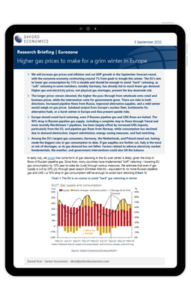 We will increase gas prices and inflation and cut GDP growth in the September forecast round, with the eurozone economy contracting around 1% from peak to trough this winter. The EU’s aim to lower gas consumption by 15% is doable and should be enough to avoid “hard” rationing, as “soft” rationing in some members, notably Germany, has already led to much lower gas demand. Higher gas and electricity prices, not physical gas shortages, present the key downside risk.

 We have long been expecting a dovish pivot from the ECB at the turn of the year as supply-driven core inflation begins to ease quickly. The recent additional surge in gas prices, turmoil on the wholesale electricity market, the ECB’s unwavering focus on inflation and increasing recessionary signals have added risks to either side of our call. But, overall, they suggest the risks have shifted clearly towards a more delayed pivot and a more frontloaded intervention by the ECB.

 The minutes from the July ECB meeting, when the bank ended the period of the negative interest rates in the eurozone, indicate that the Governing Council was in broad agreement that inflation risks – both near- and medium-term – have strengthened, with upside risks “clearly dominant” in the near term. This, coupled with the hawkish tilt of the council and its willingness to reaffirm the commitment to price stability, resulted in the decision to hike more strongly than preannounced.


 We have cut our 2023 GDP growth forecast for Finland by 0.3ppts to 0.5%. Although growth in Q2 remained resilient based on the flash estimate, pushing up our forecast for 2022 to 2.2%, the near-term outlook remains dominated by headwinds. High inflation is increasingly passing through to core prices, squeezing real incomes and denting confidence.

 We have increased our 2022 GDP growth forecast for Sweden by 0.4ppts to 2.4%, as growth in Q2 surprised on the upside. However, the outlook is dominated by headwinds, including an adverse mix of lower real incomes due to high inflation and monetary policy tightening, which increases debt servicing costs and weighs on asset prices.
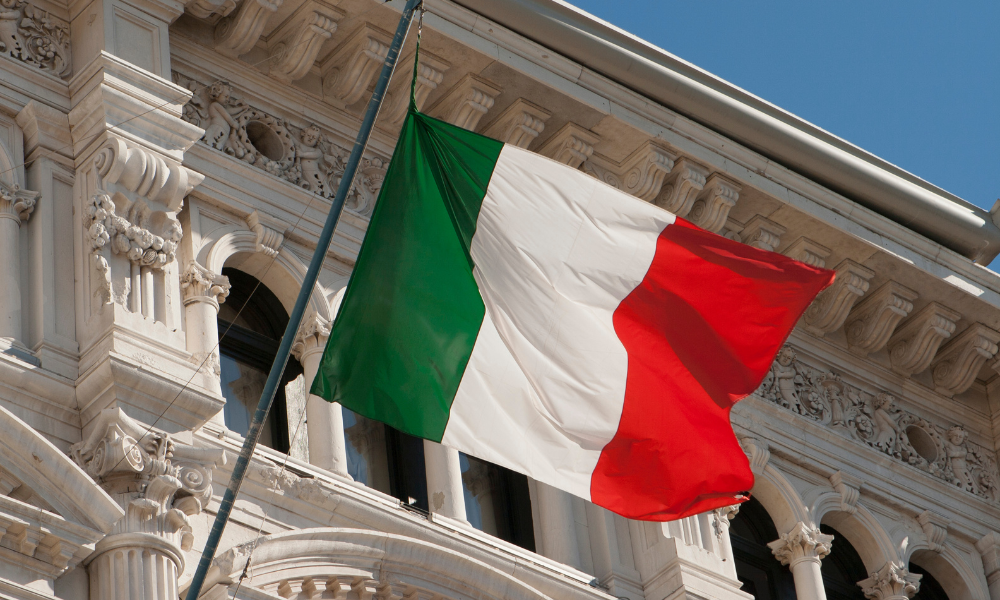
 A right-wing coalition government is expected to win in the upcoming Italian elections in September. Although “euroexit” is now very unlikely, there are still some looming risks that could arise from such a government. It is not yet clear if a right-wing government will maintain a constructive approach with the EU, both in relation to the upcoming fiscal consolidation and the Recovery and Resolution Facility (RRF), of which Italy will be the main beneficiary.

 The Danish economy surprised to the upside in Q2, expanding by 0.7% q/q. This showing raised our 2022 GDP growth forecast 0.4ppts, to 3.5%. Inflation is taking a toll on goods spending, but spending on services likely rebounded strongly in Q2, supporting consumption. Nevertheless, our view of the outlook remains unchanged: We see growth flatlining in H2, before easing inflation and a pause in ECB hikes support a pickup in activity over 2023.




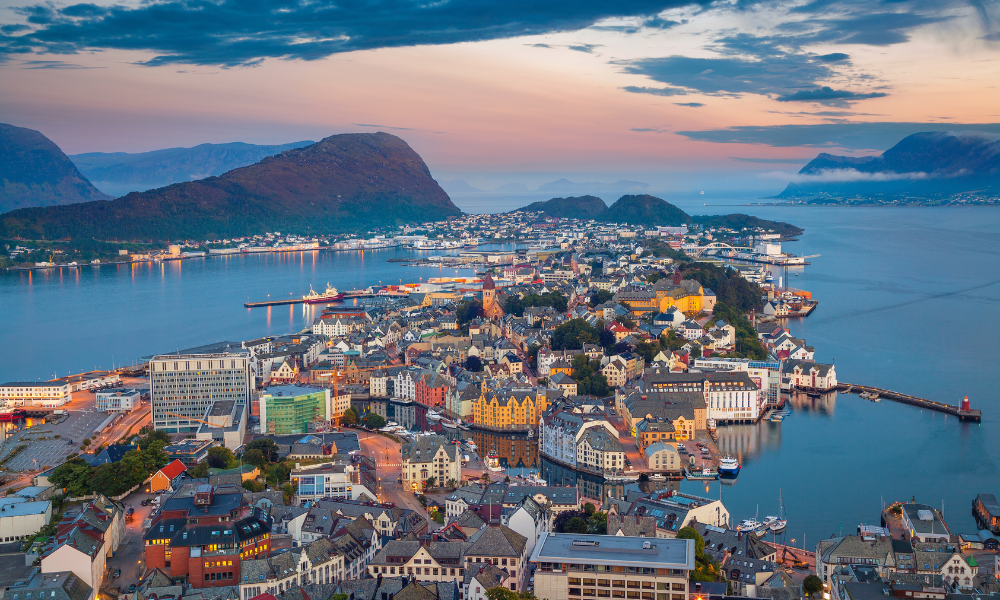



 A switch to electric vehicles (EVs) is vital if cities are to achieve net zero carbon emissions. In Europe the take-up of EVs currently varies hugely across cities, indicating that making the change is likely to be much harder for some than for others. Explanations include the degree of reliance on private versus public transport and differences in household income levels. Capital cities tend to do well: they have the scale, the density, the incomes, and perhaps also the necessary political will.
