OE Logo
Ungated Post|19 October 2020

Chart of the week: Eurozone: OE real neutral rate estimates

Innes McFee
Innes McFee
CEO
Chart of the week: Eurozone: OE real neutral rate estimates

According to our new overlapping generations model, the Eurozone is stuck in secular stagnation leaving the ECB unable to hit the 2% inflation target in the foreseeable future. We find that secular demographic forces have been key to driving down real neutral interest rates. Based on our research, they hit -2% in 2018 and without a sharp increase in public debt levels or a major shift in demographics, they are likely to remain negative.

Read more

Blog|18 October 2020

(Video) AI, Acceleration: The Great Shift to Artificial Intelligence and Automation

(Video) AI, Acceleration: The Great Shift to Artificial Intelligence and Automation

NTT DATA and Oxford Economics conducted a survey of 1,000 respondents in the US and Canada about their AI strategies. The data points to essential next steps on the AI journey as companies respond to a new business environment, and identifies where early leaders are seeing returns on their investments.

Read more

Blog|16 October 2020

US Recovery Tracker rises hesitantly in early October

US Recovery Tracker rises hesitantly in early October

While the US Recovery Tracker posted its strongest gain in six weeks, rising 1ppt to 82.1 in the week ended Oct 2, it merely regained its level from two weeks prior. Five of the tracker’s six subcomponents improved, led by strong gains in employment and production. The modest rise in health conditions was an anomaly, as daily Covid-19 infections are rising again. Demand remained hesitant in early October and prone to relapse with colder weather approaching.

With the prospects of an immediate fiscal relief package dimming, the risk is growing that declining income and reduced savings buffers will constrain household spending in coming months, especially among the most vulnerable tranches of the population. The upcoming elections carry upside and downside risks for the economy, but a lapse in income support until 2021 would leave the US consumer quite exposed during the fall and early winter.

Read more

Joe Biden will become the 46th president of the United States. But, with Republicans likely to retain control of the Senate, Biden will find enacting his major tax and spending proposals difficult. Increased policy certainty, trade multilateralism and a pro-immigration stance should generally benefit the economy, but they are unlikely to drastically change the growth trajectory.

This paper, the third in our series, examines the impact of the coronavirus pandemic on the food sector in Asia, looked at the potential fiscal risks to the sector arising as a result of the pandemic.

Ungated Post|13 October 2020

Food & Kindness: The Sobell House Cook Book

Food & Kindness: The Sobell House Cook Book

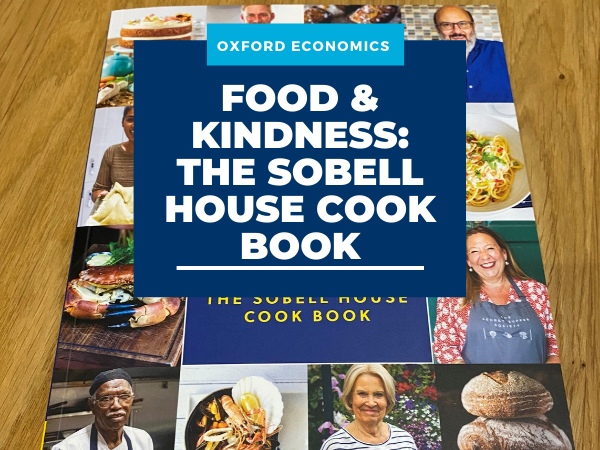
We are excited to have received our copy of Food & Kindness: The Sobell House Cook Book. We have sponsored this inspiring recipe book to support all the great work that Sobell House does.

cookbookThis book raises awareness and funds for their hospice as well as empowering the local food and drinks businesses of Oxfordshire, which have been impacted by the coronavirus pandemic.

You can expect to find 30 recipes and stories catering to all tastes and diets. You’ll come across recipes from local chefs and restaurants, as well as celebrities such as Stephen Fry, Mel Giedroyc and Sue Perkins.

Click here to find out more.

Read more

Ungated Post|25 September 2020

US Recovery Tracker slows to a crawl

US Recovery Tracker slows to a crawl

Our US Recovery Tracker rose only 0.2ppts to 81.3 in the week ended Sept 11. Again fostering much of the gain was an improving public health situation, while a rise in employment and financial conditions was partially offset by a relapse in mobility, demand, and production.

Despite relatively encouraging news on the health front, the deterioration in demand and mobility post-Labor Day and ongoing softness in production are concerning. With colder weather arriving and the school year starting, restaurant and hotel activity is once again slowing. And while consumers are using their savings from unemployment payments and one-time checks to finance their outlays, the situation isn’t sustainable over time without stronger gains in employment. 

Read more

Oxford Economics and SHRM conducted surveys of senior executives and HR managers to understand the state of paid leave in the United States. This report includes an overview of paid leave offerings and usage, insights into the motivations of employers considering various paid leave policies, and perceptions about the value and cost of providing these benefits.

Public service music radio supports over 50,000 jobs across 48 European countries, taking direct, supply chain and wage-funded spending impacts into account.

NKC African Economics’ and Control Risks’ Africa experts are pleased to present the fifth edition of the Africa Risk-Reward Index. The index captures the evolution of the investment environment and risk landscape in major African markets.

The latest update of The State of the Nation provides up-to-date evidence and analysis of the UK’s family business sector, a crucial component of the UK economy that in 2018 employed 14.2 million people, contributed £657 billion to UK GDP, and paid £196 billion in taxes.

Ungated Post|4 September 2020

Chart of the week: What the next decade of slower globalization will bring

Innes McFee
Innes McFee
CEO
Chart of the week: What the next decade of slower globalization will bring

We spelt out our view on the future of globalisation this week. We don’t expect globalization to go into reverse, but we do think it will continue to proceed much less briskly than in 1990-2010, implying further downward pressure on growth. This is partly a natural outcome of rapid growth in some EMs, internalization of the environmental impact of transport, a shift of production closer to markets, and labour-saving technological progress. But it also reflects policies that erect barriers to trade and investment, such as tariffs in the US-China trade war..

Read more

Oxford Economics worked with Accenture to survey 7,800 consumers around the world about their use of digital healthcare tools and services, then used the pre-crisis data to understand how forced adoption of virtual care can be maintained following the COVID-19 pandemic.

Ungated Post|28 August 2020

US Recovery Tracker builds some momentum in mid-August

US Recovery Tracker builds some momentum in mid-August

Our Recovery Tracker rose 1.1ppt for a second consecutive week, reaching 79.1 in the week ended Aug 14. Growth in four of the six dimensions points to relative resilience. But given the fiscal aid impasse, the unchanged demand tracker since the end of July and weakening employment gains are worrisome.

Five months into the coronavirus crisis, some sectors have made significant progress but are struggling to regain their pre-Covid luster. While the expiry of the federal top-up to jobless benefits hasn’t led to a sharp fallback in spending, the stalling recovery is an important risk at this stage in the recession. Further, the rebound could adopt a K-shape with those fortunate enough to be able to work remotely and benefit from stock market gains still spending, and those dependent on further fiscal aid experiencing severe income difficulties.

Read more

This paper, the second in our series of three examining the impact of the coronavirus pandemic on the food sector in Asia, looked at the potential fiscal risks to the sector arising as a result of the pandemic.

The Global business pulse is the first index to track the health of mid-sized companies at a global, regional, country and sector level.

Ungated Post|14 August 2020

Chart of the week: US: Total trade under different scenarios

Innes McFee
Innes McFee
CEO
Chart of the week: US: Total trade under different scenarios

Trade is already one of the hardest-hit US sectors in the coronavirus crisis and faces major risks depending on the path of the pandemic in our GSS scenarios. While an escalation in tariffs would have a noticeable impact on GDP, trade would be hurt much worse. If markets react sharply to the new tariffs, with equities retracing March lows, trade activity could see its recovery delayed by almost two years, and the impact would persist well into the medium term.

Read more

Ungated Post|14 August 2020

US Recovery Tracker shows stalled progress nationwide

US Recovery Tracker shows stalled progress nationwide

High-frequency indicators signal the recovery is stuck in a lull.

  • Our US Recovery Tracker fell 0.2ppts to 76.2 in the week ended July 31. Declines in demand, health, and mobility outweighed modest improvements in financial markets, production, and employment. The sugar rush from reopenings has clearly faded, with the tracker having fallen five times in the past eight weeks. It’s evident the economy won’t make further real inroads toward recovery until a medical solution to the pandemic is found.
  • Executive orders issued by President Trump earlier this week fall short of providing meaningful support to the economy. The lack of funding for small businesses, state and local governments, and necessary health measures will minimize chances of a sustained rebound in our tracker. Without a substantial fiscal package, the virus will continue to depress economic activity, and significant downside risks will persist.

Read more

Global trade in services to increase by $2 trillion over the next five years, according to new report by Western Union and Oxford Economics.

Ungated Post|7 August 2020

Chart of the week: Why ending the easing cycle in Brazil now would be a mistake

Innes McFee
Innes McFee
CEO
Chart of the week: Why ending the easing cycle in Brazil now would be a mistake

This week the Banco Central do Brasil (BCB) lowered the Selic rate to 2.00%. Although our baseline scenario is for further rate cuts in the coming months, our Taylor rule suggests that rates should go even lower, between zero and 1%. We continue to believe the BCB will eventually be forced to cut rates again in the coming months and it won’t need to hike by as much as markets currently price in.

Read more