ETF sales support the Bank of Japan’s balance sheet and fiscal financing
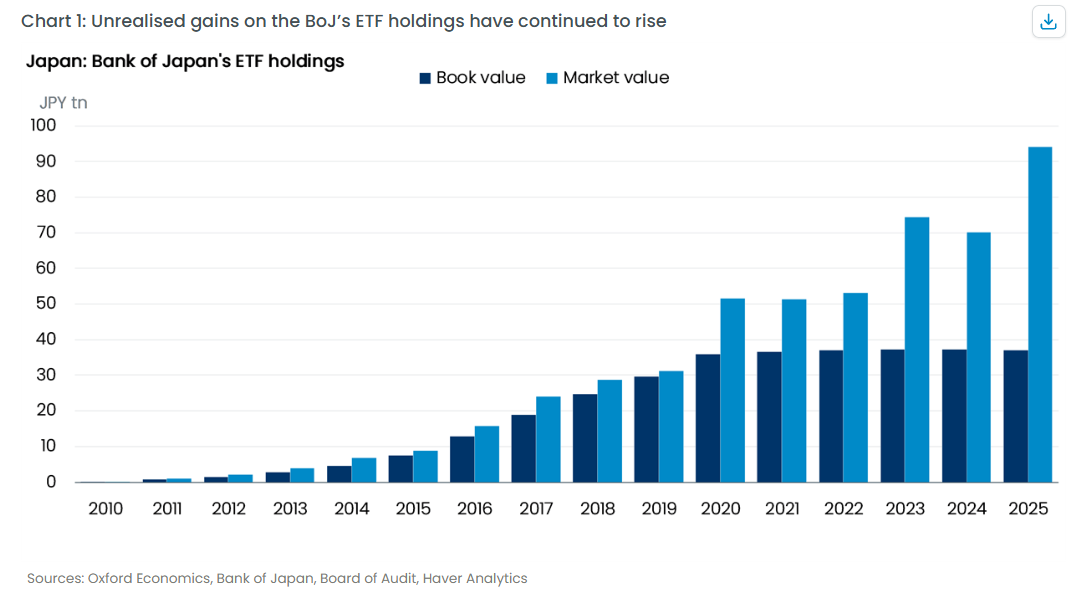
The Bank of Japan (BoJ) announced on October 30 that it will increase the pace at which it’s selling its holdings of exchange-traded funds (ETFs) on the open market. The additional revenue from capital gains will mitigate the rising financial cost of rate hikes for the BoJ, but also make the government increasingly reliant on the sales as fiscal revenue, inviting the risk of political interference.
As rate hikes increase interest payments on current accounts, dividends and capital gains from the ETF holdings play an increasingly crucial role in maintaining the BoJ’s surplus, allowing it to continue rate hikes without weakening its balance sheet. According to an estimate by a private research firm, the BoJ would post an operating deficit of JPY1.3tn in FY2026 without the ETF-related revenue of JPY2.7tn.
The government, which needs to find alternative revenue sources of JPY15tn-JPY20tn, plans to incorporate the proceeds from the ETF sales into its fiscal plan. Payments from the BoJ to the national treasury have been about JPY1tn-JPY2tn in recent years – faster sales could provide additional revenue of JPY1tn per year.
We think the BoJ will accelerate the pace of its ETF sales gradually in the coming years, careful not to disrupt equity markets. As the government’s reliance on the BoJ’s revenue from its ETF sales grows, the bank could come under political pressure to increase its profits.