



Data centres are emerging as one of the largest sources of construction investment in Australia. Demand for cloud computing has been growing for more than a decade, but the rapid adoption of AI has pushed the sector into a new phase.
Data centres are emerging as one of the largest sources of construction investment in Australia. Demand for cloud computing has been growing for more than a decade, but the rapid adoption of AI has pushed the sector into a new phase.

Oxford Economics forecasts data-centre investment in Australia will jump from under $10 billion per annum in 2025 to over $60 billion by 2030.

Oxford Economics Australia worked with Chartered Accountants Australia and New Zealand to assess the accounting profession’s economic contribution, workforce outlook and future skills needs.

Australia’s food and grocery manufacturing sector employs nearly 300,000 people and plays a critical role in the nation’s food supply chains and productive capacity.

This report presents Oxford Economics Australia’s and the Australian Energy Market Operator’s joint forecasts of electricity consumption by data centres in Australia.

Join our webinar to explore the outlook for Australia’s living sectors, including build-to-rent, land lease communities and purpose-built student accommodation, as institutional investment and new supply continue to grow.

Our client, KBR Australia, sought to quantify the economic contribution of its operations across Australia, including its impact on GDP, employment and tax revenue, as well as its wider contribution through skills development and support for SMEs.

This report explores the growing role of AI in energy systems, examining how data-driven AI, cloud computing and evolving market conditions are reshaping energy supply and demand.

RESEARCH BRIEFING Better-than-expected inflation figures ease pressure on RBA in Australia

Australia’s construction sector is shifting gears. Data centres and non-residential investment are stepping up as engines of growth while engineering firms pivot from transport megaprojects toward the infrastructure of the energy transition. Beneath these shifts, the sector continues to grapple with capacity constraints, elevated costs and a tight labour market that will shape how far and how fast activity can grow. This webinar brings together Oxford Economics’ construction and macro specialists to unpack these shifting growth engines and what they mean for capacity, costs and strategy over the decade ahead.

Oxford Economics’ experts will explore how AI adoption will affect workers and productivity, developments from the Middle East conflict, and the broader global macroeconomic outlook.

From rocks to racks: Australia’s data center boom
Join the Australia Construction Outlook Conference 2026 to explore how data centres, non-residential investment and the energy transition are reshaping Australia’s construction sector, alongside the key trends influencing capacity, costs and future growth.

Oxford Economics explores the forces reshaping Australia’s prefab market, from rising public procurement commitments and regulatory reform to growing domestic manufacturing capacity and import competition. We examine where adoption is likely to accelerate most, including social and affordable housing, student accommodation, co-living, land lease communities, and selected public infrastructure.
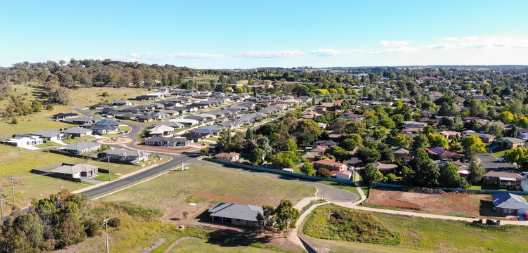
Australia’s retirement village sector is emerging as an increasingly attractive investment opportunity, supported by strong demographic demand, a growing development pipeline, and rising institutional capital. Explore the latest forecasts on supply, pricing, yields, capital values, and total returns in our latest report.

Australia’s industry growth has softened, but resilient business investment, data centre development, and a mining rebound are helping support activity through 2026.

While the ceasefire reduces immediate energy risks, Australian construction costs are likely to remain under pressure.

The reform agenda is ambitious, but surging inflation, rising interest rates, and a $28.3bn underlying cash deficit set a challenging backdrop for Australia’s 2026-27 Budget.

Consulting Report Workforce pressures facing the food & grocery manufacturing sector Oxford Economics Australia examines growing workforce gaps across five critical occupations, modelling supply and demand dynamics out to 2035 to help the industry and government plan ahead. You might be interested in

Australia’s budget position is set to improve by $71bn over four years as surging inflation and commodity prices boost government revenues. But the economy is paying the price with inflation at a three-year high, the RBA hiking rates, and households under mounting pressure.
