

OE Logo

We project Japan’s services trade balance will remain in deficit over the coming years as a trend increase in the import of digital-related services will outweigh a rising travel services surplus that has been driven by inbound tourists.

Shibuya Tokyo Japan

The post-pandemic recovery in business investment in Japan is lagging other GDP contributors. But we expect the pent-up demand accumulated during the Covid crisis, boosted by the easing of supply-side constraints, will lead a recovery in capex in the coming quarters.

Man wearing an AR headset
Blog|6 January 2022

The suddenly unavoidable metaverse: Four things you need to know

Matthew Reynolds
Matthew Reynolds
Senior Research Manager, Thought Leadership
The suddenly unavoidable metaverse: Four things you need to know

It is easy to pinpoint the moment the metaverse went mainstream: October 28, 2021, when Facebook announced it was renaming itself Meta. Defining just what the metaverse is, or will be, is a little more difficult.

There is widespread agreement that a constellation of emerging technologies will mature in the near- to-intermediate future into something greater than the sum of its parts, transforming industries, economies, and the everyday lives of billions of people along the way. Yet this rich digital realm has neither strict boundaries nor a firm schedule for its piecemeal emergence. Predictions of its economic and financial impact are still in the pick-a-huge-number phase so beloved by Silicon Valley and Wall Street, with plenty of vaporware and hype yet to come. Even the name metaverse—coined by Neal Stephenson in his 1992 novel Snow Crash—may not stick. No wonder you have questions.


Read more

shipping container
Blog|21 December 2021

Five trends that will dominate industry in 2022

Kiki Sondh
Kiki Sondh
Economist
Five trends that will dominate industry in 2022

Global industry emerged strong in early 2021, following a lacklustre performance the year before. But with a right jab from renewed restrictions, a left hook from deepening supply chain disruptions, and an uppercut from pent-up consumer demand—it has taken a bit of beating recently. So what’s in store for 2022?

Read more

covid vaccine
Blog|12 November 2021

Vaccination not the only remedy for African tourism recovery

Jacques Nel
Jacques Nel
Head of Africa Macro,
Vaccination not the only remedy for African tourism recovery

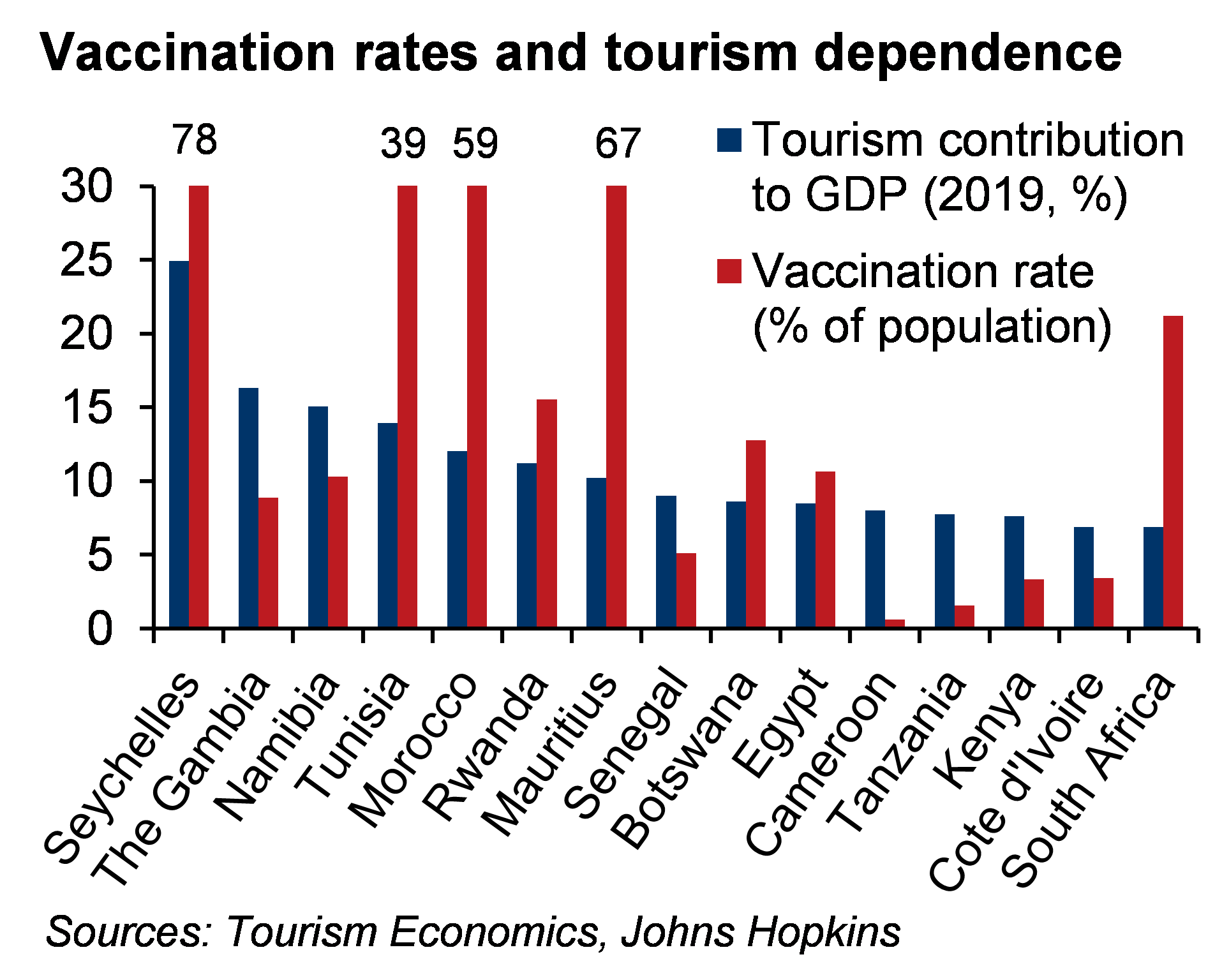
If widespread domestic vaccination was the only way to revive international tourism, most African countries would be in big trouble. The continent is by far the least vaccinated region globally. While vaccination progress is expected to gather pace as advanced economies place more weight on the risk of mutations and as vaccines become more accessible, reaching anything close to population immunity could take years for many African countries at the current rate of progress.

Africa’s island nations are some of the most tourism-dependent economies on the planet. In pre-pandemic times countries including Gambia, Namibia, Tunisia, Morocco and Rwanda relied on tourism to generate between 10% and 15% of total economic output. Tourism also accounts for a disproportionately large share of employment in most countries. The island nations of Seychelles and Mauritius as well as Morocco and Tunisia lead the continent in terms of vaccination progress, but other tourism-dependent economies such as Namibia (with around 10% of the population having received at least one jab) and Rwanda (16%) are undoubtedly far from population immunity. Around half of African countries have vaccination rates of under 5%.

vaccination rates

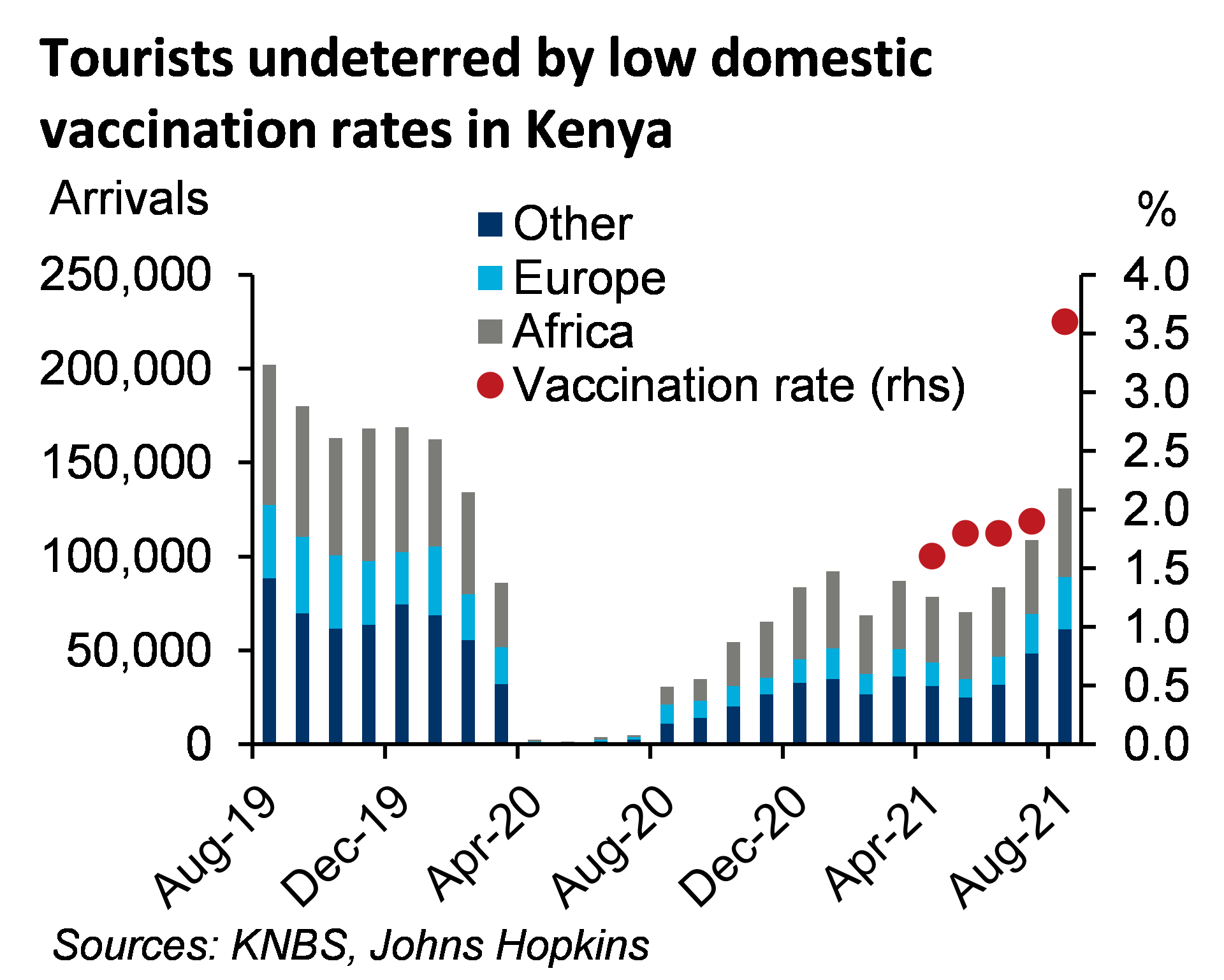
But it is becoming increasingly apparent that vaccination rates in tourism destinations are by no means the only factor affecting the recovery in tourism. Kenya, for example, continues to struggle with low vaccination rates (trending around 4% of the population) but tourist numbers have seen a good recovery; although still down 33% relative to 2019 levels, the August international arrival figures show a strong recovery. The makeup of arriving visitors, from a source-market perspective, is similar to that seen in pre-pandemic times.

tourist under

Read more

Blog|3 November 2021

E-commerce’s COVID boost is a wake-up call for policymakers

James Lambert
James Lambert
Director of Economic Consulting, Asia
E-commerce’s COVID boost is a wake-up call for policymakers

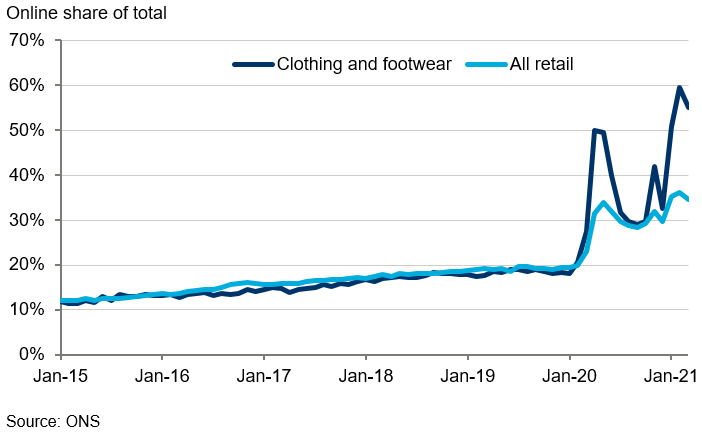
The digital economy has reached a watershed moment in the wake of the COVID-19 pandemic. From major retailers to start-up entrepreneurs, the internet is now the primary tool for businesses to understand their markets and to sell their goods and services. The figure below shows the impact on one sector—clothing and footwear—in the UK.

wpc graph for ei

But there is a growing danger that policymakers will miss the window to exploit the economic growth potential this shift represents because they have such a poor grasp of what is going on in the digital economy.

Read more

Cape Town
Blog|21 May 2021

Increased digitisation could exacerbate inequality in Southern Africa

Increased digitisation could exacerbate inequality in Southern Africa

The imposition of lockdown regulations to prevent the spread of Covid-19 forced millions of people across the globe to work from home. The transition was far smoother for “knowledge workers” (employees who sell their intellectual labour) than those who sell their manual labour. The shift was also obviously easier for those who have internet access: Only an average of 28% of national populations have internet access in Southern Africa, which is well below the world average of 51%, according to the United Nations International Telecommunication Union (ITU).

Read more

Blog|29 April 2021

In the 5th Industrial Revolution, creativity must meet technology

Kiki Sondh
Kiki Sondh
Economist
In the 5th Industrial Revolution, creativity must meet technology

The health crisis has wreaked havoc on global supply chains. Lockdowns, restrictions on movement and quarantine regulations have disrupted conventional working practices and put pressure on manufacturers to adapt industrial processes to stay afloat. The tables have turned from survival of the fittest to survival of the quickest—those who wish to remain competitive must embrace the latest technologies, adjust their business models, and innovate.

Read more