



Net migration trends are poised to reverse course over the next five years compared to 2020 and 2021 as employees and residents move back to large metros and immigration recovers.
 Saarah Ghazi
Net migration trends are poised to reverse course over the next five years compared to 2020 and 2021 as employees and residents move back to large metros and immigration recovers.

The Bank of England is arguably the central bank that faces the biggest policy headache right now.
In this week’s beyond the headlines, Andrew Goodwin, Chief UK Economist, examines the potential for further rate hikes and what it means for our forecasts, ahead of next week’s MPC Meeting.

Air transport is, for good reason, considered one of the hardest to decarbonise sectors of the economy. While there have been substantial gains in energy efficiency in past decades, these have been overwhelmed by large increases in demand, leading to large absolute increases in energy used and carbon emissions.
Monetary policy is at a critical juncture. After decades of low and stable inflation, the seismic supply adverse shocks and robust demand of recent years have jolted inflation expectations.

Spot crude oil prices continue to be held back by demand woes, despite recent moves to tighten the market by Saudi Arabia. However, in a sign that sentiment may be starting to turn, net long positions rose last week, suggesting markets are starting to become more bullish.

After decades of outperforming the broader economy, growth in tech spending by US businesses has become much more dependent on the business cycle.

Supply chain stress has eased significantly despite resilient consumer and business spending, a reassuring development for the inflation outlook.

Cross-border trade and business payments are shifting in real time. To help identify opportunities amid volatility, this new report by Convera and Oxford Economics offers insights into how global trade will evolve in coming years.

Critical minerals are metal and non-metal compounds essential to modern technologies and whose supply chain is at risk of being disrupted. Many of these minerals are components of batteries, solar PVs, wind turbines, electric vehicles, and other clean technology.
Oxford Economics is proud to announce that we have been, once again, recognised as one of the top performers in this year’s FocusEconomics’ Analyst Forecast Awards, securing 39 first place rankings and a total of 115 awards.

Q1 global industrial activity surprised to the upside, as the impact of tighter monetary policy across numerous economies was offset by idiosyncratic factors including strong labour markets, the reopening of the Chinese economy, and the sharp fall in energy prices in Europe.

After stalling in Q4, the Canadian economy likely grew modestly in Q1. Labour markets have also shown impressive resilience, with the economy adding jobs at an average pace of 62,000 m/m so far this year, helping hold the unemployment rate at a near-record low 5%.

Artificial Intelligence has the potential to fix the world’s productivity problems, just as previous general purpose technologies such as steam power, electricity, and computers have, in our view.

Around the world, efforts are being made to slow and eventually halt the process of climate change and reduce the social and economic threat it poses. Our various climate scenarios model that—globally, nationally, by sector, and for cities and regions. But what might happen if these goals aren’t reached?

Our long-term income and consumer spending forecasts reveal the high-potential urban consumer markets of the future. We identify four key trends underpinning shifts across global urban consumer markets over the coming decades.
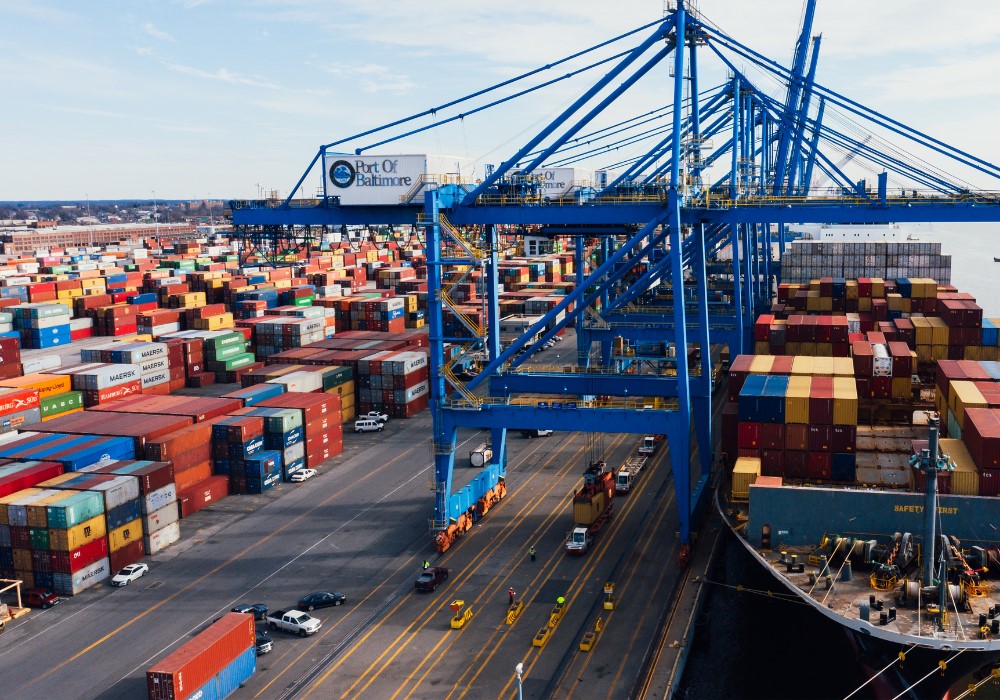
Supply chain stress eased in April, which will put downward pressure on goods prices and allow the Fed to pause in its tightening.
The Inflation Reduction Act and the CHIPS Act that passed last summer are spurring a sharp rise in investment in new manufacturing plants. The revival is concentrated in electronics, reflecting the targeted subsidies and doesn’t appear to herald a broad-based reshoring of manufacturing to the US.
Despite the US dollar already moderating from a multi-year peak in late 2022, we expect it to remain relatively strong this year.

As China finally becomes the last major economy to dismantle its Zero Covid restrictions and fully opens its borders, governments and business leaders are scrambling to understand what a post-pandemic global trade system will look like.

Though the impact of a slowing global economy is weighing on Asian economies, we expect fiscal consolidation to continue, which means the fiscal impulse, government balance adjusted for cyclical movement in the economy, will be negative in most places.
