



Data centres are emerging as one of the largest sources of construction investment in Australia. Demand for cloud computing has been growing for more than a decade, but the rapid adoption of AI has pushed the sector into a new phase.
 Adric Kam
Data centres are emerging as one of the largest sources of construction investment in Australia. Demand for cloud computing has been growing for more than a decade, but the rapid adoption of AI has pushed the sector into a new phase.

Oxford Economics forecasts data-centre investment in Australia will jump from under $10 billion per annum in 2025 to over $60 billion by 2030.

We’ve treated Asia’s external strength with some caution this year. After all, gross trade and financial inflows have risen much faster than the domestic income they generate, making the external accounts an unreliable guide to regional reflation.

Australia’s food and grocery manufacturing sector employs nearly 300,000 people and plays a critical role in the nation’s food supply chains and productive capacity.

Migration is a core channel through which demographic forces shape an economy’s performance in the long run.

War in the Middle East and the shutdown of Qatari LNG exports have effectively removed roughly 20% of global LNG supply. This is focusing attention on the vulnerability of North Asia’s energy-intensive technology cycle.
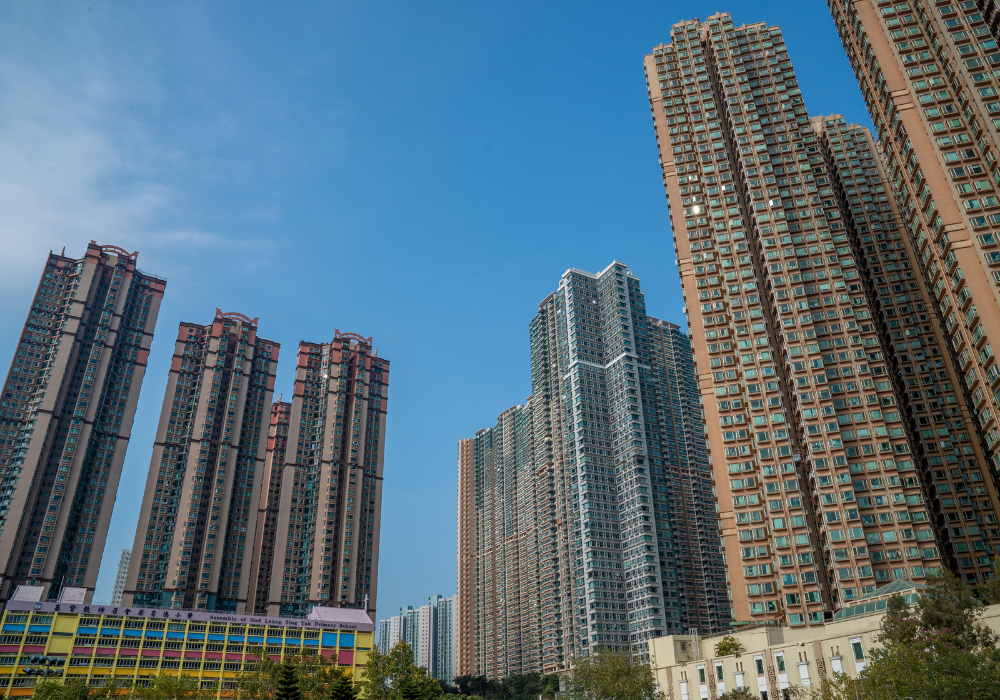
Commercial real estate development pipelines across Asia-Pacific are contracting structurally. Falling supply over the next two-three years is creating a window for operating fundamentals to improve.

The boom in data centres in the UK is set to fuel a strong demand for energy. We recently forecast that total electricity demand from data centres in the UK could grow fivefold over the next five years.

As AI accelerates and global tech companies commit billions to new cloud and data-centre projects in the UK, the country is cementing its role as a leading AI hub.

The UK is experiencing a remarkable growth in its digital infrastructure. Data centres—the facilities that house the servers and computing equipment powering everything from cloud storage to artificial intelligence (AI)—are expanding at an unprecedented rate and fuelling energy demand.

The UK’s data centre sector is expanding rapidly as digitalisation, cloud computing, and artificial intelligence (AI) drive surging demand for high-performance computing infrastructure.

Our Global Rebalance scenario explores a gradual movement from a unipolar, dollar-based system to one with two centres of economic and financial gravity – the US and China – driven by weaker US policy credibility and Chinese structural reforms.

As governments across Asia race to build digital economies, the question of where data lives has become one of the region’s most economically consequential policy debates.

Asia chip export index (CEI) showed a remarkable rise of 27.3% in value and 26.2% in volume year-on-year.

Our Megatrends Scenarios model a range of long-run global scenarios. In the Q3 update, these include Tech Revolution, Secular Stagnation and Fractured World, exploring the impact on a wide array of macroeconomic and financial indicators across 84 economies.

Airbnb’s platform connects hosts across Asia Pacific (APAC) with travellers from around the world. Oxford Economics was commissioned by Airbnb to quantify its economic footprint in 10 APAC markets in 2024.

We recently created a heatmap of daily and weekly data to gauge how the US economy is fairing in real time, and tourism, including international, is one of the metrics.

We previously identified four core megatrends – demographics, technology, institutions, and globalisation – as the key drivers shaping the long-term outlook.
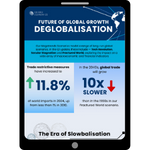
This infographic presents our Megatrends Scenarios model, which outlines various long-term global scenarios.

Global economic growth has been slowing during the past decade, especially when compared to the pre-2008 trend. This deceleration is largely driven by long-term structural shifts, including ageing populations that reduce the labour supply, declining productivity growth, and a significant slowdown in global trade growth.
