
Iran War’s Impact on Fuel Prices and Air Passenger Demand
A conflict-driven fuel price surge is raising airfares and slowing global air travel demand.
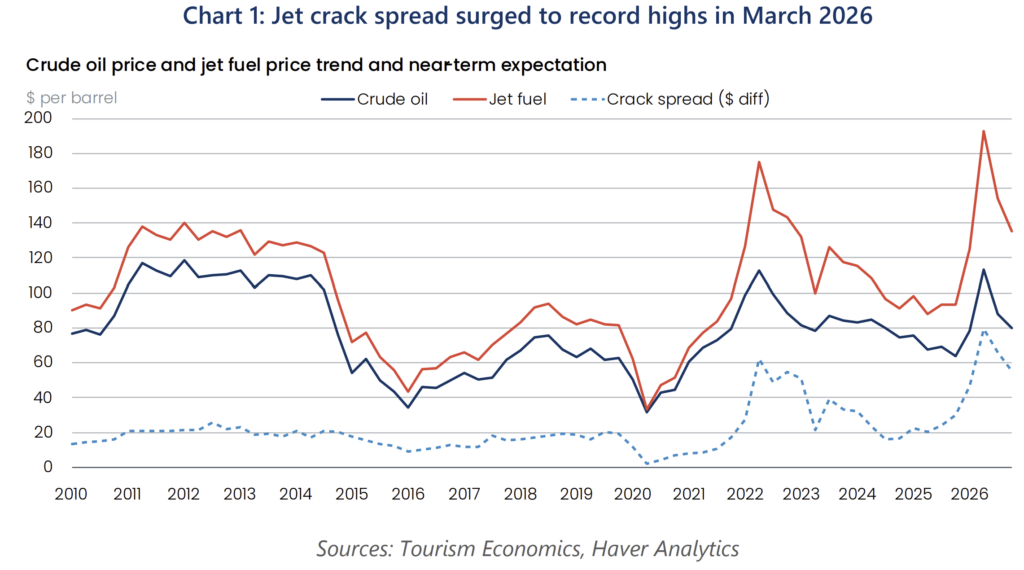
A sharp escalation in the US–Israel war on Iran has triggered a major shock across global energy and travel markets. In March 2026, crude oil prices surged 64% following the closure of the Strait of Hormuz—disrupting up to a quarter of global energy supply and marking the most significant oil shock since 2022. The impact has been even more pronounced for aviation, where jet fuel prices have rapidly doubled in the span of weeks.
Airlines are already responding, with fares expected to rise 5–10% and fuel surcharges beginning to appear. However, softening demand is limiting how much of these higher costs can be passed on to travelers. The disruption is most acute in the Middle East, where airspace closures and rerouting are affecting key global corridors—putting a meaningful share of Europe–Asia and North America–Asia travel at risk. While global demand remains relatively resilient, growth is slowing, and recovery timelines will depend not only on the duration of the conflict but also on shifting traveler sentiment.