Long-term optimism for Middle East travel
Safety concerns dampen near-term travel, though future growth expectations hold firm in the Middle East.
The Iran war has delivered a major shock to global travel, disrupting visitor flows and hitting the Middle East especially hard. This analysis draws on Tourism Economics’ Travel Industry Monitor (TIM), using insights from more than 30 Middle East–based tourism professionals to compare regional sentiment with the global outlook.
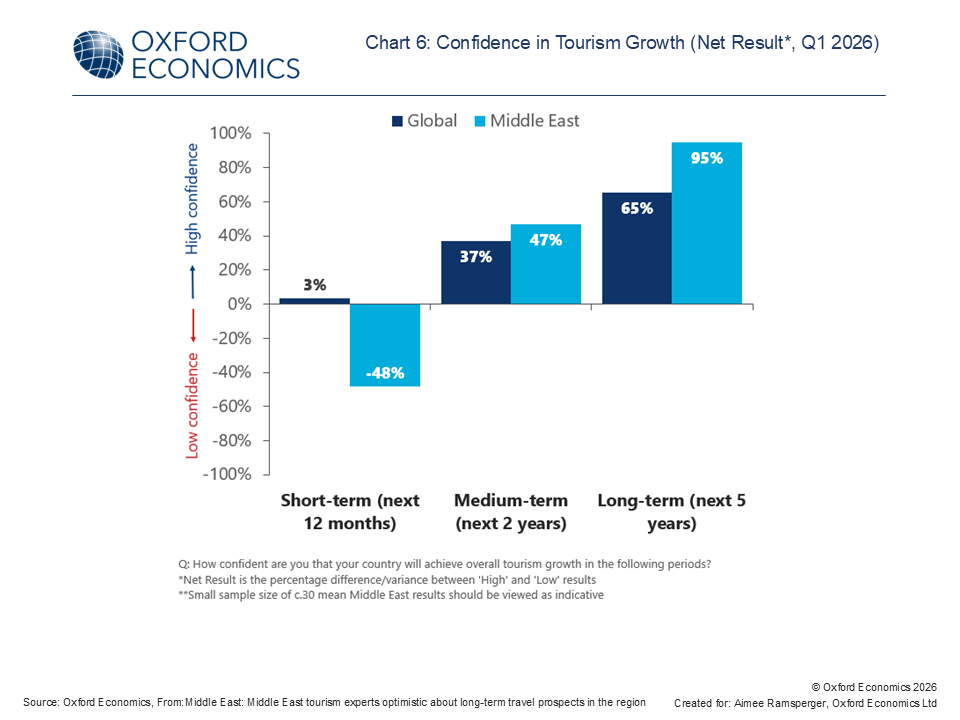
Short-term tourism confidence in the Middle East has fallen sharply, diverging from the more stable global outlook as regional conflict creates a strong headwind. The Iran war is heavily influencing expectations for both domestic and inbound tourism in the next 12 months, with inbound travel seen as particularly vulnerable over a longer-term horizon, primarily due to ongoing safety concerns. As a result, expectations for visitor numbers and hotel occupancy were overwhelmingly negative in the near term, with declines anticipated almost universally over the coming quarter and year.
Recovery in the region is dependent on restoring confidence and demonstrating safety, rather than lowering costs and restoring capacity. Despite these headwinds, longer-term confidence in tourism growth remains exceptionally strong, supported by opportunities linked to events, policy support and business travel.