


Swings in oil prices pack less of an economic punch than in the past but sudden increases can still be costly, particularly now when the economy is vulnerable.
 Saarah Ghazi
Swings in oil prices pack less of an economic punch than in the past but sudden increases can still be costly, particularly now when the economy is vulnerable.

Gold prices have been under pressure since the beginning of 2022, as high US real rates increase the opportunity cost of holding zero-yields assets and make the US dollar more expensive to foreign investors.

We expect the MPC to raise Bank Rate at December’s meeting. But recent UK developments, including calmer financial markets, a stronger pound, and energy support to households set to become less generous, mean we think the MPC will pivot to a 50bps hike rather than repeat November’s 75bps rise.

Following the loss of Russian pipeline gas, European countries have increasingly focused on LNG shipments as a replacement, giving Europe a safety buffer this winter.

The latest data releases for overseas travel movements and visa grants, along with the thrust of recent policy announcements, lean increasingly towards a near-term overshoot in net overseas migration (NOM) for Australia.

The outlook for Latin America changed dramatically after Russia’s invasion of Ukraine last February.

The G7 and the European Union (EU) hope to keep Russian oil exports on the market and prevent global oil prices from rising by setting the oil price cap at $60 p/b, above recent market price

In most UK regions and nations, inactivity levels have risen since the beginning of the pandemic, and an increasing number of inactive individuals are reporting long-term sickness.
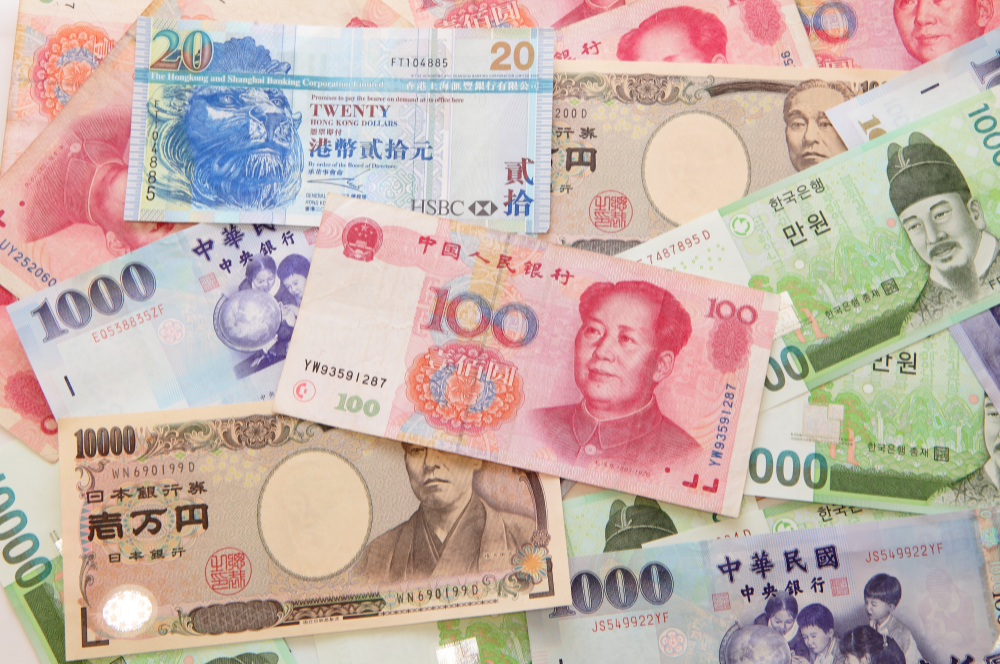
We expect Asian currencies to stabilise, if not strengthen, versus the US dollar in 2023, as the Fed pauses hiking rates in Q1, China reopens in H2, and real yields retrace as inflation moderates.

The semiconductor cycle has already turned and is likely to continue softening into next year. As the world’s largest producer of chips, Asia is set to bear the brunt of the hit to growth.

We expect the UK economy to be in recession for most of 2023, with activity dragged down by falling real household income and tight policy settings.

The global cycle is now rolling over and even if the recession is likely to be mild, the subsequent recovery will be disappointing. Yet we see ample opportunities going into 2023 given the dislocations in both safe and risk asset pricing this year.

This study looks at the UK family business sector, an important part of the UK economy. It presents new insights, especially on how the sector was affected by, and is recovering from, the pandemic.

Pioneering research has used panel econometric techniques to estimate the economic impact of average temperatures. Building on that approach, we show that temperature anomalies from historical norms may be more consequential economically than average temperature levels.

Reopening pressures have increased, as recent protests test policymakers’ resolve to stick to the current zero-Covid approach.

Our baseline forecast is now for world trade in goods to decline by 0.2% in 2023, a considerable downgrade from six months ago.

It’s been a horrible period for EM portfolio debt flows. The better news is that broader capital flows to EMs have held up well and next year we expect a recovery in fixed income.

We revisit the economic impact of climate change by incorporating temperature volatility and extremes.

We expect real estate values to correct sharply in 2023, but pressure should gradually alleviate as policy rates peak.

Bank Indonesia raised its policy rate by 50 bps at its last meeting on November 17, making for a total of 175bps of rate hikes over the last 6 months.
