

RESEARCH BRIEFING
23 Mar 2026
Shipping in for the long haul of Middle East conflict
Uneven trade disruptions emerge as energy spikes immediately and logistics pressures build more gradually
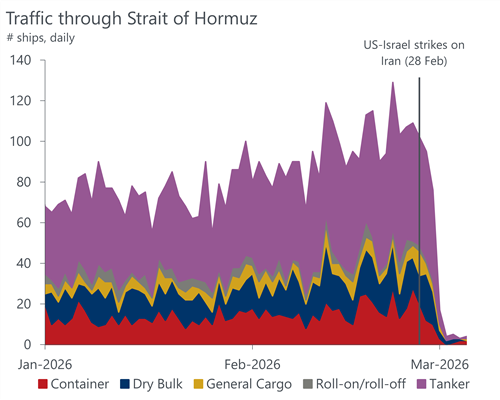
The conflict in the Middle East delivered an immediate shock to global trade, but the impacts aren’t uniform across regions and commodities. Tanker rates are surging on top of already-rocketing oil prices; insurers have been quick to reprice war-risk premiums, while the closure of the Strait of Hormuz has stranded vessels, effectively removing them from the global fleet.
- Containerised trade has been more resilient. Shipping lines never fully returned to the Suez Canal after the 2023-24 Red Sea crisis, so less rerouting is necessary this time. That’s kept global containerised freight costs stable.
- Air freight is feeling the sharpest near-term pain. Emirates, Qatar Airways, and Etihad carry are 13% of global air cargo and handle a quarter of all China-Europe freight; their effective grounding has pushed rates sharply higher across corridors well beyond the Gulf.
- The inflation consequences will arrive in two waves. Energy prices tend to feed through to businesses and consumers more quickly than shipping costs, with the latter peaking in consumer prices around 12 months after the onset.
Download the full report to know more
You might also be interested in
Tags: