



The Spring Statement delivered on Wednesday 26 March is likely to prove a stopgap ahead of a more comprehensive overhaul of UK fiscal policy in this autumn’s Budget.
 Ryan Hadden
The Spring Statement delivered on Wednesday 26 March is likely to prove a stopgap ahead of a more comprehensive overhaul of UK fiscal policy in this autumn’s Budget.

A series of problems have undermined confidence in the accuracy of official economic statistics for the UK. When using Office for National Statistics data, it’s important that users make allowance for the increased uncertainty about their reliability.

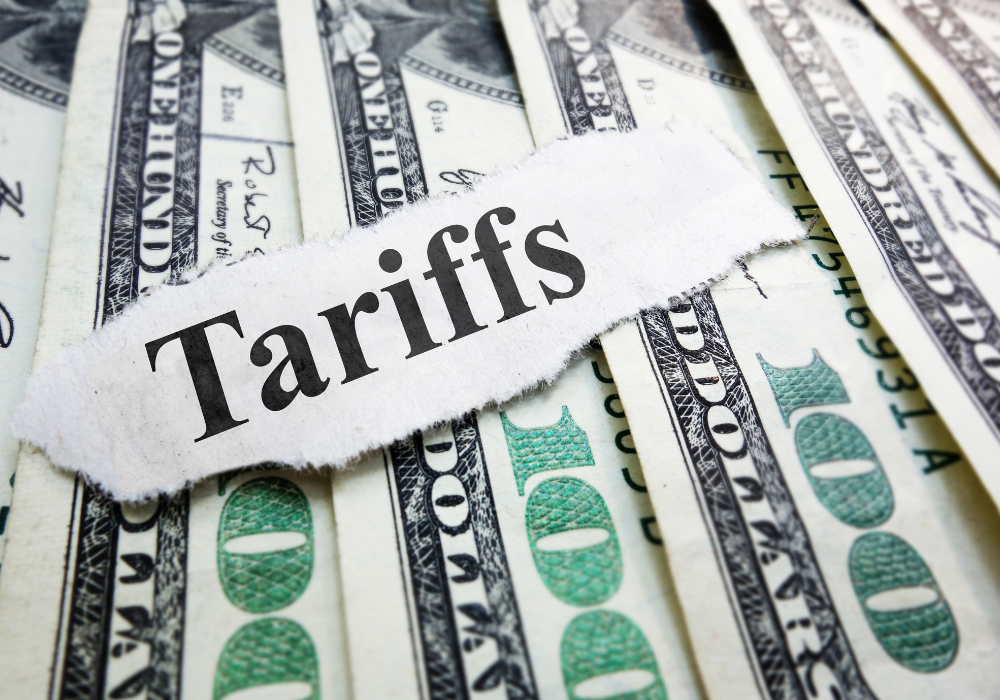
Tariffs are taxes imposed by a government on goods and services imported from other countries. Think of tariff like an extra cost added to foreign products when they enter the country. They’re usually a percentage of the price of the goods, making imported items more expensive compared to domestically produced good

This quarter’s scenarios quantify key risks to the global economy. These relate primarily to trade protectionism and other geopolitical tensions, structural weakness in the Chinese economy, the stance of monetary and fiscal policy, and financial market conditions.

New geopolitical realities have forced the likely next German coalition of the CDU and SPD into agreeing to a massive fiscal splurge. Details are scarce and implementation risks loom large, but this could in theory see the fiscal deficit widen to 4% of GDP for the next decade. The measures could help build a viable military deterrent, jumpstart the recovery and transform the economic outlook for the coming decade.

Prime Minister Sir Kier Starmer has pledged to increase the UK’s defence spending to 2.5% of GDP by 2027, following demands from President Donald Trump that European nations contribute more to their own defence

Oxford Economics set the stage for the year ahead, at our second Global Economic Outlook Conference, in London on Wednesday, 5 February.

The April increase in employers’ national insurance contributions will weaken the UK labour market, increasing unemployment. Sectors with the greatest reliance on lower paying roles, such as hospitality, art and recreation, and wholesale and retail, look highly vulnerable to job losses.
We have revised our Eurozone labour market forecasts to incorporate the impact of US tariffs, and now expect employment growth to come to a near standstill this year. Although risks to the labour market are tilted to the downside, various indicators continue to suggest that a serious downturn will be averted.

The UK is planning one of the largest fiscal consolidations of any advanced economy over the next two years. We expect it to result in much weaker GDP growth than the Office for Budget Responsibility forecasts and think the government’s balance sheet is still likely to deteriorate.

Israel and Hamas reached a multi-stage ceasefire agreement with the first stage becoming effective on 19th January and establishing a 6-week ceasefire and mandating the release of hostages and prisoners.

Manchester United is considering several options for the development of their stadium at Old Trafford. As such, there is a need to understand the net socioeconomic benefits that could be generated by a potential new stadium at a local, regional, and national level.

We think that valid concerns about the quality of data from the UK’s Labour Force Survey (LFS) make it virtually unusable at present. Considering it will likely take another two years to fix the problems, this poses a major headache for policymakers and economists alike.

We believe the Czech Republic will move to the upper one-third of the fastest-growing EU economies in 2025-2026 after lagging its EU peers in the last four years. However, much of this will be catch-up growth, mainly in consumer spending, where a large shortfall remains. Relative to pre-pandemic, the economy will remain in bottom one-third of the EU, behind its CEE peers.

The spread between French and German government bonds has reached its highest level since the height of the eurozone sovereign debt crisis in 2012, as Prime Minister Michel Barnier’s government appears increasingly likely to be toppled over the 2025 budget.

Our baseline forecast assumes that President-elect Trump won’t increase tariffs on US imports from the UK. In fact, the main impact on the UK outlook from Trump’s victory comes from stronger global demand stoked by looser US fiscal policy.

In this infographic, our focus is on the growth of global enterprise tech spend. We expect to see that spend by businesses and governments grow at an average annual rate of 5.1% and exceed $9.8tn by 2032.

We think improving profitability and falling interest rates will underpin a gradual pickup in UK business investment. But this follows a decade over which capital spending has flatlined and even if our forecast proves accurate, it would still leave the UK well behind peers like the US.

Following Wednesday’s UK Budget, gilt yields have risen sharply as financial markets appear concerned over the scale of the extra borrowing, that some of it will fund current spending rather than investment, and the narrow headroom it leaves.

Oxford Economics is excited to announce the launch of the Global Tech Spend Forecasts service, offering the most reliable forecasts on enterprise IT spending across 35 industries and 25 countries, with forecasts out to 2050.
