Research Briefing
| Jul 3, 2024
Eurozone: Jobs engine to roar but decelerate heading for new balance
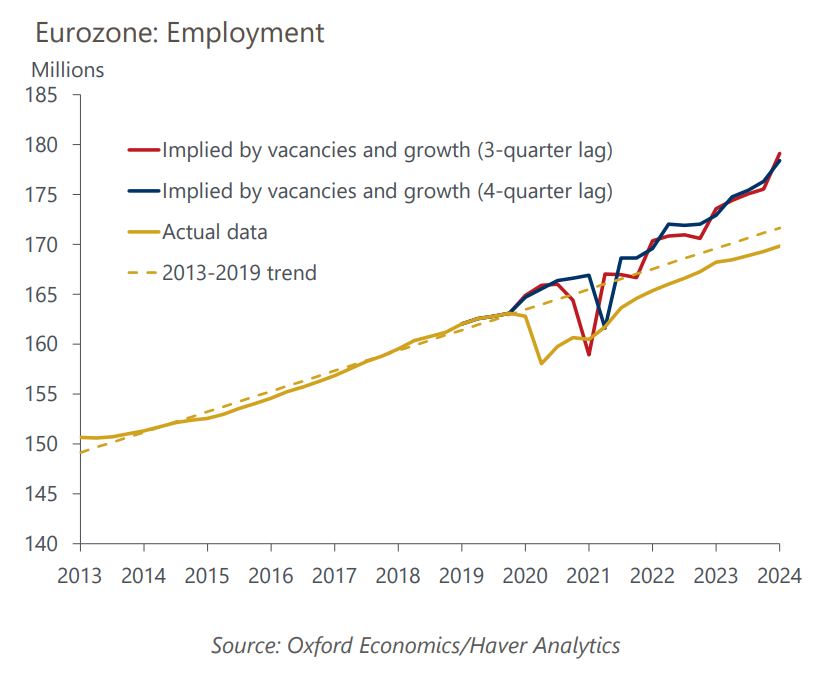
We expect employment growth in the eurozone to continue slowing despite the economic recovery gathering speed. Future employment will be constrained by demographics and by the unemployment rate falling only slightly, given it is at a historical low and close to its long-term natural level. This will favour less dormant wage growth than before the pandemic.
What you will learn:
- There is structural scarcity of adequate candidates in the pool of unemployed, and an ageing population will limit the scope for an increase in participation, absent changes in policy, preferences, or culture. But the recovery in productivity and a contained pick-up in hours worked as labour hoarding unwinds will prevent a significant tightening in the labour market.
- In the short run, nominal wage growth will continue to slow as the inflation shock unwinds and workers recoup real income losses. But in the medium term, the combination of stronger demand and not-so-responsive supply should encourage reallocation in the labour market and make wages advance less sluggishly than before the pandemic, which will enhance disposable income and support spending. Reduced costs thanks to recovering productivity will offset the inflationary impact of less anaemic pay growth.
- The risks to the employment outlook are balanced. If the recovery disappoints, then companies may pause hiring as they reassess business expansion expectations. Stronger-than-expected migrant inflows would support job growth by alleviating supply-side constraints.