OE Logo

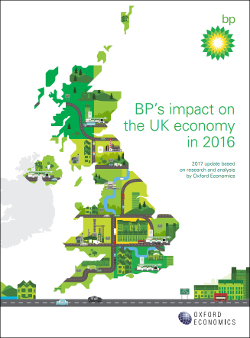
Building on the comprehensive report of BP’s impact on the UK economy in 2014, and the update for 2015, this report shows that BP’s activities continue to contribute substantially to the UK economy.

In total, BP’s direct, indirect and capital expe

Digital technologies are profoundly recalibrating the way we need to work. To enable co-creation and collaboration, and harness the productive energy these approaches generate, organizations need to reimagine the interplay between workspace, performa

Ungated Post|3 January 2018

Pinning down world flashpoints to protect against nasty surprises

Pinning down world flashpoints to protect against nasty surprises

The upsets and surprises of the past 12 months show all too clearly how, in an ever more unpredictable world, risk can catch out the unwary. And, as we begin 2018, nowhere is this more apparent than in the realms of economic and political risk.

As one of the world’s foremost independent economic forecasters, Oxford Economics has collaborated in a joint venture with Control Risks, the global specialist in political and security risks, to create a unique tool for organisations to weigh-up the uncertainties lurking in every corner of a volatile globe.

Read more

Ungated Post|22 December 2017

Urban power shifts east as Asian cities’ economies burgeon

Urban power shifts east as Asian cities’ economies burgeon

China’s cities’ GDP to double, and will outstrip Europe’s and North America’s by 2035. But New York, Tokyo, London and LA to stay as world’s urban superpowers as Shanghai closes in.

The world is ever more urban. The top 780 global cities already produce almost 60 per cent of all world economic activity, and they are set grow in importance as urbanisation continues.

By 2035, these cities will be home to almost half a billion additional people with their GDP rising by $32 trillion (constant 2015 prices and exchange rates).

Read more

Blog|7 December 2017

Four reasons why 2018 will be the economy’s best post-crisis year

Four reasons why 2018 will be the economy’s best post-crisis year

 We head into 2018 in a fairly optimistic mood. The current global economic upswing is more broadly based than any other since the global financial crisis, and – unusually, by recent standards –  the new year approaches without any major crisis looming.

In our latest forecasts, we see world GDP growth accelerating from 2.9% this year to 3.2% in 2018. This would mark the best year for the world economy since the rebound from the global financial crisis began.

Read more

The Nuclear Activity Report presents a comprehensive study of the UK’s civil nuclear industry. For the first time in the annual series, Oxford Economics undertook an analysis of the economic contribution the civil nuclear industry makes to the UK and

Ungated Post|1 December 2017

The ‘new Great Stability’ conundrum for the world economy

The ‘new Great Stability’ conundrum for the world economy

It is plausible that recent low volatility is the new and persistent norm, with economic surprises muted and downside risks in decline.

As a tempestuous year in world politics comes to an unnerving close, in economics the nervousness flows from an almost entirely and strangely opposite cause. 2017 ends as the year of the risk conundrum.

Even as the advent of the Trump Administration, the UK’s great Brexit gamble, and the rise of populism and separatist tendencies in parts of Europe have raised the global political stakes, in the global economy both macro and market volatility have recently plummeted. Conditions, in fact, appear more stable than during the period of the Nineties and early 2000s, which itself became known as the ‘Great Stability.

Read more

Ungated Post|28 November 2017

Tackling the UK’s productivity problem: investing in the right skills

Tackling the UK’s productivity problem: investing in the right skills

The UK launched its Industrial Strategy yesterday, seeking to tackle the UK’s pervasive slow productivity growth. Developing technical skills is one of the key recommendations, through increasing teaching of STEM subjects, enhanced Computer Science education and “T levels,” the establishment of a National Centre for Computing Education and an Institute for Coding.  Coincidentally, last week BT and Accenture launched their study “Tech know-how: The new way to get ahead for the next generation.” Though they both seem on the same page in promoting tackling technology skills shortages, there are important differences in emphasis.

Read more

This report spells out the tech literacy dividend that can be created, highlighting wage premium & GDP uplift resulting from improved tech capability. Improving technical skills can also help to tackle problems with social mobility.

The results of

Ungated Post|20 November 2017

Europe may be poised for a golden decade of economic expansion

Europe may be poised for a golden decade of economic expansion

Lost amid Europe’s political drama and recurrent euro doomsday scenarios is the fact that the Eurozone economy has a business cycle that is alive and well.

Our analysis suggests there is plenty of room left in the current expansionary cycle, which could see the single currency area enjoy a golden decade of economic growth. 

More than four years into the current upturn, most indicators signal the Eurozone economy is still somewhere around mid-cycle, suggesting that – absent an unexpected shock – we should see several more years of sustained expansion. 

One reason is that the amount of economic slack in the Eurozone countries –  the size of the “output gap” before an economy hits a ‘speed limit’ above which growth comes with inflation – may be larger than commonly accepted. 

Read more

Blog|14 November 2017

Over the cliff? No deal Brexit would cut UK growth by 1 point a year

Over the cliff? No deal Brexit would cut UK growth by 1 point a year

Economy would be 2% smaller than otherwise expected by end of 2020 – equivalent to a £16bn hit to GDP

With Theresa May’s UK Government struggling to make progress in ‘Brexit’ negotiations with the EU and strike a deal for Britain to leave the bloc, Oxford Economics analysed the potential impact of the talks collapsing with no agreement.

Read more

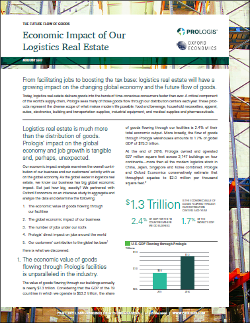
Warehouses and distribution centers facilitate the commercial flow of goods across the world. Nearly every product purchased by consumers and businesses will have passed through a warehouse or distribution facility. Oxford Economics undertook a custo

Ungated Post|10 November 2017

Fear of Trump policy errors, N Korea tensions keep businesses fearing a slowdown

Fear of Trump policy errors, N Korea tensions keep businesses fearing a slowdown

Businesses remain fearful over risks of major economic upsets that could trigger a global slowdown – despite the present upswing in world growth, according to our latest quarterly survey of global corporate risk perceptions.  Business fears over tensions between the US and North Korean and over potential US policy errors emanating from the Trump Administration have persisted since the summer, even as world growth has strengthened.

Read more

We partnered with ServiceNow to survey 500 Chief Information Officers around the world and across industries. Our survey explored the strategies CIOs are adopting to realize value from machine learning, and the competitive advantage for organizations

Ungated Post|8 November 2017

Goldilocks sees off market bears with help of resurgent global growth

Goldilocks sees off market bears with help of resurgent global growth

Equity earnings cycles to power ahead – especially in underperforming Europe and EM markets

The world economy is evidently in the midst of what many are calling a synchronised upswing in growth. A strong rebound in manufacturing, led by Europe, appears to be at the heart of the resurgence. And the pace of expansion has accelerated in recent months. This environment is fundamentally conducive to outperformance by assets leveraged to global growth.

Investors have now been uneasy for many months that in some key global equity markets, shares are becoming overvalued, with share prices relative to corporate earnings – P/E ratios ¬– stretched, especially in the United States.

But our analysis concludes that equity earnings cycles, especially in underperforming markets in Europe and emerging markets (EM), should continue to power ahead for some time.

Read more

Ungated Post|6 November 2017

Mapping global debt danger zones as alert sounds over credit trigger for a new crisis

Mapping global debt danger zones as alert sounds over credit trigger for a new crisis

Ten years on from the global financial crisis, and eyes are peeled for triggers for a new world economic upheaval.  And chief among the prime suspects is debt, and especially household debt.

Last month, the International Monetary Fund highlighted the danger from big increases in both the level of household debt and the pace at which it is rising in many key economies.  “Higher household debt is associated with a greater probability of a banking crisis, especially when debt is already high, and with greater risk of declines in bank equity prices,” the Fund warned in its influential Global Financial Stability Report.

Building on the IMF’s analysis, Oxford Economics has put the debt bogeyman under the spotlight.

We investigated just how great the risks really are, and just where they may lie, country by country, creating a global risk map to identify the debt danger zones to the world economy.  This goes beyond the Fund’s study which while looking at 80 economies and across 25 years of data stopped short of naming the countries where the risks loom largest.

Read more

Ungated Post|3 November 2017

How well are you living? Take the quiz – discover how a good sleep is 4x more important than pay

How well are you living? Take the quiz – discover how a good sleep is 4x more important than pay

How closely linked is your disposable income to your overall wellness? Does sleep impact your quality of life? What about spending time outdoors or chatting with your neighbours? Our daily experiences and interactions impact our lives and wellness. But it’s not always so clear how to define and measure them.

In our latest research, we explore those questions and more, partnering with Sainsbury’s as we quantify, analyse, and track what it means to live well.

We asked more than 8,000 people to tell us how they’re living – from their relationships with partners, family and friends, to whether they own their own home, how secure they feel in their finances and jobs and much more. In the coming years, we will track how these factors change and impact our lives, creating the Sainsbury’s Living Well Index.

Read more

Ungated Post|1 November 2017

Early death of the internal combustion engine greatly exaggerated

Early death of the internal combustion engine greatly exaggerated

What will the highways of the world look like in five or 10 years’ time and what will this mean for the future of the automotive industry, not to mention the thousands of businesses in multiple industry sectors that supply them? For many, the hubbub in the media and among industry observers over electric vehicles drives an image in our imaginations of a world humming quietly to the sound of electric cars whizzing us happily to our destinations. It is a vision of more efficient journeys, clean air and a quieter environment.

Read more

Cities are becoming increasingly large as tourism destinations and are accounting for a greater proportion of global tourism demand. This research, conducted by Oxford economics in conjunction with WTTC, looks at the economic impact of Travel & Touri

Ungated Post|18 October 2017

How Finance Leadership Pays Off

How Finance Leadership Pays Off

The demands of the global and digital economy have multiplied the finance function’s core responsibilities. At the same time, CFOs are expected to partner with their C-suite colleagues to shape long-term business strategy. When finance chiefs do their jobs well, they make a powerful impact, not only within their own department but also on their company’s overall performance—amplifying their importance to the enterprise.

The demands of the global and digital economy have multiplied the finance function’s core responsibilities. At the same time, CFOs are expected to partner with their C-suite colleagues to shape long-term business strategy. When finance chiefs do their jobs well, they make a powerful impact, not only within their own department but also on their company’s overall performance—amplifying their importance to the enterprise.

But surprisingly few CFOs give themselves high marks for effectiveness. Most see room for improvement in financial planning and analysis, a critical process for driving growth, and even in risk and compliance. What do the high-performing minority—the Finance Leaders—do differently from the rest of the pack?

We asked 1,500 CFOs and other senior executives around the world about their goals and challenges. Then we identified six traits that make a Finance Leader, including excellence in core finance activities and strong influence over strategy. Only 11.5% of our survey respondents, qualified as Leaders. Yet our results show these six practices boost business performance and efficiency, as well as governance, risk, and compliance (GRC) effectiveness across the company.

Read the full report.

Read more