

Research Briefing
| May 30, 2024
Why dollar strength looks set to go on
The strength of the US dollar looks likely to continue this year and into 2025 before possibly waning in 2026, according to our analysis. Relatively robust US growth, favourable interest rate differentials, and structural improvements to the US balance of payments are all dollar positives.
What you will learn:
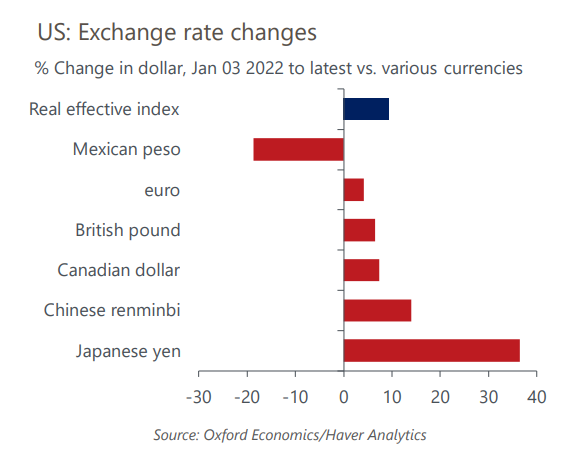
- The dollar’s real effective rate is up 9% since the start of 2022 and is around 10% above its long-term trend. But the current bout of dollar muscularity is far from unprecedented. Previous dollar peaks have been considerably higher than this, and our BEER framework suggests only moderate dollar overvaluation of around 6% currently. So valuation levels don’t appear to be an obstacle to further dollar gains.
- A mix of short-term cyclical factors and longer-term structural factors are benefitting the dollar. Growth differentials between the US and other G7 economies have been high recently and consistently positive for some time. Short- and long-term interest rate differentials are dollar supportive, and the US’s shift to a net energy exporter and strong FDI are also helpful.
- Our updated dollar strength framework, which assesses the dollar outlook across a range of variables, shows a clear dollar-positive outlook. This analytical framework, which signalled the current period of dollar gains, points to dollar strength persisting during 2024 and 2025, in line with our baseline forecasts.
Related Reports
Click here to subscribe to our asset management newsletter and get reports delivered directly to your mailbox

Bonds and the end of the global savings glut
Is the “end of the global savings glut” story reflected in bond prices? Three different approaches to fair value for 10-year Treasurys suggest the answer is yes.
Read more: Bonds and the end of the global savings glut

Czech Republic: Profligate fiscal loosening will push up bond yields
We think the Czech 10-year bond yield is on track to breach 5% in the coming months, as the markets continue to price in the fiscally profligate programme of the new government.
Read more: Czech Republic: Profligate fiscal loosening will push up bond yields
Why bond yields are rising again and why it matters
The rise in bond yields reflects fiscal concerns, higher risk premia, shifting investor preferences, and idiosyncratic factors.
Read more: Why bond yields are rising again and why it matters

Economics for Asset Managers
Read more of our analysis and reports on asset management and economic outlook.
Read more: Economics for Asset Managers