
Higher energy prices weigh on APAC output while AI demand supports growth
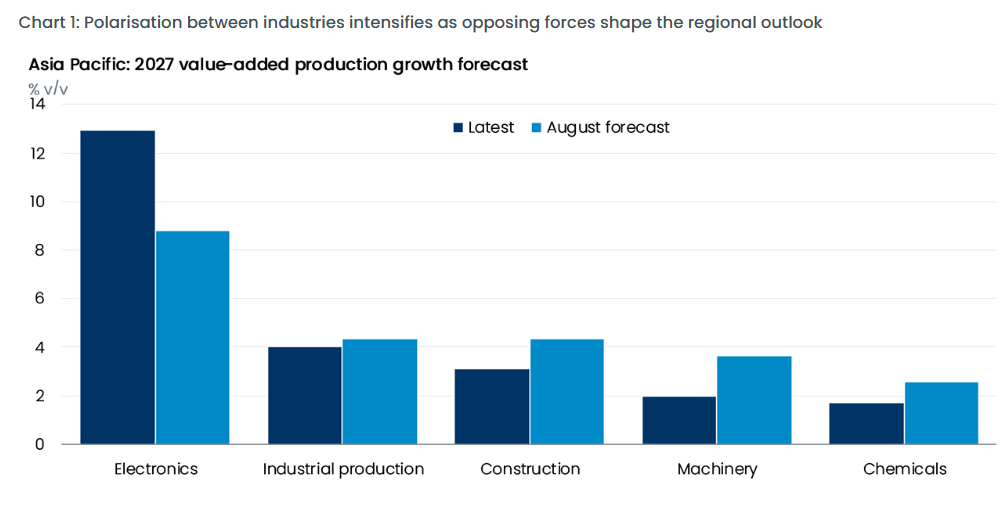
We have kept our industrial production forecast for the Asia Pacific (APAC) region at 4.9% in 2026, while downgrading our 2027 outlook to 4% from our 4.4% forecast in August. We expect a more prolonged Middle East conflict to hit production via higher energy prices and tighter monetary policy. Meanwhile, a stronger growth impulse from the AI boom has lifted our electronics production forecast again.
We have materially raised our oil price forecast for the next few quarters, reflecting the latest escalation in the US-Israel war with Iran. Higher energy prices will hit APAC particularly hard, given the region’s heavy reliance on Gulf hydrocarbons. The exposure is greatest in petrochemicals, utilities, and refining, where hydrocarbons are a core input.
Higher energy prices and more hawkish central banks will further raise firms’ financing costs at a time when global interest rates are already elevated. Although narrow credit spreads and steady credit conditions are limiting the overall financial stress level, global investment growth is set to slow this year before recording a modest pick-up in 2027. A stronger squeeze on investment demand will hit investment-reliant sectors such as machinery and construction.
Stronger-than-expected momentum from US AI data centre investment has prompted us to upgrade our electronics production forecasts for the region. Export orders remain robust, and production data continue to indicate steady growth in output. For China, the government’s chip production localisation push provides additional structural tailwinds on top of a cyclical AI-related boost. That said, AI strength leaves the sector vulnerable to concentration risks, especially because a slowdown in AI investment now looks more likely.