

Office property continues to be challenged globally by structural changes to occupier demand. This has impacted vacancy rates and rents and trigged large falls in capital values, to which Australia is not immune
 Garima Sinha
Office property continues to be challenged globally by structural changes to occupier demand. This has impacted vacancy rates and rents and trigged large falls in capital values, to which Australia is not immune

The Federal government has changed tack on fiscal policy, signalling it will run a much easier stance of policy from next financial year.
The Australian labour market has outperformed expectations over the past two years. From a very tight starting point, employment has increased by 6.1%, and while the unemployment rate has risen, it remains low at 4.1%.
We’ve kept our GDP growth forecasts unchanged at 1.1% for 2024 and 2.0% for 2025. We’ve seen some signs the Australian economy is running a little hotter than we previously thought over the past month, which doesn’t bode well for its ongoing battle against inflation.

The government funded transportation infrastructure boom continues to support growth in engineering construction activity. Annual growth slowed to 6.4% over FY24 to be $34.9bn, the highest level on record. We expect activity to reach a cyclical peak of $36.9bn in FY26.

The wage price index increased by 0.8% q/q in Q3. Quarterly WPI growth has been steady at the same pace through 2024.

The election of Donald Trump will affect global construction activity through fiscal stimulus, curbed immigration, increased tariffs, and policy decisions.

The results of the US election have prompted us to adopt our ‘limited Trump’ scenario as our baseline view for now. Broadly speaking, the outlook for 2025 is little changed.

There were no surprises from the RBA at the November meeting, with the board keeping rates on hold at 4.35%.

Australia’s major metropolitan office markets are at the tail end of a major phase of supply that started in FY20 and will run to mid next year, in the process contributing towards the current substantial oversupply.

Fertility rates have been declining globally over the past few decades, and Australia has followed suit. After a small ‘baby bump’ during the pandemic, fertility rates have now reached new lows across much of the OECD.

The labour market continued its very strong run in September, with employment shooting up by 64,100. The unemployment rate held steady at 4.1%, following a downward revision to the August figure, with the participation rate reaching a record high of 67.2%.

Through a period of higher but stable interest rates and cost of living pressures, the combined capital city (CCC) median all-dwelling price grew 7.5% over FY2024 to a fresh record of $987,600.
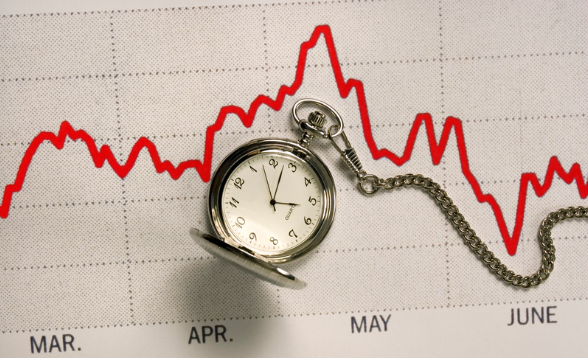
Vacancy in the Melbourne CBD continued to track higher during H1 2024, increasing to 18.0%, reflecting the
persistent contraction in office demand

Amid a relatively weak building sector (particularly for residential buildings), engineering construction continues to provide growth support for the broader construction industry. While growth continues to normalize from recent peaks, the most recent engineering construction work done data (for the June quarter of 2024) shows some strength remains.

While recent data has come in close to guidance, with net overseas migration (NOM) estimated to total 485,000 for FY2024, the near-term outlook for overseas migration has softened.
Australia’s GDP growth was broadly in line with our expectations in Q2 at a meagre 0.2% q/q. The
economy is lacking a clear engine of growth and the private sector is clearly struggling against
restrictive policy settings.

Stress among home loan borrowers has risen due to higher interest rates, broad cost-of-living pressures, and the gradual slackening of the labour market.

The Australian engineering construction industry is characterised by booms and busts of activity, not only by subsector and state but by regions within states and territories.

It was fantastic to welcome our esteemed clients and guests to our economic forecasting conference in Sydney, Melbourne and online.
