OE Logo

A “no-deal” Brexit would cause a 5% drop in UK outbound travel and tourism trips in 2020, because of the stifled economic backdrop and impact of a weaker pound. Ireland and Spain would be the hardest hit from fewer UK visitors. In contrast, the weaker pound could mean that UK tourism inflows are 4% higher in a “no-deal” scenario, provided there is no travel disruption. But lower levels of domestic tourism mean that we would expect UK travel and tourism GDP to be 2% lower than our baseline forecast in 2020.

Oxford Economics fielded and analyzed a survey of 2,280 executives from over 60 countries to identify the drivers of digital success.

The new edition of our annual Global Cities report explores the fortunes and prospects of cities around the world, forecasting to 2035 which will be the largest and fastest growing urban economies. Read more

Experienced investors know that risk and reward are close companions. There are certain African economies that no serious investor on the continent can reasonably overlook. South Africa, Nigeria and Egypt, the continent’s heavy hitters, are justifiably on every investor’s radar and the recent recovery in Nigeria and South Africa are good signs for businesses.

Democratization of consumption has happened so quickly, that close to two-thirds of the world’s population will join the ranks of the ‘Global Middle Class’ by 2030. The implications on consumer demand and future spending power cannot be overstated.

SMEs report that improving Banking and Business services to SMEs could improve their productivity by 10%, delivering a £70 billion boost to the UK economy.

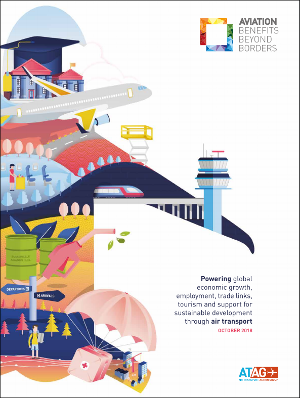
Oxford Economics has once again collaborated with the Air Transport Action Group (ATAG) to provide the most comprehensive estimate of the the value of the world’s aviation sector. We estimate that in 2016, the air transport sector and the tourism it facilitates supported a $2.7 trillion to global GDP and 65.5 million jobs.

This research details for the first time the varied ways that ornamental horticulture and landscaping contribute value to the UK economy.

Following the 2016 referendum, economic uncertainty has spread across several industries within the UK economy. This report is Oxford Economics’ and Thomson Reuters’ exploration of the impact of the UK’s potential departure from the EU on the legal services industry.

2018 will be remembered as a landmark year in the history of the data economy, marked by a dramatic increase in consumer awareness of the power, scope, and risks of corporate data strategies, and by sweeping changes to the regulatory environment.

Independent schools support £13.7 billion of UK GDP annually, associated with over 300,000 jobs and £4.1 billion of yearly tax revenues. They help the exchequer further by providing an alternative to state-funded education, and boost the economy’s long-term productive potential by improving educational outcomes.

The rail supply industry has been a dynamic and vital part of the U.S. economy for over 200 years–spurring value in excess of $74 billion in 2017 alone and supporting more than 650,000 jobs.

Artificial intelligence (AI) is moving beyond the hype cycle, as more and more organizations seek to adopt AI-related technologies. These organizations are focusing on prioritizing functional areas and use cases, placing a stronger emphasis on topline growth, taking up a renewed interest in their data infrastructure and articulating greater unease about the skills of their knowledge workers. This report explores how they are approaching strategic imperatives, defining value drivers, building foundational capabilities and improving access to talent — as well as how their efforts could drive exponential competitive advantage.

Petroleum markets must shift from an era of “organizational centricity,” in which companies and service providers largely defined what to produce and market to customers, to one of “individual centricity,” in which tech-savvy consumers demand customized engagement and experiences.

Even “normal weather” impacts the chemicals, petroleum and industrial products industries on a daily basis, whether through operations needs, critical infrastructure requirements or dangers for field workers. Some companies in these industries are reaping benefits from weather data by leveraging insights to reduce costs and increase revenues.

Attracting and retaining the right talent is crucial to an organisation’s success, wherever in the world it operates. For the seventh year running, this report––created in partnership with Hays, the global recruitment consultant––presents an exhaustive analysis of the labour market landscape in 33 countries, for the benefit of workers, firms, and policymakers.

Security for connected and autonomous vehicles gets a lot of attention, but companies need to focus on fundamentals – the industrial systems used for manufacturing automobiles and their increasingly high-tech components. Bringing “intelligent industrial things” online without effective cybersecurity puts an entire company at risk.

European migrants living in the UK contribute £2,300 more to public purse each year than the average adult, suggesting a net contribution of £78,000 to the exchequer over their lifespan in the UK.

Destinations and policymakers should embrace digital platforms and data-driven innovation, to drive tourism performance.

Technology will displace 28 million workers in the ASEAN region by 2028, but by boosting real incomes it will generate new demands for workers too. Jobs will evolve, rather than disappear, posing a considerable reskilling challenge to ASEAN workers.