Ungated Post|18 March 2019

The Economic Impact of the Fragrance Industry
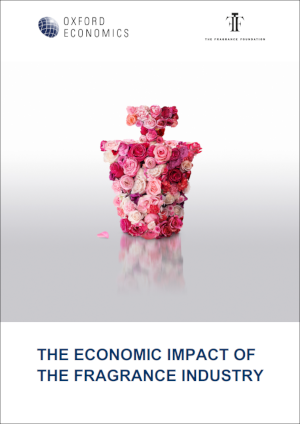
The Economic Impact of the Fragrance Industry

To celebrate National Fragrance week (18-24 March), this report provides the first comprehensive assessment of the contribution of the fragrance industry to the UK economy. It finds the fragrance industry has a large positive economic footprint in the UK. The industry must therefore be recognised as a valuable asset for the UK economy.

In total, we estimate the fragrance industry generated a total gross value added contribution to GDP worth £7.1 billion in 2018. From this activity it supported the employment of 126,700 people and was responsible for raising £2.1 billion in tax receipts.

This impact is centred around the wholesale and retail of fragrance products. However, there is also a notable manufacturing footprint, with additional impacts in sectors across the economy driven by the supply chain spending and consumer activity that the industry’s payment of wages creates.

Read the report

Our economic consulting team are world leaders in quantitative economic analysis, working with clients around the globe and across sectors to build models, forecast markets and evaluate interventions using state-of-the art techniques. Lead consultants on this project were:

Oxford Economics’ team is expert at applying advanced economic tools that provide valuable insights into today’s most pressing business, financial, and policy issues.

To find out more about our capabilities, contact:

EMEA
Pete Collings
+44 (0)203 910 8078
Email

Americas
Hamilton Galloway
+1 (646) 503 3068
Email

Asia
Christie Tang
+852 3974 8841
Email

  • Share:

Related Services

Socioeconomic Impact of DP World in Senegal

Socioeconomic Impact of DP World in Senegal

Oxford Economics Africa conducted a socioeconomic impact assessment of DP World Dakar covering 2022–2024. We assessed DP World’s operations in Senegal, quantifying its economic footprint, the activity supported through trade facilitation and evaluating social and environmental outcomes, while mapping how value is created for key stakeholders: employees, customers, suppliers, partners, and communities.
From Farm to Table: The Philippine Agri-Food Economy in 2025 and the Road to Competitiveness

From Farm to Table: The Philippine Agri-Food Economy in 2025 and the Road to Competitiveness

This report assesses the Philippines’ agri-food system, from agricultural production and food and beverage (F&B) manufacturing, to the wholesale, retail, and hospitality distribution networks that bring F&B to market. We quantify the economic contribution of the local agri-food sector, document the challenges faced by Philippine agri-businesses due to the tightening operating environment and shifting trade patterns, and outline a practical path to navigate these headwinds.
Economic benefits quantum computing can bring to Sussex and Greater Brighton

Economic benefits quantum computing can bring to Sussex and Greater Brighton

This report focuses on the quantum computing sector in Sussex and Greater Brighton, and its potential contribution to the South East and wider UK economy.