
Research Briefing
| Apr 16, 2024
GCC: Key themes shaping city economies in the near term
For Gulf cities, the near-term outlook will be tied not only to the global macroeconomic backdrop, but also the progress of the diverse visions and strategies in the region. With the aim to diversify their economies and reduce the dependence on oil, Gulf states continue to invest in the non-oil economy and implement various reforms. That said, oil revenues remain key to funding diversification efforts.
What you will learn:
- Two themes to watch out for over the next two years are (1) the increasingly competitive business environments across the main gulf states and (2) the recovery and growth of the tourism sector. Both factors will boost economic growth, employment, and consumer spending across cities.
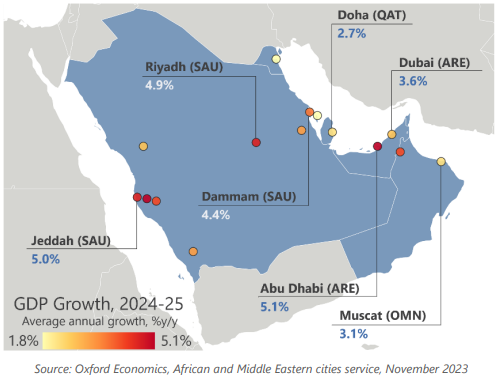
- Momentum in the non-oil sector remains strong in Saudi Arabia, supported by substantial investment as progress continues towards the goals of Vision 2030. Growth in non-oil GDP is supporting employment across the Kingdom’s main cities, with growth at 4.2% in Riyadh, 4.5% in Jeddah, 4.6% in Mecca and 4.5% in Medina in 2024. This growth is boosted by foreign companies setting up regional headquarters, particularly in Riyadh.
- The UAE is an open economy and faces headwinds from other parts of the global economy. But domestic activity is underpinning its resilience. Inflation has stabilised, the fiscal position has improved (especially for Dubai), and an improving outlook for the labour market will support growth. We expect employment to grow by 2.4% in 2024 in Dubai. Abu Dhabi’s diversification effort is progressing with the non-mining industrial sector playing a big role in the advancement. We are of the view that the UAE officially joining BRICS+ will push for more activity and investment in the industrial and logistics sector through expanded market access and less trade barriers, which should benefit Abu Dhabi further.
- One of the most closely watched countries in the region is Saudi Arabia. A key feature of the Kingdom’s efforts to diversify away from oil is the development of giga projects (defined as projects above $10 billion), an initiative headed up by the Public Investment Fund (PIF), the official sovereign wealth fund of Saudi Arabia. Since 2016, the Kingdom has initiated projects valued at over $1.25 trillion, including NEOM, Diriyah, and the Riyadh Metro, among others. The scale of these projects is unique, and they represent a substantial step towards achieving the Kingdom’s ambitious goals.