

Research Briefing
| Jun 6, 2024
ECB embarks on rate cutting path, but at an uncertain pace
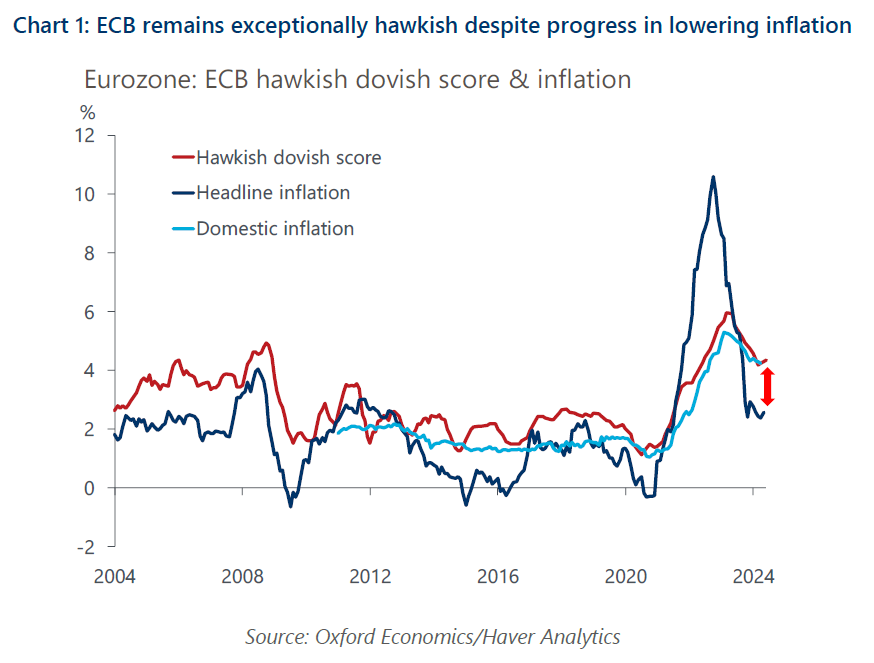
There were few surprises at the June ECB meeting. The council delivered the widely expected first rate cut, having judged that the inflation outlook had sufficiently improved to begin easing policy. But the policy statement and president Lagarde’s press conference retained a hawkish bias, with the council sticking to its data dependent, meeting by meeting approach.
What you will learn:
- New staff projections added to the hawkish tilt with the headline and core inflation forecasts for this year and next revised up more than expected reaching the 2% target only later in 2025. We remain more confident of the disinflationary trend than the ECB, but our revised forecasts now see inflation undershooting 2% only early next year rather than already in H2 this year.
- Stickiness in wages and domestic inflation remain a key worry point. Leading indicators point to good news accumulating on that front, which we think will facilitate further rate cuts later this year. But we now think that progress won’t be fast enough to reduce the ECB’s hawkish tilt sufficiently. Therefore, we expect only two more rate cuts this year, in September and December.
Related Reports
Click here to subscribe to our asset management newsletter and get reports delivered directly to your mailbox

Bonds and the end of the global savings glut
Is the “end of the global savings glut” story reflected in bond prices? Three different approaches to fair value for 10-year Treasurys suggest the answer is yes.
Read more: Bonds and the end of the global savings glut

Czech Republic: Profligate fiscal loosening will push up bond yields
We think the Czech 10-year bond yield is on track to breach 5% in the coming months, as the markets continue to price in the fiscally profligate programme of the new government.
Read more: Czech Republic: Profligate fiscal loosening will push up bond yields
Why bond yields are rising again and why it matters
The rise in bond yields reflects fiscal concerns, higher risk premia, shifting investor preferences, and idiosyncratic factors.
Read more: Why bond yields are rising again and why it matters

Economics for Asset Managers
Read more of our analysis and reports on asset management and economic outlook.
Read more: Economics for Asset Managers