












Divergent consumption patterns persist despite recovery
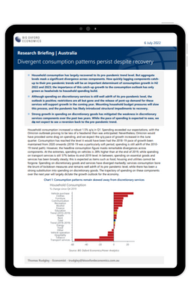
Household consumption increased a robust 1.5% q/q in Q1. Spending exceeded our expectations, with the Omicron outbreak proving to be less of a headwind than was anticipated. Nevertheless, Omicron would have provided some drag on spending, and we expect the q/q pace of growth increased in the June quarter. Consumption has reached the level it would have been had the 2018-19 pace of growth been maintained from 2020 onwards (2018-19 was a particularly soft period; spending is still adrift of the 2010- 19 trend path). However, the headline consumption figure masks remarkable divergences across components.
Divergent consumption patterns persist despite recovery
Household consumption increased a robust 1.5% q/q in Q1. Spending exceeded our expectations, with the Omicron outbreak proving to be less of a headwind than was anticipated. Nevertheless, Omicron would have provided some drag on spending, and we expect the q/q pace of growth increased in the June quarter. Consumption has reached the level it would have been had the 2018-19 pace of growth been maintained from 2020 onwards (2018-19 was a particularly soft period; spending is still adrift of the 2010- 19 trend path). However, the headline consumption figure masks remarkable divergences across components.





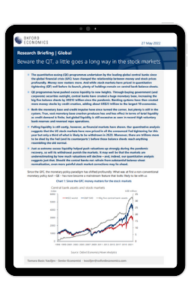 The quantitative easing (QE) programmes undertaken by the leading global central banks since the global financial crisis (GFC) have changed the relationship between money and stock prices profoundly. Money now matters more. And while stock markets have priced in quantitative tightening (QT) well before its launch, plenty of holdings remain on central bank balance sheets.

