


Consumer spending in the eurozone is set to worsen from Q3
 We estimate consumer spending in the eurozone increased by 0.8% q/q in Q2, despite persistent elevated inflation denting real incomes and depressing consumer confidence. High-frequency indicators that households carried on spending, particularly on services, and consumption should contribute positively to growth in Q3. However, the outlook continues to worsen for Q4 and beyond, with consumption fundamentals expected to worsen over the winter.
Consumer spending in the eurozone is set to worsen from Q3
We estimate consumer spending in the eurozone increased by 0.8% q/q in Q2, despite persistent elevated inflation denting real incomes and depressing consumer confidence. High-frequency indicators that households carried on spending, particularly on services, and consumption should contribute positively to growth in Q3. However, the outlook continues to worsen for Q4 and beyond, with consumption fundamentals expected to worsen over the winter.

 In early August, Russia’s Gazprom refused to accept a Siemens’ turbine used in Nord Stream 1, citing technical issues. Gazprom is seeking EU guarantees that the latter won’t impose sanctions. Such promises may not be forthcoming, however, so Gazprom could stop exporting gas via Nord Stream 1 to Europe in the coming weeks. Still, we expect any disruption to be temporary. Europe is replacing Russian natural gas with LNG imported from elsewhere, mostly the US.

 As European inflation reaches record levels, the impact varies across cities and regions. We estimate that most large European cities are less exposed to inflation than the rest of their countries, mainly because their residents spend proportionately less on energy, which has seen the biggest price increase this year. Higher average incomes also leave large cities in a better position, although income inequality works in the opposite direction, making some residents of large cities very exposed.

 There are five days to go until Kenya’s high-stakes elections on August 9. All eyes are on the presidential vote, which will essentially be a tight two-horse race between veteran opposition figure Raila Odinga and Deputy President William Ruto. The likelihood of a run-off is low. This Research Briefing explores these candidates’ prospects of winning the top job and assesses the tense election environment. Along with a new president, Kenyans will vote for members of the National Assembly and Senate, as well as local county governors and members of the 47 county assemblies. Tough economic conditions have fuelled voter apathy, as citizens consider politicians’ promises empty. Economic policy will play a larger role than before in voter decision-making, but identity remains key. There is a high risk of sporadic election-related violence, particularly along ethnic lines. However, it is not expected to be as devastating as in 2007.

 Africa is disproportionately affected by climate change. It accounts for only 3% of global greenhouse gas emissions, in contrast to China (23%), the US (19%) and the EU (13%), according to a 2020 Carbon Disclosure Project (CDP) report; yet many African nations are among the most vulnerable to the change in weather conditions.

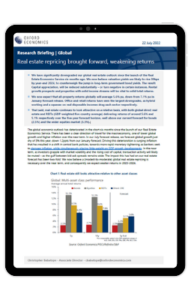


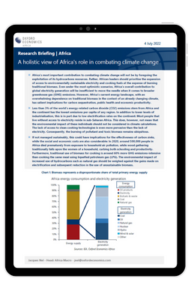 Africa’s most important contribution to combating climate change will not be by foregoing the exploitation of its hydrocarbons resources. Rather, African leaders should prioritise the expansion of access to environmentally sustainable electricity and cooking fuels at the expense of burning traditional biomass. Even under the most optimistic scenarios, Africa’s overall contribution to global electricity generation will be insufficient to move the needle when it comes to broader greenhouse gas (GHG) emissions.


 Africa’s greatest potential asset is its youth – the population of those younger than 25 years is set to more than double by 2050. By providing these individuals with the tools to contribute to a modern economy, the continent could see an unprecedented increase in productivity and inclusive growth. Quality education will be key to unlocking this potential.

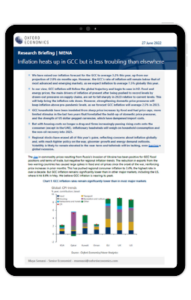 We have raised our inflation forecast for the GCC to average 3.2% this year, up from our projection of 2.8% six months ago. However, the GCC’s rate of inflation will remain below that of most advanced and emerging markets, as we expect inflation to average 7.5% globally this year. Regional stocks have erased all of this year’s gains, reflecting concerns about inflation globally and, with much tighter policy on the way, gloomier growth and energy demand outlooks.

 Monthly data from Russia’s trading partners indicate a rapid reorientation of Russian exports towards Asian markets. In particular, the data shows the US dollar value of Russian exports to China soared by 40% y/y in January-April and was up 80% y/y in May when China ramped up purchases of Russian crude.

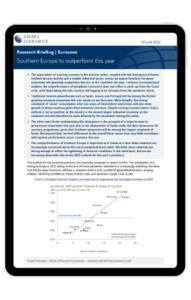 The ground has shifted and cheap budget funding in frontier markets is a thing of the past. In the current climate, African nations will struggle with a narrowing investor pool amid escalating inflation and FX risks. While forced consolidation due to a funding shortfall is a viable risk, a number of funding avenues can still be explored. We believe that these encompass a greater embracing of concessional funding options, preferably underpinned by an IMF or World Bank initiative. Environmental, social & governance (ESG) bonds also offer competitive pricing while supporting governance and accountability.

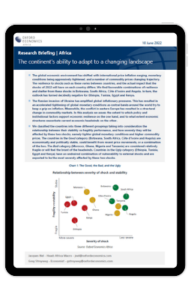 The global economic environment has shifted with international price inflation surging, monetary conditions being aggressively tightened, and a number of commodity prices changing trajectory. The resilience to shocks such as these varies between countries, and the actual impact that the shocks of 2022 will have on each country differs. We find favourable combinations of resilience and shelter from these shocks in Botswana, South Africa, Côte d’Ivoire and Angola. In turn, the outlook has turned decidedly negative for Ethiopia, Tunisia, Egypt and Kenya.
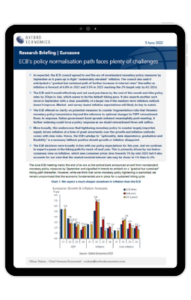 As expected, the ECB council agreed to end the era of nonstandard monetary policy measures by September as it gears up to fight “undesirably elevated” inflation. The council also said it anticipated a “gradual but sustained path of further increases in interest rates” thereafter as inflation is forecast at 6.8% in 2022 and 3.5% in 2023 reaching the 2% target only by H2 2024.

