
Evidence-based advocacy: How German communicators can learn from the British


The results are a bombshell: only one in 12 German citizens trusts the statements of German communicators. This is one of the findings of the “Trust in Communicators” study conducted by Leipzig University in 2019. According to the study, trust in professional communicators is almost twice as high in the UK. What do the British do differently?
One reason could be the use of numbers as a communication tool. Number-based knowledge is attractive: in times when “fake news” and populist statements make communication more difficult, numbers have an undeniable power of persuasion. Evidence-based studies by independent experts are therefore a firm fixture of corporate communications in the English-speaking world. In addition, the population trusts experts from consulting and science more than customers or management—another finding of the “Trust in Communicators” study.
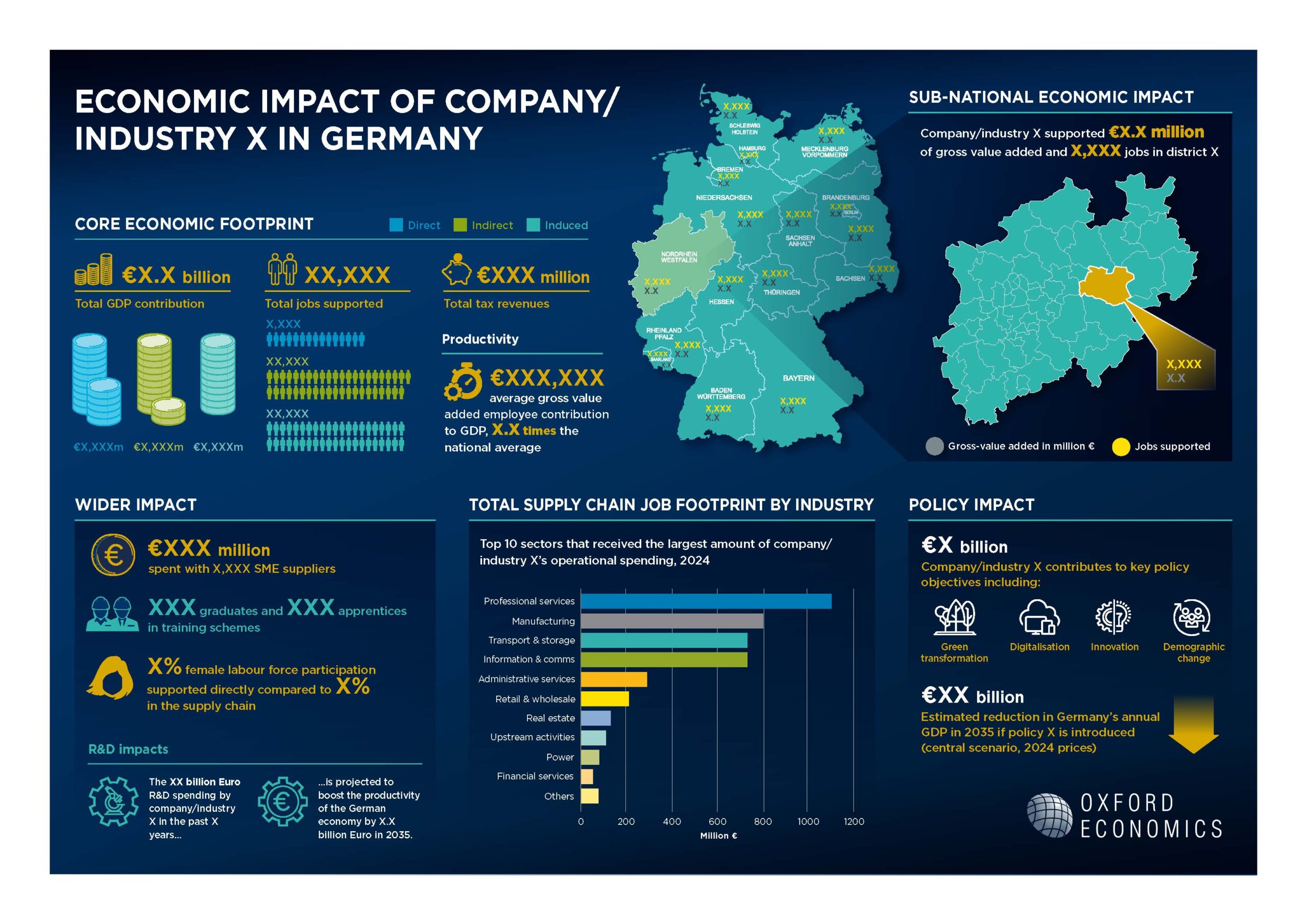
Economic footprint studies are an example of evidence-based studies in corporate communications: they quantify the socio-economic significance of a company for the national economy. Instead of relying on vague statements, communication departments receive tangible figures on gross value added, employment, and tax contributions that can be easily communicated and quickly understood. This is a huge advantage—especially for time-poor target groups. Stakeholders who depend on reliable data and facts, such as investors, political decision-makers, and the media, can use the results as a basis for well-founded decisions or news.
A well-placed presentation of one’s own economic footprint can gain the trust of the public and present companies in a positive light. German corporate decision-makers are increasingly recognising this: according to a recent survey by FAZ—a leading German newspaper—almost nine out of 10 (86%) of respondents considered studies to be a promising means of communication.
Supporting brand communication
Facts and figures on economic significance are real all-rounders for communicators. Stan McCoy, President of the Motion Picture Association, uses our study on the series “Pitch Perfect: Bumper in Berlin” to represent political interests. “This report is a timely example of the benefits a country can achieve through production support programmes, as this money flows directly into the German economy and supports local jobs and businesses,” he says.
Brand communication is also supported. Our study on the creator economy for YouTube, for example, showed that the platform not only gave everyone a voice but also made a significant economic contribution. As Frankfurter Allgemeine Zeitung, the leading German newspaper, said: “The creatives [on YouTube] contributed around 775 million euros to Germany’s gross domestic product in 2019 alone.”
Unlock exclusive economic and business insights—sign up for our newsletter today
Manchester United used our calculations to promote acceptance of a new stadium among local residents and the planning authority. Furthermore, the studies are also used for financial communication, as facts and figures are expected here. For example, AB InBev, one of the world’s largest beer producers, uses Oxford Economics’ calculations in its annual report.
Based on these endorsements by major business figures, economic studies are clearly an essential component of effective corporate communication. Whether as a basis for speeches and presentations, as a tool for decision-making for stakeholders, or as a strategic communication tool, these studies can support corporate communication in many ways. Companies that act now can establish themselves as pioneers of a new, fact-based communication strategy. Possibly a “winning strategy” in the run-up to the forthcoming elections?
With global expertise and a local team attuned to German nuances, we specialise in conducting impact assessments for companies on various scales. Our insights are key for companies to understand and influence policy decisions, effectively communicate their value to investors, customers, suppliers and local communities, and help them make informed decisions in a constantly changing world—not only in Germany but also across the globe. Especially for Western multinationals using economics to improve business dialogue with governments in Asia is critical—and through our economic consulting work, we help improve the effectiveness of that dialogue.
If you are interested in speaking to our specialist team of economists to improve the quality of your company’s engagement with stakeholders, please fill out the form.
A version of this article has been published in the German DPRG Journal, the magazine of the German Public Relations Association.
Speak to our team
Tags: