
Why the next era of inflation may be benign globally
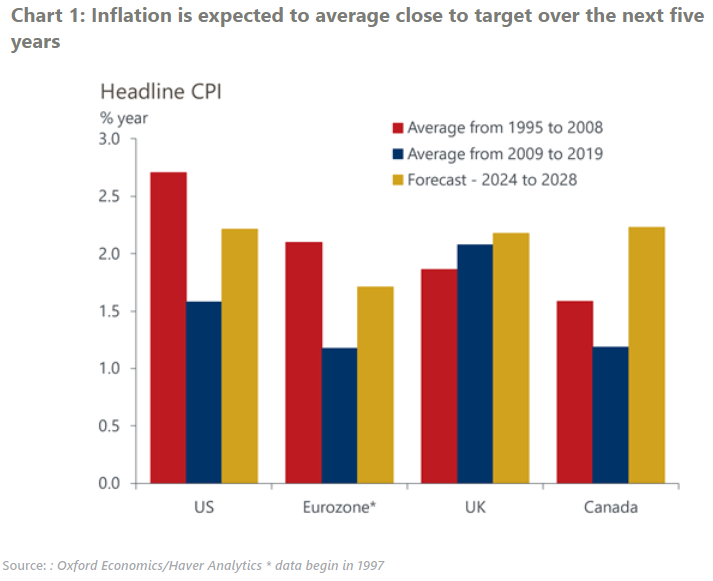
A return to the sustained ‘lowflation’ of the 2010s is unlikely, in our view. But we also doubt that the economic landscape has changed significantly enough that inflation will ‘unanchor’ from target at a higher level. Over the longer-term, we expect inflation to average around 2%, though this will include longer periods above target than was the norm post-financial crisis.
What you will learn:
- After a period of exceptionally low and stable inflation in the 2000s and 2010s, several factors –especially greater geopolitical instability and a more extreme climate – could lead to more supply shocks in the future. This increases the chances of inflation spiking up.
- Whether inflation will be generally higher or just more volatile will depend on the economic backdrop and how central banks respond. We expect higher policy rates on average, partly because domestic demand is unlikely to be as persistently weak as in the 2010s, so a repeat of the last decade’s private sector deleveraging and fiscal austerity seems unlikely.
- At the same time, the chances that strong demand will pose a risk of persistently high inflation seem overblown. More spending on defence, the greening of the economy, and aging doesn’t automatically mean bigger budget deficits. But if they do rise, then policy rates would likely be higher to offset the effect.
Tags:
Related Posts

Post
Housing affordability remains strained across US metros
A household needed to earn an annual income of $110,100 to afford a single-family home and pay both property taxes and home insurance costs in Q3 2025, down 2.3% from the peak Q1 2025 ($112,700) but nearly twice that of Q3 2020.
Find Out More
Post
US Tariff Monitor – Going bananas over food prices
The US macroeconomic implications are minor, and the resulting reduction in inflation next year is no more than just a handful of basis points.
Find Out More
Post
Affordability is top of mind as US government shutdown ends
The end of the government shutdown did not alter the broader economic trajectory, but it did create a sharp swing in the sequential pace of GDP growth within the November baseline outlook. As Washington refocuses on affordability and agencies restart delayed data releases, the coming weeks will offer clearer insight into how policy debates, price pressures, and election-year dynamics may shape the near-term environment.
Find Out More