
Research Briefing
| Sep 1, 2021
Global | Rising wealth dampens UK and EZ interest rates
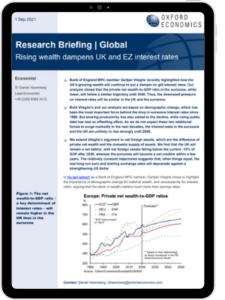
Bank of England MPC member Gertjan Vlieghe recently highlighted how the UK’s growing wealth will continue to put a damper on gilt interest rates. Our analysis shows that the private net wealth-to-GDP ratio in the eurozone, while lower, will follow a similar trajectory until 2050. Thus, the downward pressure on interest rates will be similar in the UK and the eurozone.
What you will learn:
- Both Vlieghe’s and our analysis are based on demographic change, which has been the most important force behind the drop in eurozone interest rates since 1980.
- We extend Vlieghe’s argument to net foreign assets, which are the difference of private net wealth and the domestic supply of assets.
- We find that the UK will remain a net debtor, with net foreign assets falling below the current -15% of GDP after 2030, whereas the eurozone will become a net creditor within a few years.
- The relatively constant trajectories suggests that, other things equal, the real long-run euro and sterling exchange rates will depreciate against a strengthening US dollar.
Tags:
Related Services

Post
US Key Themes 2026: Exceptionalism amid fragmentation
US exceptionalism is alive and well, and that won't change in 2026.
Find Out More
Post
Global Key themes 2026: Bullish on US despite AI bubble fears
We anticipate another year of broadly steady and unexceptional global GDP growth, but with some more interesting stories running below the surface.
Find Out More[autopilot_shortcode]