
Japan’s older households to support spending under higher rates
The resilience of consumption is essential to support sustained wage-driven inflation and the Bank of Japan’s rate hikes. We see little risk of spending faltering due to the projected gradual rate hikes to 1% because the ageing of society has made households’ balance sheets less vulnerable to rate increases.
What you will learn:
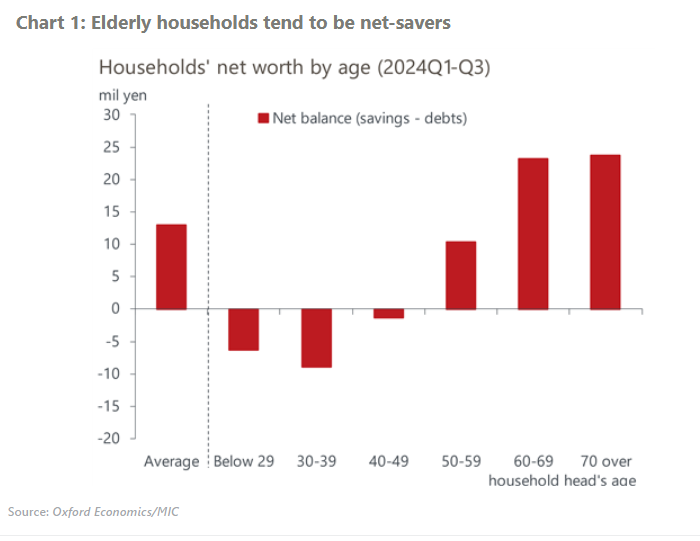
- Today, 35% of the Japanese population is older than 60, while their share of the consumption market is about half. We think their consumption will remain firm, given they tend to be net savers, implying that higher interest rates will have positive impacts on their balance sheets. For retired households, stable gains in pension benefits are also supportive.
- In contrast, households in their 30s and 40s tend to be net debtors due to large mortgage balances that are overwhelmingly floating rate loans, making them vulnerable to higher rates. At the same time, they benefit from pay rises which will likely outweigh the increased interest expenses in our baseline projection.
- We think that risks to consumption outlooks are tilted toward the downside. Supply-driven inflation could hamper households’ real income recoveries, if it proves more persistent than projected. Uncertainly about inflation and interest rates could increase precautionary savings by younger generations, which have been on a trend rise in the past years.
Tags:
Related Posts

Japan’s politics add uncertainty to BoJ policy outlook
The Bank of Japan (BoJ) kept its policy rate at 0.5% at its October meeting, after a 7-2 majority vote. Two board members again voted for a rate increase. We believe the BoJ will hike in December to 0.75% as incoming data confirm that the economy is performing in line with the bank's forecasts in its quarterly outlook. However, there's a material chance of a delay.
Find Out More
Japan’s December rate hike appears likely, though there is a risk of delay
We've brought forward the timing of the next Bank of Japan (BoJ) 25bps rate hike to December from next year and have added another 25bps hike in mid-2026. This reflects the surprisingly hawkish shift in the BoJ's view since its September policy meeting and upward revisions to our growth and inflation projections, driven by the US economy's resilience.
Find Out More
BoJ announces cautious plan to sell ETF and J-REIT holdings
At its monetary policy meeting on Friday, the Bank of Japan (BoJ) unexpectedly announced it would start to sell its ETF and Japanese real estate investment trust (J-REIT) holdings. We think the impact of this plan on financial markets will likely be limited because the BoJ is opting to play it safe in terms of the process and the scale.
Find Out More