
Autos and machineries in Japan are most vulnerable to US tariffs
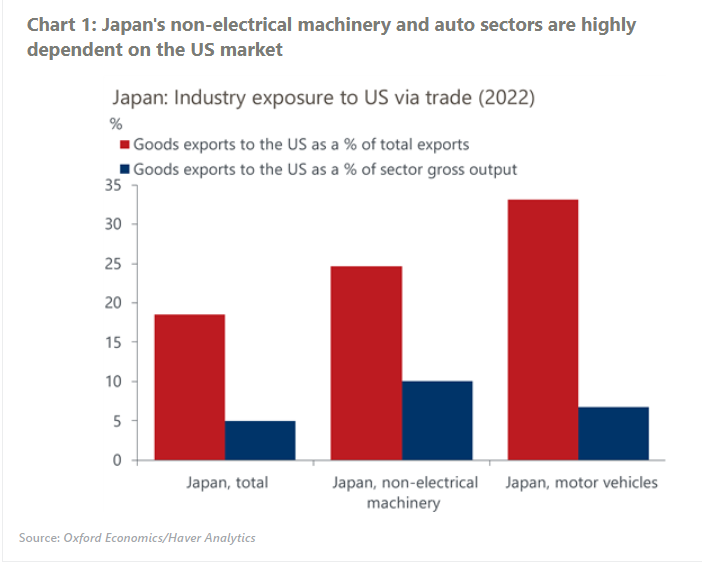
Our analysis of industry and trade structure between the US and Japan reveals the auto and non-electrical machinery sectors are most vulnerable to tariffs by the US. For both sectors, the US accounts for a sizeable share of total exports as well as gross output, and particularly so for auto.
What you will learn:
- On the other hand, imports from Japan accounts for a relatively small share of the US market, making it easy for the US to impose tariffs. Even for the most exposed sector, 20% tariffs on Japanese goods will translate into less than a 0.5% rise in US output prices. This uneven power balance presents the US with a chance to use tariffs as a means to gain diplomatic leverage.
- However, Japan could resort to retaliatory tariffs, given relatively small reliance on US input for production. For most sectors, the intermediate input from the US accounts for less than 2% of gross output. Items such as agricultural products might be targeted, given Japan holds a relatively sizeable share of total US exports.
- Even in the absence of bilateral tariffs on Japan, globalised supply chains mean Japan could still be hit by tariffs on other economies. Tariffs on Mexico will be detrimental to Japanese automakers who have a production hub in the country, while those on Taiwan semiconductors could dampen demand for Japanese chip equipment.
Tags:
Related Posts

Post
Japan’s politics add uncertainty to BoJ policy outlook
The Bank of Japan (BoJ) kept its policy rate at 0.5% at its October meeting, after a 7-2 majority vote. Two board members again voted for a rate increase. We believe the BoJ will hike in December to 0.75% as incoming data confirm that the economy is performing in line with the bank's forecasts in its quarterly outlook. However, there's a material chance of a delay.
Find Out More
Post
Japan’s December rate hike appears likely, though there is a risk of delay
We've brought forward the timing of the next Bank of Japan (BoJ) 25bps rate hike to December from next year and have added another 25bps hike in mid-2026. This reflects the surprisingly hawkish shift in the BoJ's view since its September policy meeting and upward revisions to our growth and inflation projections, driven by the US economy's resilience.
Find Out More
Post
BoJ announces cautious plan to sell ETF and J-REIT holdings
At its monetary policy meeting on Friday, the Bank of Japan (BoJ) unexpectedly announced it would start to sell its ETF and Japanese real estate investment trust (J-REIT) holdings. We think the impact of this plan on financial markets will likely be limited because the BoJ is opting to play it safe in terms of the process and the scale.
Find Out More