
MENA | July PMIs, Oman’s electricity subsidies, Iran inflation
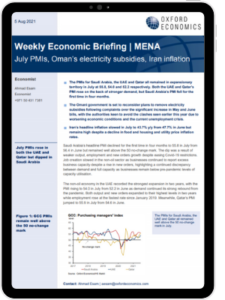
The PMIs for Saudi Arabia, the UAE and Qatar all remained in expansionary
territory in July at 55.8, 54.0 and 52.2 respectively. Both the UAE and Qatar’s
PMI rose on the back of stronger demand, but Saudi Arabia’s PMI fell for the
first time in four months.
What you will learn:
- The Omani government is set to reconsider plans to remove electricity
subsidies following complaints over the significant increase in May and June bills, with the authorities keen to avoid the clashes seen earlier this year due to worsening economic conditions and the current unemployment crisis. - Iran’s headline inflation slowed in July to 43.7% y/y from 47.7% in June but remains high despite a decline in food and housing and utility price inflation rates.
- Saudi Arabia’s headline PMI declined for the first time in four months to 55.8 in July from 56.4 in June but remained well above the 50 no-change mark.
Tags:
Related Services

Post
APAC Key Themes 2026: Paybacks, policy offsets and trade
We believe APAC will remain the strongest global performer in 2026. However, the growth trajectory will likely be more uneven than in past cycles.
Find Out More
Post
Japan’s fiscal policy will remain loose, which increases risks to debt sustainabilit
We've changed our fiscal outlook for Japan in our December forecast round. We now expect the new government to set a primary deficit close to that of 2024, at 2%-3% of GDP for 2025-2027, instead of restoring a balanced budget by taking advantage of strong tax revenue. We assume higher bond yields will force the government to take measures to reduce the deficit from 2028.
Find Out More