
UK | The economics of Scottish independence
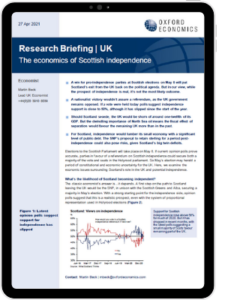
A win for pro-independence parties at Scottish elections on May 6 will put Scotland’s exit from the UK back on the political agenda. But in our view, while the prospect of independence is real, it’s not the most likely outcome. A nationalist victory wouldn’t assure a referendum, as the UK government remains opposed.
What you will learn from this report:
- A nationalist victory wouldn’t assure a referendum, as the UK government remains opposed.
- Should Scotland secede, the UK would be shorn of around one-twelfth of its GDP.
- For Scotland, independence would lumber its small economy with a significant level of public debt.
Tags:
Related Services

Post
APAC Key Themes 2026: Paybacks, policy offsets and trade
We believe APAC will remain the strongest global performer in 2026. However, the growth trajectory will likely be more uneven than in past cycles.
Find Out More
Post
Japan’s fiscal policy will remain loose, which increases risks to debt sustainabilit
We've changed our fiscal outlook for Japan in our December forecast round. We now expect the new government to set a primary deficit close to that of 2024, at 2%-3% of GDP for 2025-2027, instead of restoring a balanced budget by taking advantage of strong tax revenue. We assume higher bond yields will force the government to take measures to reduce the deficit from 2028.
Find Out More