
Trump will slow, but not stop, the energy transition
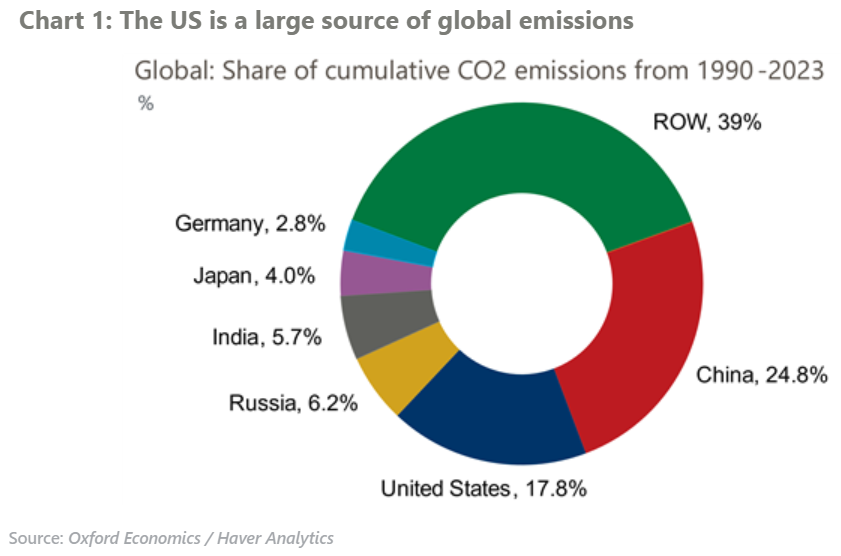
Donald Trump’s withdrawal from the Paris Agreement is a symbolic step back from global climate cooperation. The new administration is set to abandon the latest climate commitments made by its predecessor and halt international climate funding. This could discourage other countries and slow the shift to low carbon energy. However, we don’t think the global transition will grind to a halt because the economics remain favourable and climate policies are more entrenched than before. Rather, what the US does at home will have a greater impact on climate.
What you will learn:
- The Inflation Reduction Act (IRA), the US’ most ambitious climate legislation, is under threat. We believe its key components should survive, and see the EV tax credits and direct outlays as most vulnerable. The bigger challenge comes from the more uncertain policy environment, which could deter investment. If it does and the domestic clean technology sector does not develop, especially if imports are more expensive, consumers will lack access and revert to fossil fuels.
- At the same time, the Trump administration wants to ramp up fuel production, in part to push energy prices down. However, we believe these efforts will likely have a limited impact on prices.
- Business sentiment is shifting, and the private sector is catering to the new administration. For example, banks have left the Net Zero Banking Alliance (NZBA), just as some have continued to support fossil fuels. Further, increasing deregulation, a key theme of Trump’s administration, will reduce the incentive for companies to invest in cleaner technologies and processes.
- Net zero will become a more elusive global goal without the US. Other members of the Paris Agreement will need to either ramp up climate action or the world will miss its climate goals.
Tags:
Related Posts

Post
Advanced economy leadership is key to the low-carbon transition
We modelled how advanced-economy leadership in innovation and finance could accelerate a global low-carbon transition.
Find Out More
Post
The changing energy order
To understand how the G20 countries are progressing in the energy transition, Oxford Economics PwC collaborated with PwC to create the Changing Energy Order Index. The index combines data from international economic organizations like the OECD and World Bank with with Oxford's own forecasts to evaluate each country's progress across five key pillars.
Find Out More
Post
Increasing renewables will reshape electricity prices
With more variable renewable energy (VRE), we expect electricity prices to rise in the short term.
Find Out More