
US retailers’ wish these holidays? A working supply chain
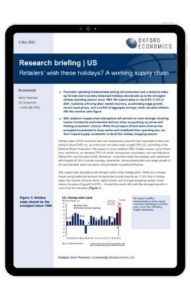 Favorable spending fundamentals among US consumers and a desire to make up for last year’s socially distanced holidays should add up to the strongest holiday spending season since 1999. We expect sales to rise 9.5%-11.5% in 2021, fueled by a firming labor market recovery, accelerating wage growth, record asset prices, and a surfeit of aggregate savings, while elevated inflation lifts the nominal sales figure.
What you will learn:
- Leaner inventories and extended delivery times are pushing up prices and limiting consumers’ choices. While the prospect of bare store shelves has prompted households to shop earlier and recalibrate their spending mix, we don’t expect supply constraints to derail the holiday shopping season.
- Holiday sales (which excludes auto and restaurants) outperformed expectations last year, rising a robust 6.8% y/y, as online and non-store sales surged 24% y/y, according to the National Retail Federation.
- While we are bullish on consumer fundamentals driving a record spending season, supply chain issues will play a significant role in shaping this year’s holidays. Typical gifts like apparel and electronics are sated in large part by imports, making holiday sales in the Covid-era highly sensitive to global health conditions and just-in time inventory management.
Tags:
Related Services

Post
Japan’s fiscal policy will remain loose, which increases risks to debt sustainabilit
We've changed our fiscal outlook for Japan in our December forecast round. We now expect the new government to set a primary deficit close to that of 2024, at 2%-3% of GDP for 2025-2027, instead of restoring a balanced budget by taking advantage of strong tax revenue. We assume higher bond yields will force the government to take measures to reduce the deficit from 2028.
Find Out More
Post
US Key Themes 2026: Exceptionalism amid fragmentation
US exceptionalism is alive and well, and that won't change in 2026.
Find Out More